BBQ Patio Ideas for Australian Entertaining
Plan functional BBQ patio zones for Australian outdoor entertaining. Compare built-in versus portable setups, organise prep and serving areas, integrate shade and seating for relaxed backyard gatherings.
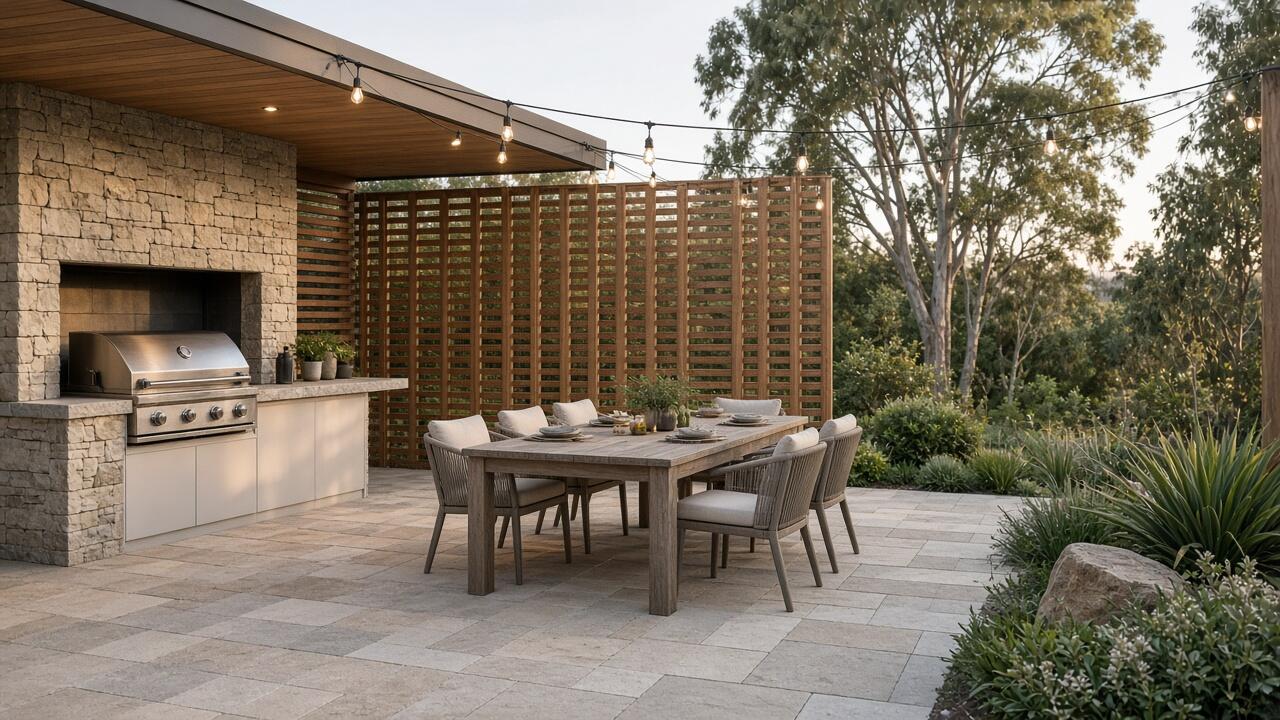
Barbecue patios represent the heart of Australian outdoor entertaining, transforming basic backyard spaces into functional cooking and gathering zones that extend living areas beyond house walls. Unlike casual portable BBQ arrangements, properly planned barbecue patios integrate cooking equipment, preparation zones, serving areas, comfortable seating, and weather protection into cohesive outdoor rooms supporting relaxed entertaining from intimate family dinners through to larger social gatherings characteristic of Australian lifestyle.
Melbourne and Peninsula properties benefit particularly from well-designed BBQ spaces that accommodate variable weather—scorching summer days demanding shade, cooler autumn evenings requiring wind protection, and spring’s unpredictable conditions testing flexible outdoor area design. Successful barbecue patios balance functional cooking requirements, traffic flow around working grills, comfortable guest zones, and aesthetic integration with broader landscape character.
Understanding BBQ patio layout principles, equipment choices, essential supporting infrastructure, and Peninsula-specific climate considerations helps homeowners create outdoor cooking spaces that actually get used year-round rather than becoming expensive underutilised installations gathering dust between occasional summer gatherings.
BBQ Equipment Choices
Selecting appropriate barbecue type determines patio design requirements.
Built-In BBQ Stations
What they are:
- Permanent barbecue installed in masonry surround
- Integrated into outdoor kitchen or feature wall
- Gas plumbed connection (occasionally charcoal chamber)
- Surrounding benchtop workspace
- Storage cabinets below
Advantages:
- Premium appearance (polished outdoor room)
- Ample preparation space (integrated benchtops)
- Organised storage (utensils, plates, condiments)
- Property value addition (high-quality installation)
- Never moves (no storage required)
Disadvantages:
- Expensive: $5,000-20,000+ complete installation
- Permanent location (can’t relocate if layout changes)
- Gas plumbing required (licensed plumber, permit)
- Maintenance commitment (stone/tile cleaning, equipment upkeep)
- Overkill for casual occasional users
Best for:
- Serious entertainers (regular BBQ use)
- High-value properties (investment justified)
- Permanent landscape design (mature gardens, established patios)
- Premium outdoor living priority
- Properties with space for dedicated zones
Construction requirements:
- Concrete slab foundation (structural base)
- Masonry surround (brick, block, or stone)
- Benchtop (granite, bluestone, concrete, tile)
- Gas plumbing (licensed gasfitter)
- Electrical (lighting, power points)
Portable BBQ Systems
What they are:
- Standalone barbecue (wheeled or placed)
- 2-6 burner gas or charcoal
- Bottle gas connection
- Side tables or trolley
- Can relocate or store
Advantages:
- Affordable: $300-2,000 quality units
- Flexibility (move around patio, store off-season)
- No construction required (place and use)
- Easy replacement or upgrade
- Rent-friendly (take when moving)
Disadvantages:
- Less integrated appearance
- Limited surrounding workspace (small side tables)
- Storage required (weather protection extends life)
- Can look temporary (affects outdoor room polish)
- Bottle gas (refilling inconvenience)
Best for:
- Budget-conscious BBQ enthusiasts
- Rental properties (moveable)
- Flexible outdoor spaces (multi-use patios)
- Occasional entertainers
- Properties still developing landscape design
Quality considerations:
- Stainless steel cooking grates (avoid painted cast iron)
- Porcelain enamel firebox (durability)
- Quality burners (cast brass or stainless)
- Substantial trolley (stability and storage)
- Brands: Weber, Beefeater, Ziegler & Brown (Australian conditions)
Hybrid Approach
Combining built and portable:
- Permanent masonry bench (prep space, storage)
- Portable BBQ placed on or beside bench
- Flexibility plus infrastructure
- Affordable upgrade path (bench now, built-in later)
- Popular compromise
Design strategy:
- Build masonry L-shaped bench
- Leave BBQ space open or sized for portable
- Gas bayonet installed (connects portable)
- Upgrade to built-in when budget allows
- Functional immediately, refined over time
For broader outdoor entertaining space design including furniture layout and zone planning, see our guide on backyard patio ideas for Australian properties.
Functional Zone Planning
Effective BBQ patios separate distinct activity areas whilst maintaining visual and traffic flow connections.
Cooking Zone
Size requirements:
- 2-3m wide minimum (BBQ plus landing space)
- 1.5-2m deep (adequate clearance behind cook)
- Heat clearance (1m+ to seating, 2m+ to house wall)
- No overhanging combustibles (pergola beams, shade cloth)
Essential elements:
- Barbecue (built-in or quality portable)
- Preparation surface (benchtop or side table)
- Utensil storage (hooks, drawer, basket)
- Lighting (task lighting essential evening cooking)
- Rubbish bin (integrated or nearby)
Layout considerations:
- Cook faces guests (social whilst cooking)
- Wind direction (smoke away from seating)
- Traffic flow (people don’t cross behind working grill)
- House access (easy path to kitchen for supplies)
Peninsula climate factors:
- Wind protection essential (coastal especially)
- Partial overhead cover (sun protection, not full roof)
- Clearance for smoke (natural ventilation)
- North-facing ideal (winter sun, summer shade management)
Preparation and Serving Zone
Supporting cooking:
- Adjacent to BBQ (within arm’s reach)
- 1-2m benchtop length minimum
- Height 850-900mm (standard kitchen height)
- Storage below (crockery, cutlery, condiments)
Materials:
- Heat-resistant surface (near BBQ)
- Easy-clean (bluestone, granite, concrete, tile)
- Weather-resistant (outdoor exposure)
- Avoid timber immediately beside grill (fire risk, heat damage)
Infrastructure:
- Power point (appliances, phone charging)
- Outdoor sink optional (convenient, adds cost)
- Small bar fridge (drinks, salads)
- Overhead lighting (task and ambient)
Traffic flow:
- Serve from preparation side (guests collect plates)
- Access both ends (no bottleneck)
- Clear path to dining table
- Consider covered route (rain protection)
Dining and Seating Zone
Table size:
- 6-8 people: 2.4m x 1m minimum
- 8-10 people: 2.7-3m x 1m
- Allow 600mm per person minimum
- Rectangular suits long narrow patios (better than round)
Clearance:
- 1m behind chairs (pulling out, walking past)
- 1.5m between table and obstacles (comfortable circulation)
- 2-3m from BBQ (heat clearance, smoke, traffic)
Furniture choices:
- Outdoor-rated materials (timber, aluminium, all-weather wicker)
- Cushions enhance comfort (store or covers protect)
- Umbrellas or pergola shade (essential Peninsula summer)
- Mix seating (chairs plus bench one side maximises capacity)
Atmosphere:
- String lights or overhead (ambience)
- Outdoor speakers (background music)
- Heater (extends season autumn/winter)
- Privacy screens if needed (neighbours, wind)
Circulation and Flow
Traffic paths:
- Clear route: house → BBQ → serving → dining
- Width: 1.2m minimum (two people pass)
- Avoid crossing behind working BBQ
- Level surfaces (trip hazards problematic carrying plates)
Multiple access points:
- Kitchen to BBQ (supplies)
- Dining to BBQ (self-serve)
- Overflow seating to facilities (informal gathering zones)
Shade and Weather Protection
Peninsula climate demands flexible shade management.
Pergola Structures
Coverage approach:
- Partial cover (BBQ and prep zones)
- Open dining (full sun when desired)
- Retractable shade cloth or louvres (flexibility)
Clearance requirements:
- 2.4m minimum height (comfortable head clearance)
- 2.7-3m better (airy feeling)
- Heat rise clearance (BBQ smoke escapes)
Material choices:
- Timber: traditional, suits most styles, requires maintenance
- Aluminium: modern, low maintenance, powder coat finish
- Steel: industrial, very strong, heavy
Roofing options:
- Open rafters: partial shade, rain penetrates
- Shade cloth: removable, affordable, filters sun
- Polycarbonate: weather protection, light transmission
- Louvres: adjustable, premium, best flexibility
Cost range:
- Basic timber pergola: $2,000-5,000 (3m x 3m)
- Aluminium with louvres: $8,000-15,000
- Full outdoor room: $15,000-30,000+
For comprehensive comparison of outdoor patio styles including enclosed options, see our guide on enclosed patio ideas for Australian properties.
Shade Sails
When they work:
- Modern architecture (contemporary aesthetic)
- Budget limitations ($300-1,000 installed)
- Temporary shade (planning future pergola)
- Rental properties (removable)
Limitations:
- Wind noise (Peninsula coastal consideration)
- 7-10 year lifespan (fabric replacement)
- Less “room” feeling than pergola
- Can’t upgrade to solid roof later
Windbreaks
Peninsula essential:
- Coastal wind makes outdoor spaces unusable unprotected
- Screens on prevailing wind sides (west and north-east Peninsula)
- Lattice, batten, or glass panels
- Plantings supplement (hedges, shrubs)
Materials:
- Timber battens: natural, DIY-friendly, affordable
- Glass panels: sophisticated, maintain views, expensive
- Outdoor fabric: removable, cost-effective
- Planting: long-term, free once established
Height:
- 1.8-2.1m typical (blocks wind, maintains openness)
- Partial screens (not full enclosure unless desired)
- Balance protection and airflow
Infrastructure Essentials
Supporting systems enable comfortable year-round use.
Gas Connection
Portable vs plumbed:
- Bottle gas: flexible, refilling inconvenience
- Natural gas plumbing: convenient, expensive installation ($800-2,000)
- LPG plumbing: compromise (refillable tank, plumbed BBQ)
Plumbing requirements:
- Licensed gasfitter (legal requirement)
- Permit likely required (check local council)
- Bayonet fitting (connect/disconnect BBQ)
- Pressure regulator
- Leak testing and certification
Electrical and Lighting
Power requirements:
- Weatherproof power points (GPO) for appliances
- Dedicated circuit recommended (RCD protection)
- Multiple outlets (fridge, phone charging, lighting)
- Licensed electrician (DIY electrical illegal and dangerous)
Lighting design:
- Task lighting: BBQ and prep zones (LED downlights)
- Ambient lighting: dining and seating (string lights, feature lights)
- Safety lighting: paths and steps (low-level LED)
- Dimmer controls (adjust ambience)
Cost installed:
- Power points: $200-400 each
- Lighting circuit: $300-800
- Feature lighting: $500-2,000 (design dependent)
Water Access
Outdoor sink:
- Convenient (hand washing, vegetable prep, cleaning)
- Plumbing requirement (supply and waste)
- Adds significant cost ($1,500-4,000 installed)
- Not essential (kitchen access acceptable alternative)
Alternative:
- Garden tap nearby (hose for cleaning)
- Portable wash station (camping-style)
- Accept kitchen trips (works fine most properties)
Material Selections
Patio surfaces and finishes affect functionality and aesthetics.
Paving Around BBQ
Heat and stain resistant:
- Concrete pavers: economical, durable
- Bluestone: heat-resistant, sophisticated
- Concrete (polished or exposed aggregate): seamless
- Avoid: timber decking immediately beside BBQ (fire risk, grease stains)
Non-slip essential:
- Textured surfaces (wet from rain, spills)
- Light colours (stay cooler barefoot summer)
- Adequate drainage (falls away from BBQ zone)
For comprehensive comparison of paving materials including heat performance and stain resistance, see our guide on paving ideas for Australian properties.
Benchtop Materials
BBQ-adjacent requirements:
- Heat resistant (hot plates, cookware)
- Easy clean (grease, food spills)
- Weather durable (outdoor exposure)
Material options:
- Bluestone: premium, very durable, Melbourne tradition
- Granite: hard, heat-proof, stain-resistant
- Concrete (sealed): affordable, modern, requires resealing
- Porcelain tile: easy-clean, budget to premium options
- Avoid: laminate, unsealed timber (outdoor unsuitable)
Cost comparison (per linear metre):
- Concrete: $200-400
- Granite: $400-800
- Bluestone: $500-1,000
- Porcelain tile: $300-600
Storage Cabinetry
Outdoor-rated materials:
- Stainless steel: premium, durable, expensive
- Powder-coated aluminium: weather-resistant, mid-range
- Marine ply (sealed): budget option, requires maintenance
- Brick or block (rendered): permanent, economical
Door and drawer hardware:
- Stainless steel (316 grade coastal)
- Soft-close mechanisms (quality feel)
- Adequate ventilation (prevent moisture buildup)
Peninsula Design Considerations
Regional climate and lifestyle affect BBQ patio planning.
Seasonal Use Patterns
Peak entertaining:
- Summer: daily BBQ use typical
- Spring/autumn: weekend entertaining
- Winter: occasional use (brave Peninsula enthusiasts)
Design implications:
- Prioritise summer comfort (shade essential)
- Enable shoulder-season use (wind protection, heating)
- Accept winter limited use (cost-benefit diminishes)
Wind Management
Peninsula prevailing winds:
- Summer: north-east sea breeze (afternoon)
- Winter: westerly cold fronts
- Both require screening
Screen placement:
- West side: winter wind protection
- North-east side: summer breeze management
- Partial screens (not full enclosure)
- Adjustable panels (flexibility)
Fire Risk
BBQ placement:
- Clearance from combustibles (minimum 1m)
- No overhanging vegetation
- Spark arrestor for charcoal (rarely used Australia)
- Hose connection nearby
Bushfire zones:
- CFA regulations apply (BAL ratings)
- Non-combustible construction (masonry, steel, glass)
- Ember protection (sealed gaps, mesh screens)
- Professional advice (architect, CFA consultation)
Native Planting Integration
Softening hard surfaces:
- Coastal species (Westringia, Myoporum, Lomandra)
- Drought-tolerant (Australian summers)
- Wind-resistant (Peninsula exposure)
- Low-maintenance (entertaining focus, not garden work)
Herb gardens:
- Adjacent to BBQ (culinary access)
- Raised beds or pots
- Basil, rosemary, thyme, oregano
- Practical and attractive
For broader Peninsula outdoor living design strategies, see our guide on outdoor living ideas for Peninsula climate.
Budget Approaches
Creating functional BBQ patios without excessive spending.
Staged Development
Year 1: Essentials
- Paved area (DIY pavers)
- Quality portable BBQ
- Basic table and chairs
- String lighting
- Budget: $2,000-4,000
Year 2: Infrastructure
- Simple pergola or shade sail
- Gas plumbing (if upgrading long-term)
- Windbreak screens
- Budget: $1,500-3,500
Year 3: Refinement
- Built-in bench or upgrade BBQ
- Permanent lighting
- Furniture upgrade
- Budget: $2,000-8,000
Budget vs Premium Comparison
Budget functional (DIY-focus):
- Concrete pavers (DIY): $1,200
- Quality portable BBQ: $800
- Basic furniture: $600
- String lights: $100
- Shade sail: $400
- Total: $3,100
Mid-range practical:
- Professional paving: $2,500
- Premium portable BBQ: $2,000
- Quality furniture: $1,500
- Timber pergola: $3,000
- Gas plumbing: $1,500
- Total: $10,500
Premium built-in:
- Stone paving: $5,000
- Built-in BBQ kitchen: $12,000
- Designer furniture: $4,000
- Louvre roof pergola: $12,000
- Full electrical/gas: $3,000
- Total: $36,000+
DIY Cost Savings
Appropriate DIY elements:
- Paver laying
- Basic pergola construction
- String lighting installation
- Furniture assembly
- Planting and landscaping
Professional essential:
- Gas plumbing (licensed requirement)
- Electrical wiring (safety and legal)
- Complex masonry (built-in BBQ surrounds)
- Structural pergolas (engineering if large)
Style Integration
BBQ patios should complement property character.
Modern Contemporary
Characteristics:
- Clean lines (minimal ornamentation)
- Industrial materials (concrete, steel, glass)
- Monochrome palette (grey, black, white)
- Integrated lighting
- Sleek built-in BBQ
Coastal Relaxed
Characteristics:
- Light colours (white, cream, sand)
- Natural timbers (weathered or white-washed)
- Outdoor rugs and cushions
- Casual furniture (mixed chairs)
- Portable BBQ acceptable
Australian Bush
Characteristics:
- Timber structures (natural or stained)
- Stone features (sandstone, random rock)
- Native planting (eucalypt, grasses)
- Earth tones
- Rustic furniture
Final Thoughts
Successful BBQ patios integrate cooking equipment, preparation infrastructure, comfortable seating, and weather protection into cohesive outdoor entertaining zones that suit Australian lifestyle and Peninsula climate. Whether investing in premium built-in installations or developing functional portable setups, proper planning of cooking zones, traffic flow, shade structures, and supporting utilities creates outdoor spaces that enhance property value whilst supporting relaxed year-round entertaining.
Planning priorities:
- Functional zones: cooking, prep/serving, dining, circulation
- Weather protection: shade (essential), wind screens (Peninsula critical)
- Infrastructure: gas, electrical, lighting, water access
- Equipment choice: built-in (premium investment) vs portable (affordable flexibility)
BBQ equipment comparison:
- Built-in: $5,000-20,000+, permanent, premium appearance, serious entertainers
- Portable: $300-2,000, flexible, adequate most users, budget-friendly
- Hybrid: masonry bench ($2,000-5,000) plus portable BBQ, upgrade path
Essential measurements:
- Cooking zone: 2-3m wide x 1.5-2m deep
- Heat clearance: 1m to seating, 2m to house walls
- Traffic paths: 1.2m width minimum
- Dining space: 600mm per person, 1m behind chairs
Peninsula-specific considerations:
- Wind protection essential (west and north-east screens)
- Shade critical (summer Melbourne sun intense)
- Seasonal patterns (summer peak use, winter occasional)
- Fire risk (clearances, non-combustible materials)
Budget approaches:
- DIY functional: $2,000-4,000 (paving, portable BBQ, basic furniture)
- Mid-range practical: $8,000-15,000 (professional paving, pergola, gas plumbing)
- Premium built-in: $30,000-60,000+ (complete outdoor kitchen, louvre roof, stone finishes)
Staged development:
- Year 1: paved area, portable BBQ, basic seating, lighting
- Year 2: pergola/shade, gas plumbing, wind protection
- Year 3: built-in upgrades, permanent lighting, refined finishes
Infrastructure costs:
- Gas plumbing: $800-2,000 professional installation
- Electrical: $500-2,000 (power points, lighting circuit)
- Basic pergola: $2,000-5,000 DIY timber or professional basic
- Premium pergola: $8,000-15,000+ (aluminium, louvres)
Material selections:
- Paving: concrete pavers (budget), bluestone (premium), heat-resistant
- Benchtops: concrete (affordable), granite/bluestone (durable, heat-proof)
- Furniture: outdoor-rated, cushions for comfort, shade essential
- Screening: timber battens (natural), glass panels (sophisticated), planting (long-term)
Style integration:
- Match property architecture (contemporary, coastal, bush)
- Complement existing landscape character
- Balance functionality and aesthetics
- Consider resale appeal (mainstream installations)
BBQ patios transform Australian backyards from underutilised lawn areas into functional entertaining zones supporting outdoor lifestyle central to Melbourne and Peninsula living. Strategic investment in proper infrastructure—gas plumbing, electrical, shade structures, weather-resistant finishes—creates outdoor rooms genuinely used year-round rather than expensive installations gathering dust between occasional summer gatherings. Whether developing budget portable setups or premium built-in outdoor kitchens, focusing spending on essential functional elements whilst deferring optional refinements delivers practical BBQ spaces that enhance property value and daily enjoyment without financial overextension.
Need a Hand?
Professional lawn and garden services when you need them. Get a quote from our trusted Peninsula partners.
Contact Mowing Magic or Peninsula Hard Yards →Disclosure: We share links to related local services that serve our readers in the Peninsula area.