Enclosed Patio Ideas Australia
Practical enclosed patio ideas for Australian homes. Explore café blinds, sliding glass, pergola roofs, insect screens, and Melbourne weather considerations for outdoor living protection.
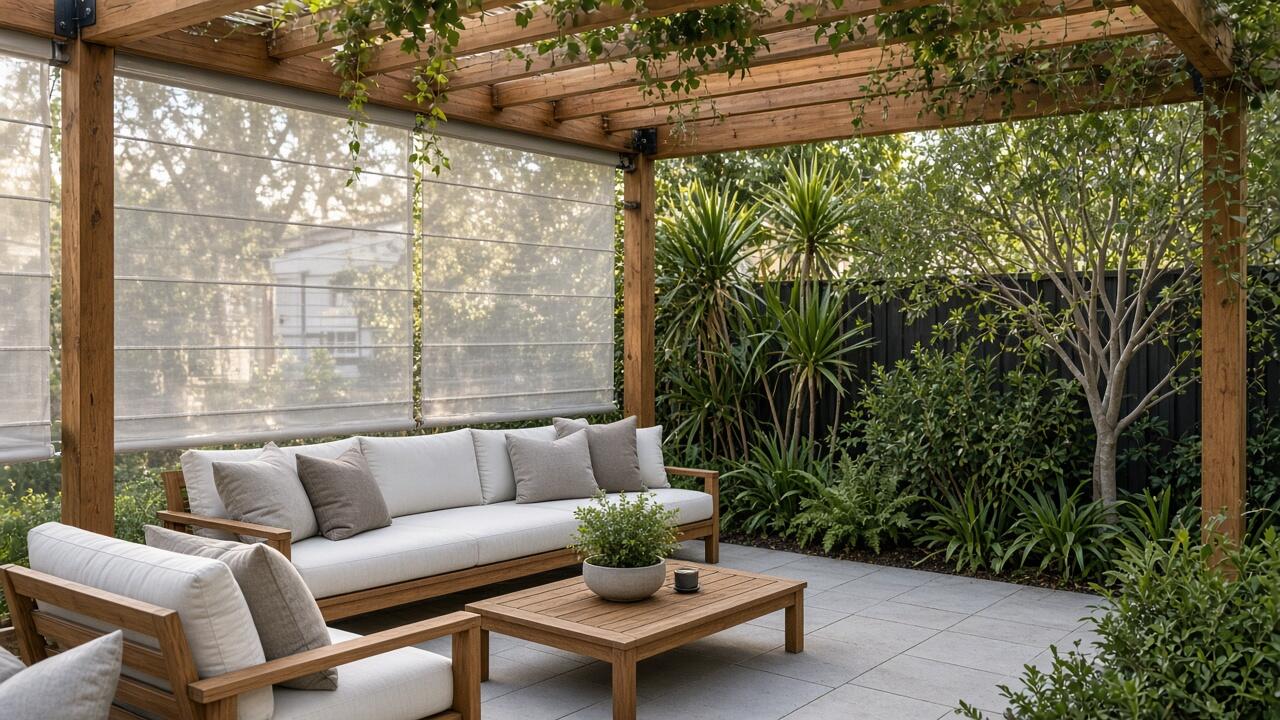
An enclosed patio transforms outdoor space into true year-round living area, protecting you from Melbourne’s unpredictable weather, insects, and wind whilst maintaining the connection to your garden. Whether you’re dealing with summer sun, winter rain, or Peninsula coastal winds, the right enclosure approach creates comfortable outdoor entertaining space that extends how you use your property.
Understanding your enclosure options - from fully-sealed glazing to flexible café blinds - helps you choose solutions that match your climate, budget, and how you actually use outdoor space.
Why Enclose a Patio?
Australian outdoor living faces real challenges that enclosures address.
Weather Protection
Melbourne’s variable climate:
- Four seasons in one day (genuinely)
- Summer heat requiring shade
- Winter rain making open patios unusable
- Spring and autumn wind (particularly Peninsula)
- UV exposure concerns
Enclosure benefits:
- Use patio in light rain
- Wind protection for entertaining
- Temperature moderation (warmer winter, cooler summer)
- Extended usable season significantly
Insect Protection
Australian insect reality:
- Mosquitoes peak summer evenings
- Flies during daytime
- Moths attracted to evening lighting
- Spiders establishing in corners
- Peninsula coastal areas can have significant midge/sandfly issues
Screening transforms summer evening entertaining from constant swatting to comfortable relaxation.
Privacy Enhancement
Suburban overlooking:
- Neighbouring properties often elevated
- Fence height limits (typically 1.8-2.1m)
- Upper-storey windows overlooking patios
- Desire for intimate outdoor spaces
Enclosures create visual screening whilst maintaining outdoor feeling.
Year-Round Value
Usage extension:
- Open patio: 60-80 days comfortable use annually (Melbourne)
- Enclosed patio: 200-300+ days usable
- Increases property value (functional additional room)
- Better return on patio investment
- Creates second living space
Café Blinds (Clear PVC Blinds)
The most popular Australian patio enclosure solution.
What They Are
Characteristics:
- Clear or tinted PVC panels
- Roll down from pelmet at roof edge
- Zip-track system or channel guides
- Can be raised/lowered individually
- Flexible use (open in nice weather, closed when needed)
Advantages
Flexibility:
- Open completely in fine weather
- Close individual sides as needed
- Adjust for sun angle or wind direction
- Not permanent enclosure (easy to change)
Cost-effective:
- $350-650 per linear metre installed
- Cheaper than permanent glazing
- DIY options available (though professional installation recommended)
- Good budget-conscious solution
Weather protection:
- Excellent wind protection
- Good rain protection (some spray through zips)
- Reduces temperature extremes
- UV-rated PVC blocks harmful rays
Insect barrier:
- Effective when fully closed
- Seals reasonably well with zip-tracks
- Creates screened entertaining space
- Allows outdoor cooking without flies
Maintains outdoor feeling:
- Clear panels preserve views
- Not as “closed-in” as solid walls
- Natural light throughout
- Ventilation when partially raised
Considerations
Lifespan:
- PVC panels: 5-8 years typical (sun degrades)
- Replacement panels: $150-300 each
- Annual maintenance needed (cleaning, lubrication)
- Ongoing cost over life of patio
Condensation:
- Can form on PVC in cold weather
- Reduces clarity temporarily
- Requires good ventilation design
- Not an issue with partially raised blinds
Wind ratings:
- Standard systems: 60-80km/h winds
- High-wind coastal systems available (up to 100km/h)
- Must be raised in extreme wind conditions
- Peninsula coastal properties need higher-spec systems
Appearance:
- Some consider PVC less attractive than glass
- Panels yellow or cloud over time
- Not suitable for ultra-modern architectural homes
- Better for relaxed/casual patio aesthetics
Temperature control limitations:
- Closed blinds trap heat (can be very hot summer)
- Better than nothing in winter but not insulated
- Not climate-controlled space
- Best used selectively (open/close as needed)
Melbourne consideration: Café blinds suit Melbourne’s variable weather perfectly - use open most days, close when wind/rain/cold hits, particularly valuable spring and autumn.
Sliding Glass Systems
Premium enclosure solution creating proper additional room.
Types of Systems
Frameless stacking glass:
- Individual glass panels
- Stack to one or both sides when open
- Minimal frame visible
- Contemporary architectural look
- Most expensive option
Aluminium-framed sliding:
- Aluminium frames around glass panels
- Slide on tracks
- More traditional appearance
- Less expensive than frameless
- Excellent weather sealing
Bi-fold glass doors:
- Panels fold back concertina-style
- Open wide for full access
- Good compromise style and cost
- Popular for patio enclosures
Advantages
Permanent quality solution:
- 20-30+ year lifespan
- Low maintenance (glass doesn’t degrade like PVC)
- Professional appearance
- Increases property value significantly
Superior weather protection:
- Fully sealed when closed
- No wind/rain penetration
- Double glazing option for insulation
- Creates proper room feeling
Clarity and views:
- Crystal-clear visibility always
- No yellowing or clouding
- Maximum natural light
- Feels open even when closed
Versatility:
- Open fully for outdoor feeling
- Close partially for wind protection
- Individual panel control
- Creates true indoor-outdoor flow
Temperature control:
- Better insulation than PVC
- Double glazing option for significant improvement
- Can combine with heating for winter use
- Reduces heat gain summer
Considerations
Cost:
- $800-1,500+ per linear metre installed
- Significantly more expensive than café blinds
- Professional engineering and installation essential
- Long-term investment rather than budget option
Weight and structure:
- Requires solid substructure
- Existing pergolas may need strengthening
- Professional assessment essential
- Structural engineering for large spans
Less flexible:
- More commitment than café blinds
- Cannot easily remove or change
- Panels must be stored somewhere when open
- More “permanent room” than “enclosed patio”
Condensation potential:
- Double glazing recommended (reduces condensation significantly)
- Single glazing can condensate in cold weather
- Ventilation design important
- Not usually issue with regular use/opening
Council approval:
- May require planning permit (creating enclosed room)
- Building permit required
- Check setbacks and regulations
- More scrutiny than temporary blinds
Best suited to: Properties wanting permanent additional room, entertaining area used year-round, architectural homes where aesthetics critical, coastal properties requiring superior wind rating.
Pergola Roofs and Overhead Protection
Enclosing sides without addressing roof limits effectiveness.
Roof Options for Enclosed Patios
Solid insulated roof:
- Colourbond steel with insulation
- Excellent weather protection
- Temperature control (blocks heat)
- Permits typically required
- Most expensive roof option
Polycarbonate/acrylic roofing:
- Translucent or clear panels
- Natural light maintained
- Moderate cost
- Insulation limited (can be hot summer)
- Good light, less temperature control
Shade sail/fabric:
- Lightweight, budget option
- Blocks sun, not rain
- Limited lifespan (8-12 years)
- Cannot effectively combine with full enclosures
- Best for open patios
Louvred roofs:
- Adjustable aluminium louvres
- Open for sun/ventilation, close for rain
- Premium price ($15,000-30,000+)
- Excellent flexibility
- Popular modern solution
Combination approach:
- Solid roof over dining area
- Clear roof over lounge area
- Creates zones with different light/feel
- More architectural interest
Peninsula wind consideration: Solid or louvred roofs perform better in Peninsula winds than lightweight fabric. Coastal properties should avoid shade cloth roofs.
Matching Roof to Enclosure Type
Café blinds:
- Work with any roof type
- Solid roof + café blinds = best wind/rain protection
- Clear roof + café blinds = bright enclosed space
- Most common combination
Glass enclosures:
- Benefit from solid insulated roof
- Creates proper room with climate control potential
- Glass roof option but expensive and hot summer
- Louvred roof provides best versatility
For more comprehensive patio design guidance, see our guide on patio ideas for Australian properties.
Insect Screens and Mesh Options
Budget-friendly insect protection without full weather enclosure.
Fixed Screen Panels
Characteristics:
- Aluminium frames with insect mesh
- Fixed in place (not removable)
- Permanent screening solution
- Airflow maintained
Advantages:
- Excellent insect protection
- Lower cost than blinds/glass
- Minimal maintenance
- Good ventilation (mesh breathes)
- Clear visibility (quality mesh nearly invisible)
Limitations:
- No weather protection (rain and wind pass through)
- Temperature control minimal
- Privacy limited (see-through)
- Cannot open/remove for full outdoor feeling
Best use: Summer-only patios, warm climate areas, insect-focused needs, very limited budget.
Retractable Screens
Pull-down retractable mesh:
- Similar to café blinds but mesh not PVC
- Roll up when not needed
- Zip-track or channel system
- Insect protection without weather sealing
Advantages:
- Flexibility (up when not needed)
- Better ventilation than PVC
- Cheaper than café blinds
- Good insect barrier
Limitations:
- Minimal weather protection
- Less robust than fixed screens
- Mesh can tear
- Limited lifespan (5-10 years)
Sliding screen doors/panels:
- Panels slide on tracks
- Can stack to side
- Good for wide openings
- Commercial-grade systems available
Combination Approaches
Screens + café blinds:
- Inner mesh screens for insects
- Outer café blinds for weather
- Layered protection
- More expensive but maximum flexibility
Screens on some sides, blinds others:
- Mesh on protected side (less weather exposure)
- Blinds on weather side
- Cost savings whilst maintaining protection
- Common practical solution
Heating and Cooling Enclosed Patios
Enclosure creates opportunity for climate control.
Heating Options
Outdoor electric heaters:
- Wall-mounted radiant heaters
- Effective in enclosed space (heat retained)
- $200-800 per unit
- Electrician installation required
Gas patio heaters:
- Freestanding or mounted
- LPG bottle or natural gas
- Good heat output
- Running costs higher than electric
Wood-burning or gas fireplaces:
- Creates focal point and warmth
- Significant cost ($3,000-10,000+)
- Professional installation essential
- Genuine additional-room feeling
Ceiling fans with heating:
- Some models include heating elements
- Circulate warm air
- Multi-season functionality
- Moderate cost
Melbourne winter reality: Enclosed patio with heating extends entertaining season significantly. Peninsula winter evenings (6-10°C) become comfortable with heater and wind protection.
Cooling and Ventilation
Ceiling fans:
- Essential for Australian enclosed patios
- Air circulation prevents stuffiness
- Reduces heat summer
- $200-600 installed
Openable sections:
- Design with ability to open significant portion
- Natural ventilation critical
- Cross-breeze capability
- Prevents greenhouse effect
Shade/tint options:
- Tinted PVC or glass reduces heat gain
- External blinds/awnings over glass
- Louvred roofs for adjustable shade
- Light-coloured solid roofs reflect heat
Misting systems:
- Fine water mist for evaporative cooling
- Effective for hot dry days
- Less useful in humid conditions
- $500-2,000 installed
Design Considerations and Layouts
Full vs Partial Enclosure
Fully enclosed (all sides):
- Maximum weather/insect protection
- Creates proper room feeling
- More expensive
- Can feel closed-in if small space
- Best for properties wanting year-round use
Three sides enclosed:
- One side remains open (usually garden-facing)
- Better airflow
- Less “boxed-in” feeling
- Still significant protection
- More budget-friendly
Two sides enclosed:
- Corner protection (common for L-shaped patios)
- Partial wind protection
- Moderate cost
- Maintains outdoor feeling whilst improving comfort
Peninsula wind consideration: Prevailing wind direction determines priority enclosure sides. Coastal properties often enclose southern and western sides first.
Openable vs Fixed Sections
Fully openable:
- All panels/blinds can open
- Maximum flexibility
- Higher cost (mechanisms for everything)
- True indoor-outdoor flow
Mixed approach:
- Some sides fixed (e.g., screen or glass), others openable
- Cost savings
- Adequate for most uses
- Common practical solution
Strategic openable sections:
- Access side fully openable (to garden or house)
- Weather sides fixed or simpler systems
- Balances budget and functionality
Small Enclosed Patio Ideas
Limited space benefits from enclosure even more.
Compact Enclosure Strategies
Minimalist framing:
- Frameless glass or minimal-frame systems
- Avoids bulky frames eating space visually
- Maintains open feeling
- Premium cost but worthwhile small spaces
Light colours and materials:
- Clear or very lightly tinted panels
- Light-coloured roof and structure
- Maximises perceived space
- Brighter feeling
Vertical interest:
- Hanging plants inside enclosure
- Vertical garden on solid walls
- Wall-mounted features
- Draws eye up, makes space feel larger
Multi-function furniture:
- Built-in seating with storage
- Fold-down tables
- Maximises usable space
- Reduces furniture clutter
Mirrors and lighting:
- Mirror on solid wall (expands space visually)
- Good lighting design (don’t rely on overhead alone)
- Creates ambience and apparent size
For more small patio design ideas, see our guide on small patio ideas for compact Australian backyards.
Permits and Regulations
Planning Permits
Potentially required for:
- Enclosing patio within building setbacks
- Creating enclosed room (may be considered extension)
- Properties in heritage overlays
- Coastal or bushfire zones
Often exempt:
- Temporary enclosures (café blinds sometimes)
- Patio beyond setback distances
- Minor alterations (check council)
Building Permits
Required for:
- Structural changes to roof or posts
- Glass enclosures (structural)
- Electrical or gas work
- Creating habitable room
Engineering:
- Glass systems need engineering certification
- Wind loading calculations (particularly coastal)
- Structural adequacy of existing patio for added loads
Peninsula councils: Mornington Peninsula Shire has specific coastal and bushfire requirements. Check with council before starting.
Costs and Budget Planning
Café blinds:
- $350-650 per linear metre installed
- Small patio (12m perimeter): $4,200-7,800
- Medium patio (18m perimeter): $6,300-11,700
Retractable mesh screens:
- $250-450 per linear metre
- Small patio: $3,000-5,400
- Medium patio: $4,500-8,100
Aluminium-framed sliding glass:
- $800-1,200 per linear metre
- Small patio: $9,600-14,400
- Medium patio: $14,400-21,600
Frameless stacking glass:
- $1,200-1,800+ per linear metre
- Small patio: $14,400-21,600
- Medium patio: $21,600-32,400
Additional costs:
- Roof upgrades: $5,000-25,000+
- Heating: $500-5,000+
- Ceiling fans: $400-1,200
- Lighting: $500-3,000
- Permits and engineering: $1,000-5,000
DIY vs Professional
DIY café blind kits:
- Available from hardware/online suppliers
- Save $150-300 per metre (installation)
- Requires good DIY skills
- Sizing and fitting critical
- Warranty considerations
Professional installation:
- Proper measurement and fitting
- Warranty on workmanship
- Engineering for wind ratings
- Faster completion
- Recommended for glass systems (not DIY)
Maintenance Requirements
Café blinds:
- Clean PVC panels monthly (prevents degrading)
- Lubricate zips and tracks quarterly
- Check tension and alignment
- Replace panels every 5-8 years
- Store fully raised during extreme wind
Glass systems:
- Clean glass as needed (like windows)
- Lubricate tracks annually
- Check seals and weatherstripping
- Minimal maintenance overall
- Long-term durability
Screens:
- Vacuum or brush mesh regularly
- Check for tears or damage
- Re-tension if sagging
- Replace mesh every 10-15 years
Roof (if added):
- Clear gutters regularly
- Check insulation if applicable
- Inspect fasteners and flashing
- Louvred systems: lubricate mechanisms annually
Common Mistakes to Avoid
Under-specifying wind rating: Peninsula and coastal properties need higher wind-rated systems. Standard systems fail in strong winds.
Inadequate ventilation: Fully-enclosed patio without good ventilation becomes unbearably hot. Plan openable sections and ceiling fans.
Wrong enclosure for use: Mesh screens don’t provide weather protection. Café blinds aren’t permanent rooms. Match system to your actual needs.
Ignoring existing structure: Loading glass panels onto undersized pergola causes failure. Engineer existing structure first.
Skipping permits: Unapproved enclosures create selling problems and insurance issues. Check requirements before starting.
Over-enclosing small patios: Fully enclosing tiny patio can feel claustrophobic. Consider partial enclosure or very minimal framing.
Forgetting furniture scale: Enclosing patio doesn’t expand its footprint. Furniture must still fit comfortably.
Final Thoughts
Enclosed patios transform Australian outdoor living from occasional fair-weather use to genuine year-round entertaining space. Whether you choose budget-friendly café blinds, premium glass systems, or simple insect screening, the right enclosure extends your property’s functionality and value significantly.
For Melbourne and Peninsula properties:
- Variable weather makes enclosure particularly valuable
- Café blinds offer excellent cost-to-benefit ratio
- Coastal properties need higher wind ratings
- Peninsula winds demand solid roof or robust systems
Choose café blinds when:
- Budget-conscious but wanting significant improvement
- Flexibility important (open/close as needed)
- Relaxed patio aesthetic
- DIY option desired
Choose glass systems when:
- Creating permanent additional room
- Property value investment priority
- Architectural quality important
- Year-round intensive use planned
Choose screens when:
- Insects primary concern
- Weather protection not critical
- Tight budget
- Good ventilation priority
Start by clarifying priorities:
- Weather protection vs insect protection vs privacy?
- Flexible vs permanent solution?
- Budget available (initial and ongoing)?
- Council requirements for your property?
Well-designed patio enclosures balance protection with openness, creating spaces that feel sheltered whilst maintaining the connection to your garden and outdoors. Melbourne’s variable climate and Australian outdoor culture make enclosed patios one of the best investments in usable living space - extending entertaining season from a few months to nearly year-round.
The result? A comfortable outdoor room you actually use, rather than an expensive patio that sits empty through cold, windy, or insect-filled months. That’s the real value of thoughtful patio enclosure.
Need a Hand?
Professional lawn and garden services when you need them. Get a quote from our trusted Peninsula partners.
Contact Mowing Magic or Peninsula Hard Yards →Disclosure: We share links to related local services that serve our readers in the Peninsula area.