Pool Paving Ideas for Aussie Backyards
Choose pool paving that stays cool, non-slip, and stylish for Australian backyards. Compare pavers, concrete, travertine, and bluestone for safe, functional pool surrounds that handle Melbourne sun and Peninsula conditions.
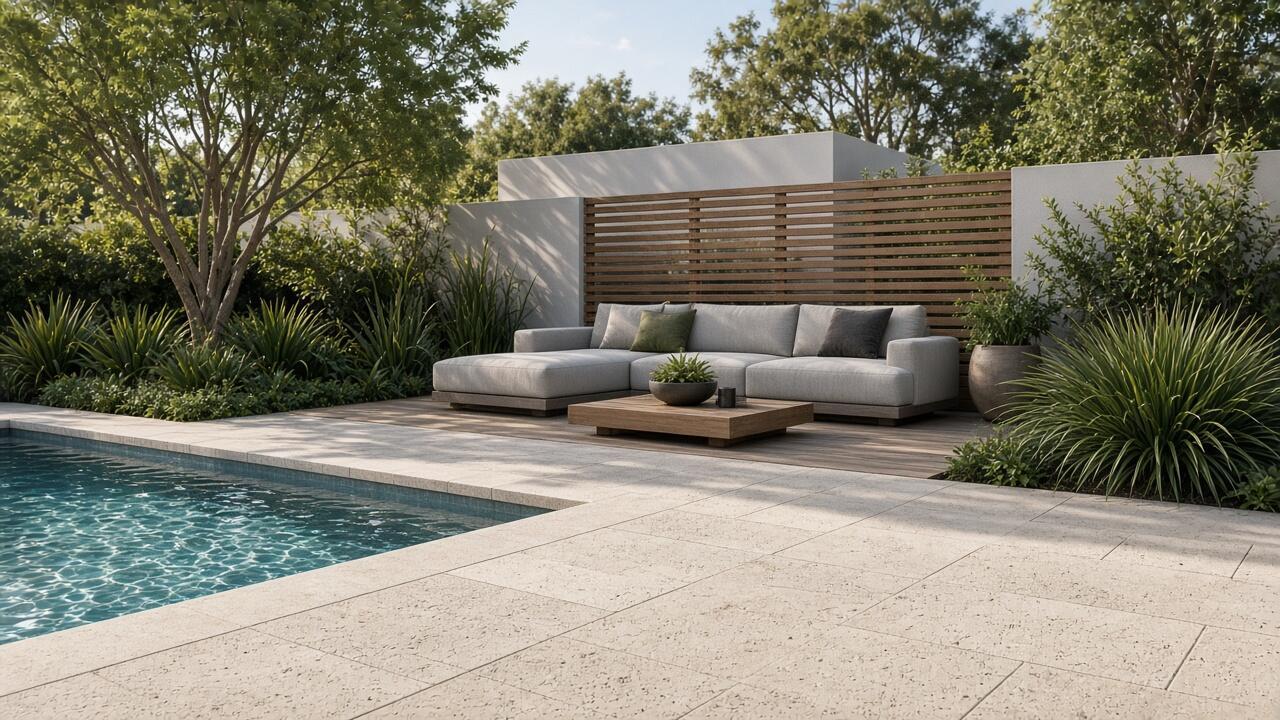
Pool paving directly affects safety, comfort, and aesthetic appeal of your swimming pool area. Unlike internal patios or decorative paths, pool surrounds demand specific performance characteristics—non-slip wet surfaces, heat-reflective materials, proper drainage, and durability under harsh Australian sun and chlorinated water exposure—that narrow suitable material choices substantially.
Getting pool paving right creates safe, comfortable, enjoyable outdoor spaces that extend Melbourne and Peninsula swimming seasons whilst complementing pool design and broader landscape character. Poor choices create scorching-hot surfaces, slippery hazards when wet, or premature material degradation from chlorine and weather exposure.
Understanding paving material options, essential safety considerations, design principles, and realistic cost expectations helps pool owners make informed decisions that balance aesthetics, safety, budget, and long-term maintenance for Australian conditions.
Pool Paving Essential Requirements
Functional demands override decorative preferences for pool surrounds.
Safety: Non-Slip When Wet
Why critical:
- Wet surfaces around pools create slip hazards
- Children running, adults carrying equipment
- Legal liability if guests injured
- Safety overrides all other considerations
- Non-negotiable requirement
Surface texture requirements:
- Rough or textured surface essential
- Smooth polished surfaces dangerous when wet (reject for pools)
- Tumbled, shot-blasted, or naturally rough finishes
- Adequate grip barefoot
- Test before committing (visit showroom, walk on wet sample)
Material-specific slip resistance:
- Exposed aggregate concrete: excellent (rough surface)
- Textured pavers: good to excellent (depends on finish)
- Honed or sandblasted bluestone: good
- Polished bluestone or granite: poor (too smooth, avoid)
- Travertine (tumbled): excellent (natural texture)
Heat Reflectivity
Australian sun intensity:
- Summer pool surrounds reach extreme temperatures
- Dark colours absorb heat (can burn bare feet)
- Smooth dense materials retain heat longer
- Light colours reflect heat (stay cooler)
- Critical Peninsula and Melbourne summer concern
Material heat performance:
- Light-coloured pavers: best (coolest underfoot)
- Exposed aggregate concrete (light aggregate): good
- Travertine: excellent (light colour, porous)
- Dark bluestone: poor (absorbs and retains heat)
- Black or charcoal pavers: avoid (unbearably hot)
Colour selection strategy:
- Cream, beige, light grey: optimal pool surrounds
- Mid-grey: acceptable compromise
- Dark grey or black: avoid (too hot)
- Terracotta or red tones: moderate heat (depends on specific product)
- Test in summer sun if uncertain (material samples on hot day)
Drainage
Water management:
- Pool surrounds constantly wet (splashing, dripping, hosing)
- Standing water creates slip hazard and mosquito breeding
- Adequate fall away from pool essential (minimum 1:100, ideally 1:60)
- Falls toward drainage points or garden beds
- Never fall water toward buildings
Permeable vs impermeable:
- Permeable paving ideal (water drains through joints or material)
- Impermeable solid concrete requires careful grading (falls essential)
- Pool deck drainage must be effective year-round
- Peninsula high rainfall demands robust drainage
For comprehensive guidance on permeable paving options suitable for pool surrounds and other Australian landscape applications, see our detailed guide on permeable paving for stormwater-smart properties.
Chemical and Weather Durability
Chlorine exposure:
- Pool water splashing onto paving
- Chlorinated water can stain or degrade some materials
- Salt-chlorinated pools less aggressive than traditional chlorine
- Sealed paving resists staining better
- Choose proven pool-suitable materials
UV and weather:
- Australian UV intensity fades some materials
- Freeze-thaw not concern Melbourne/Peninsula (unlike colder climates)
- Wet-dry cycling (Peninsula rainfall patterns)
- Wind-blown salt (coastal Peninsula properties)
- Materials must handle harsh Australian outdoor conditions
Pool Paving Material Options
Each material offers specific advantages and trade-offs.
Concrete Pavers
What they are:
- Manufactured concrete units (400x400mm or similar)
- Available numerous colours, textures, sizes
- Most common pool paving Australia
- Affordable, widely available, proven performance
- Range from budget to premium finishes
Advantages:
- Cost-effective: $50-80 per square metre materials (budget range)
- Wide design choice (colours, sizes, patterns)
- Non-slip finishes available (textured or shot-blasted)
- Easy replacement if damaged (individual pavers)
- DIY-friendly installation (sand bed, experienced homeowners)
Disadvantages:
- Quality variation (cheap pavers fade or deteriorate)
- Can be hot underfoot (dark colours particularly)
- Some cheaper pavers deteriorate from chlorine exposure
- Aesthetic less refined than natural stone
- Colour consistency varies between batches
Cost installed:
- Budget pavers: $80-120 per square metre installed
- Premium pavers: $120-180 per square metre installed
- Typical 40 square metre pool surround: $3,200-7,200
- Affordable pool paving option
Best for:
- Budget-conscious projects
- DIY installation (experienced builders)
- Contemporary or casual pool designs
- Family pools (practicality over luxury)
- Easy future repairs or alterations
Travertine
What it is:
- Natural limestone with porous structure
- Imported (typically Turkey, Italy, Mexico)
- Cream, beige, tan tones
- Tumbled or filled-and-honed finishes
- Premium natural stone
Advantages:
- Stays cool underfoot (porous, light colour)
- Excellent slip resistance (tumbled finish)
- Beautiful natural variation
- Luxurious appearance
- Salt and chlorine resistant
Disadvantages:
- Expensive: $120-200 per square metre materials
- Requires sealing (protect from staining)
- Porous structure can harbour algae if not maintained
- Imported material (sustainability consideration)
- Softer than bluestone (can chip or wear)
Cost installed:
- Materials: $120-200 per square metre
- Installation: $80-150 per square metre (careful laying required)
- Total: $200-350 per square metre installed
- Typical 40 square metre pool surround: $8,000-14,000
- Premium pool paving choice
Best for:
- Luxury pool designs
- Hot climate comfort priority
- Mediterranean or resort-style aesthetics
- Properties prioritising cool-underfoot comfort
- Budgets accommodating premium materials
Exposed Aggregate Concrete
What it is:
- Poured concrete with aggregate exposed (stones visible surface)
- Various aggregate types (quartz, granite, river pebble, coloured stones)
- Monolithic surface (no joints)
- Textured non-slip finish
- Mid-range cost option
Advantages:
- Excellent slip resistance (textured surface)
- Cost-effective: $80-120 per square metre installed
- Seamless appearance (no joint lines)
- Durable and long-lasting
- Design flexibility (curves, custom shapes)
Disadvantages:
- Cracking potential (concrete movement)
- Difficult repair (patching visible)
- Hot underfoot if dark aggregate chosen
- Professional installation essential (not DIY)
- Less refined than pavers or stone
Cost installed:
- Standard exposed aggregate: $80-120 per square metre
- Premium aggregate or decorative: $120-180 per square metre
- Typical 40 square metre pool surround: $3,200-7,200
- Competitive with mid-range pavers
Best for:
- Contemporary pool designs
- Curved or irregular pool shapes (seamless flexibility)
- Budget to mid-range projects
- Safety-focused homeowners (excellent slip resistance)
- Low-maintenance preference (no joint sand)
For broader paving material comparison including paths, patios, and driveways, see our comprehensive guide on paving ideas for Australian properties.
Bluestone
What it is:
- Basalt (volcanic rock), quarried Victoria
- Dark grey natural stone
- Honed, sandblasted, or thermal finishes
- Local Melbourne material
- Premium natural stone
Advantages:
- Beautiful sophisticated appearance
- Melbourne heritage aesthetic
- Extremely durable (hardwearing)
- Local material (sustainability, supports local industry)
- Non-slip if honed or sandblasted
Disadvantages:
- Hot underfoot summer (dark colour absorbs heat)
- Expensive: $150-250 per square metre materials
- Heavy (professional installation required)
- Dark colour shows water marks and calcium deposits
- Polished finish too slippery (must specify textured finish)
Cost installed:
- Materials: $150-250 per square metre
- Installation: $100-180 per square metre
- Total: $250-430 per square metre installed
- Typical 40 square metre pool surround: $10,000-17,200
- Premium pool paving (most expensive common option)
Best for:
- Heritage or period homes (Federation, Victorian)
- Sophisticated modern designs
- Melbourne aesthetic alignment
- Shaded pools (heat less concern)
- Budgets prioritising premium materials
Peninsula considerations:
- Locally quarried (Melbourne region bluestone)
- Suits heritage Peninsula properties
- Heat concern summer (requires light-coloured furniture, shade)
- Beautiful but hot barefoot midday summer
For detailed guidance on bluestone paving including suitability, costs, and when bluestone makes sense for Melbourne properties, see our specific guide on bluestone paving in Melbourne contexts.
Natural Stone Alternatives
Sandstone:
- Warmer tones than bluestone (buff, cream, ochre)
- Cooler underfoot than bluestone
- Softer stone (wear and staining concerns)
- $120-200 per square metre materials
- Non-slip textured finishes available
Granite:
- Extremely hard and durable
- Range of colours available
- Expensive ($180-300 per square metre materials)
- Thermal finish creates slip resistance
- Premium choice
Limestone (not travertine):
- Similar appearance to travertine but denser
- More stain-resistant than travertine
- Requires sealing
- $100-180 per square metre materials
- Less common pool choice Australia
Design Considerations
Pool paving integrates with broader landscape and pool design.
Width and Layout
Functional minimums:
- 1.5m wide minimum all sides (usable surround)
- 2-3m wide main entertaining/access side (furniture, lounging)
- Narrow utility sides acceptable (1-1.5m) if space constrained
- Consistent width looks better than varying (unless deliberate feature)
Entertaining zone:
- 3-5m wide paved area one side (outdoor furniture, lounging)
- Connects to house or outdoor kitchen if possible
- Shade structure or umbrella accommodation
- Level area for furniture stability
Safety zone:
- Clear unobstructed paving immediate pool edge (1m minimum)
- No garden beds or tripping hazards within 1m of pool edge
- Non-slip surface extends full surround
- Adequate lighting for evening use
Pool Edge Treatment
Coping options:
- Drop-edge (paving overhangs pool edge slightly)
- Square-edge (paving flush with pool edge)
- Bullnose coping (rounded coping piece)
- Choice affects aesthetics and safety (rounded edges safer, less sharp)
Material continuity:
- Same material pool surround and coping (unified appearance)
- Or contrasting coping (feature border, e.g., bluestone coping with paver surround)
- Consistent material simpler and usually looks better
- Contrasting works well if executed deliberately
Integration with Landscape
Softening hard surfaces:
- Garden beds beyond paved zone (soften hard edges)
- Feature planting near entertaining area (shade, greenery)
- Lawn or garden borders paving (transition to broader landscape)
- Avoid plants directly against pool (leaf litter problem)
Material consistency:
- Match pool paving to patio or path materials (unified palette)
- Or deliberately contrast (pool area statement, distinct zone)
- Continuity generally looks better residential properties
- Too many different materials creates busy appearance
Shade integration:
- Pergola or shade sail over entertaining zone
- Trees planted beyond paved zone (shade without leaf litter in pool)
- Built shade structure coordinated with paving material choice
- Shade critical Peninsula and Melbourne summer comfort
For broader outdoor patio and entertaining space design including pool area integration, see our comprehensive guide on backyard patio ideas for Australian properties.
Installation Essentials
Proper installation determines long-term performance.
Base Preparation
Critical foundation:
- Excavate to firm ground (300mm depth typical)
- 150-200mm compacted crushed rock base
- Level and stable substrate
- Poor base causes paving subsidence or cracking
- Professional installation strongly recommended
Drainage infrastructure:
- Falls designed before installation (minimum 1:100)
- Drainage outlets planned (stormwater or garden)
- Ag pipe perimeter drains if necessary (high water table)
- Surface water must drain away from pool and buildings
Material-Specific Installation
Paver installation:
- Sand bed (30-40mm) over compacted base
- Pavers laid tight (minimal joints)
- Cut edge restraint (concrete or steel)
- Polymeric sand swept into joints (locks pavers)
- Compacted with plate compactor
Poured concrete (exposed aggregate):
- Formwork construction (defines edges)
- Steel reinforcing mesh (crack prevention)
- Concrete pour and finishing
- Surface treatment (expose aggregate)
- Curing (keep moist several days)
Natural stone (bluestone, travertine):
- Mortar bed over concrete slab (permanent fixing)
- Or sand bed (easier future access/repair)
- Careful levelling (avoid lippage between stones)
- Grouting joints (mortared installation)
- Sealing (travertine, sandstone, limestone)
Professional vs DIY
DIY-appropriate:
- Concrete paver installation (experienced DIY builders)
- Small pool surrounds (20-30 square metres)
- Level sites (minimal complication)
- Budget-conscious projects (labour savings significant)
Professional essential:
- Exposed aggregate concrete (specialist skills)
- Natural stone (bluestone, travertine, granite)
- Large or complex layouts
- Sloped sites requiring extensive excavation or drainage
- Where result quality critical (aesthetic or safety)
Installation costs typical:
- DIY materials only: $50-200 per square metre (material dependent)
- Professional supply-and-install: $80-430 per square metre (material dependent)
- Labour component: $40-150 per square metre (complexity and material)
Maintenance and Longevity
Pool paving maintenance requirements vary by material.
Cleaning and Sealing
Regular cleaning:
- Hose and sweep weekly (remove chlorinated water and debris)
- Pressure wash annually (remove algae, calcium deposits, staining)
- Chlorine-safe cleaner for stubborn marks
- Immediate spill cleanup (sunscreen, drinks)
Sealing (material dependent):
- Travertine: seal every 2-3 years (stain protection)
- Sandstone or limestone: seal every 2-3 years
- Concrete pavers: optional (reduces staining, fading)
- Bluestone: optional (enhances colour, reduces water marks)
- Exposed aggregate: optional (some products, not all)
Joint maintenance:
- Polymeric sand joints (pavers): reapply every 3-5 years
- Mortar joints (stone): inspect and repoint as needed
- Weed control traditional sand joints (herbicide or replacement)
Long-Term Performance
Lifespan expectations:
- Concrete pavers: 20-40 years (quality dependent)
- Travertine: 30-50 years (well-maintained)
- Exposed aggregate: 30-50 years (cracking main concern)
- Bluestone: 50-100+ years (extremely durable)
- Natural stone generally outlasts manufactured products
Common issues:
- Calcium deposits (white marks from pool water)
- Chlorine staining (discolouration)
- Algae growth (shaded areas, porous materials)
- Cracking (concrete, mortar joints)
- Fading (cheap pavers, UV exposure)
Prevention strategies:
- Regular cleaning (prevents buildup)
- Sealing appropriate materials (protects surface)
- Proper drainage (reduces standing water, algae)
- Quality materials initially (cheap products deteriorate faster)
- Shade reduces UV fading (pergola or shade sails)
Final Thoughts
Pool paving choices directly affect safety, comfort, and enjoyment of Australian swimming pool areas. Non-slip surfaces, heat-reflective light colours, proper drainage, and durability under chlorine and weather exposure narrow suitable material options substantially, whilst budget and aesthetic preferences determine final selection within functional constraints. Melbourne and Peninsula pool owners achieve safe, comfortable, attractive pool surrounds by prioritising performance requirements—slip resistance and heat management—over decorative preferences alone.
Material selection priorities:
- Safety first: non-slip textured finishes (reject smooth polished surfaces)
- Cool underfoot: light colours (cream, beige, light grey optimal)
- Drainage: falls away from pool, no standing water
- Durability: proven pool-suitable materials (chlorine and UV resistant)
- Aesthetics within functional constraints (not decorative preferences overriding safety)
Budget vs premium comparison:
- Budget: concrete pavers or exposed aggregate ($80-120 per square metre installed)
- Mid-range: premium pavers or sandstone ($120-200 per square metre installed)
- Premium: travertine or bluestone ($200-430 per square metre installed)
- Typical 40 square metre pool surround: $3,200-17,200 (material choice dominant cost factor)
Best material by priority:
- Coolest underfoot: travertine (light colour, porous structure)
- Best slip resistance: exposed aggregate or tumbled travertine
- Most affordable: budget concrete pavers or exposed aggregate
- Most durable: bluestone (50-100+ years)
- Best value balance: mid-range textured pavers or exposed aggregate
Peninsula and Melbourne considerations:
- Summer heat: light colours essential (dark bluestone burns bare feet midday)
- Coastal Peninsula: salt-tolerant materials (all listed options suitable)
- High rainfall: drainage design critical (no standing water)
- Clay soils: robust base preparation prevents subsidence
- Local materials: bluestone (Melbourne quarried, supports local industry)
Installation investment:
- Professional installation recommended most homeowners (drainage, levelling, safety critical)
- DIY paver installation feasible experienced builders (smaller projects)
- Concrete and stone require professional skills (specialist installation)
- Poor installation compromises best materials (false economy saving labour)
Design integration:
- 1.5m minimum width all sides (functional requirement)
- 2-3m wide entertaining zone (furniture, lounging)
- Shade structure accommodation (pergola, shade sail, umbrella)
- Softening with garden beds beyond paved zone (transition to landscape)
- Material continuity with patio or paths (unified palette)
Long-term maintenance:
- Weekly hosing and sweeping (simple, prevents buildup)
- Annual pressure wash (deep clean)
- Sealing every 2-3 years (porous stones)
- Joint maintenance as needed (polymeric sand or repointing)
- Quality materials reduce maintenance (cheaper products deteriorate, stain, fade faster)
Safety cannot be compromised:
- Wet slip resistance overrides aesthetic preferences
- Test samples wet before committing (walk barefoot)
- Textured finishes essential (smooth polished dangerous)
- Adequate lighting evening use (trip hazard prevention)
- Clear surround immediate pool edge (no obstacles within 1m)
Pool paving represents significant investment in pool area functionality, safety, and aesthetics. Prioritising proven pool-suitable materials with non-slip surfaces and heat-reflective properties within budget constraints creates comfortable, safe, attractive Australian pool surrounds that enhance swimming season enjoyment whilst minimising maintenance demands and safety risks over decades of use.
Need a Hand?
Professional lawn and garden services when you need them. Get a quote from our trusted Peninsula partners.
Contact Mowing Magic or Peninsula Hard Yards →Disclosure: We share links to related local services that serve our readers in the Peninsula area.