Permeable Paving for Stormwater-Smart Yards
Understand permeable paving options for Australian properties. Compare permeable pavers, gravel systems, and porous concrete for driveways and paths that reduce stormwater runoff whilst meeting Melbourne council requirements.
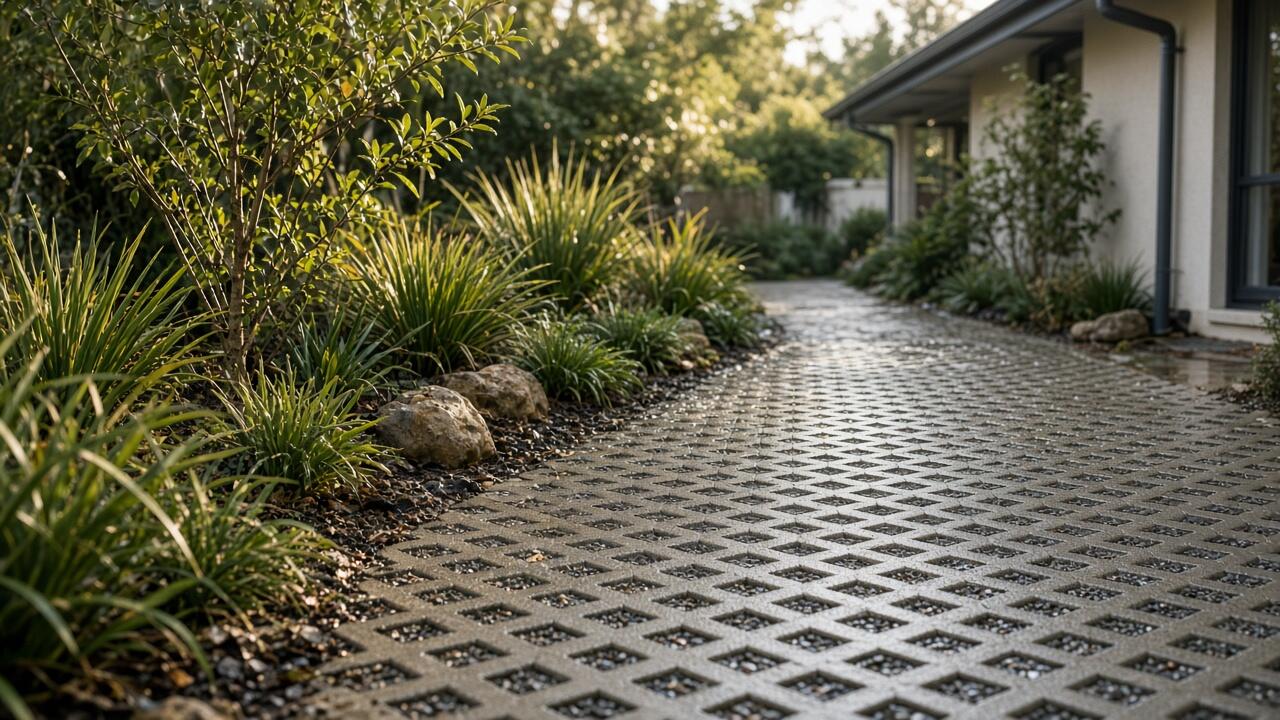
Stormwater management increasingly shapes landscape design decisions across Melbourne and the Peninsula. Council regulations tighten, drainage infrastructure struggles with storm events, and homeowners face flooding consequences when hard surfaces direct excessive runoff into overwhelmed systems.
Permeable paving addresses these challenges by allowing water to infiltrate through paving surfaces rather than running off into stormwater drains. This approach reduces peak flows during heavy rain, recharges groundwater, filters pollutants, and often satisfies council stormwater requirements that restrict traditional impermeable paving areas.
Understanding permeable paving types, applications, costs, and maintenance requirements helps property owners make informed decisions about when permeable systems deliver practical benefits versus situations where traditional drainage remains more appropriate.
Why Councils Push Permeable Paving
Regulatory frameworks increasingly favour permeable surfaces over traditional impermeable paving.
Stormwater Management Concerns
Urban flooding:
- Hard surfaces (concrete, asphalt, conventional pavers) shed 100% of rainfall
- Water concentrates in stormwater systems
- Peak flows overwhelm drainage capacity
- Flash flooding increases with urbanisation
- Melbourne storm events expose infrastructure inadequacy
Infrastructure capacity:
- Existing stormwater pipes sized for historical development
- Infill development adds hard surfaces without increasing drainage capacity
- System upgrades expensive and disruptive
- Councils seek alternatives to infrastructure expansion
- Permeable surfaces reduce demands on pipes
Pollution load:
- Stormwater runoff carries pollutants (oil, sediment, chemicals, lawn treatments)
- Direct discharge to waterways without treatment
- Port Phillip Bay receives urban stormwater pollution
- Permeable paving filters some pollutants through soil
- Reduces environmental impacts
Groundwater recharge:
- Hard surfaces prevent infiltration
- Groundwater tables decline
- Trees and vegetation suffer reduced soil moisture
- Permeable surfaces restore natural infiltration patterns
- Supports established tree health
Melbourne Council Requirements
Many councils now regulate hard surface area:
- Site coverage limits for impermeable surfaces
- Thresholds trigger stormwater management requirements
- New driveways and paving may require permeable design
- Retrospective application to major renovations
- Penalties for non-compliance
Common triggers (check your local council):
- More than 40-60 square metres of new impermeable paving
- New driveways or extensions
- Major renovations or additions
- Subdivisions or new builds
- Infill development in established suburbs
Permeable paving alternatives satisfy requirements:
- Counts as permeable surface area
- May avoid expensive detention tank requirements
- Simplifies planning approvals
- Future-proofs against tightening regulations
- Insurance considerations in flood-prone areas
Melbourne Water regulations:
- STORM tool calculations for large projects
- Retention requirements for residential development
- Permeable paving contributes to retention targets
- Reduces on-site detention needs
- Professional assessment often required
Peninsula Considerations
Coastal water quality:
- Peninsula stormwater flows to Port Phillip Bay
- Marine environment sensitive to pollution
- Council environmental priorities higher
- Permeable paving supports environmental objectives
- Community expectation for environmental responsibility
Sandy soils:
- Peninsula sandy loam drains naturally
- Ideal conditions for permeable paving
- Higher infiltration rates than clay suburbs
- Less risk of saturation failure
- Natural advantage for permeable systems
Clay pockets:
- Some Peninsula areas have clay subsoil
- Infiltration rates lower
- May require drainage to deeper sand layers
- Sub-soil assessment recommended
- Not automatically unsuitable but needs checking
Permeable Paving Types
Different systems suit different applications and budgets.
Permeable Concrete Pavers
What they are:
- Concrete pavers with wide joints (8-12mm typically)
- Joints filled with gravel or coarse sand
- Water infiltrates through joints into sub-base
- Standard paver appearance with functional gaps
- Most common residential permeable paving
Characteristics:
- Visually similar to traditional pavers
- Variety of colours and styles
- Installed on free-draining gravel sub-base
- Gravel joints provide infiltration
- Accessible to DIY installation
Best for:
- Driveways
- Car parking areas
- Paths and patios
- Residential applications
- Council compliance projects
Cost:
- Pavers: $50-100 per square metre (materials)
- Installation: $60-100 per square metre
- Total installed: $110-200 per square metre
- Comparable to traditional paving plus drainage
Pros:
- Familiar appearance
- Wide colour and style range
- DIY-able for experienced builders
- Good vehicle load capacity
- Easier maintenance than porous concrete
Cons:
- Joints can clog over time (maintenance required)
- Weeds in joints (though gravel reduces this)
- Not as high infiltration rate as porous pavers
- Joint material may wash out over years
- Requires periodic topping-up joints
Porous Concrete Pavers
What they are:
- Pavers manufactured with porous concrete
- Water infiltrates through the paver itself (not just joints)
- Higher infiltration rates than standard pavers
- Specialised product (fewer suppliers)
- Engineered for permeability and strength
Characteristics:
- Open pore structure allows water through
- Grey appearance typically (limited colours)
- Industrial or contemporary aesthetic
- Higher infiltration capacity
- Professional installation recommended
Best for:
- High rainfall areas
- Council requirement compliance
- Commercial applications
- Driveways with heavy use
- Situations requiring maximum infiltration
Cost:
- Pavers: $80-150 per square metre
- Installation: $70-120 per square metre
- Total installed: $150-270 per square metre
- Premium over standard permeable pavers
Pros:
- Very high infiltration rate
- Lower clogging risk than joint-only systems
- Meets strict stormwater requirements
- Long-lasting permeability
- Strong load-bearing capacity
Cons:
- More expensive than traditional options
- Limited aesthetic choices
- Industrial appearance (not suited to all homes)
- Professional installation essential
- Specialist product (fewer suppliers)
Permeable Gravel Systems
What they are:
- Gravel surface held in plastic grid cells
- Honeycomb grid prevents gravel dispersal
- Vehicle-stable gravel surface
- Drainage through gravel to soil below
- Informal aesthetic
Common products:
- Plastic honeycomb grids
- Concrete or plastic grass pavers filled with gravel
- Geotextile-backed systems
- DIY or professional installation
- Various cell sizes and strengths
Best for:
- Informal driveways
- Occasional-use parking
- Garden paths
- Bush properties
- Budget permeable solutions
Cost:
- Grid systems: $30-70 per square metre (materials)
- Gravel fill: $20-40 per square metre
- Installation: $40-80 per square metre
- Total: $90-190 per square metre installed
- Cheapest permeable option typically
Pros:
- Lowest cost permeable paving
- Very high infiltration rates
- Easy to repair
- Suits informal settings
- Good for gentle slopes
Cons:
- Gravel aesthetic not suited to formal areas
- Gravel migrates despite grids (maintenance)
- Uncomfortable to walk on barefoot
- Weeds can establish in gravel
- Less refined appearance than pavers
Porous Asphalt and Concrete
What they are:
- Poured surfaces with open pore structure
- Modified mix design creates voids for water infiltration
- Commercial and municipal applications primarily
- Specialist installation required
- Large-scale projects
Characteristics:
- Similar appearance to standard asphalt/concrete
- Continuous surface (no joints)
- High infiltration capacity
- Professional installation essential
- Long-term durability proven
Best for:
- Commercial driveways
- Large car parks
- Council footpaths
- Industrial applications
- Large residential driveways (rare)
Cost:
- $100-200+ per square metre installed
- Economies of scale on large projects
- Small residential projects expensive
- Specialist contractors required
- Premium permeable solution
Pros:
- Proven performance
- High infiltration rates
- Smooth surface
- Long lifespan with proper maintenance
- Handles heavy vehicles
Cons:
- Expensive for small residential projects
- Specialist contractors required
- Maintenance critical (pressure cleaning to prevent clogging)
- Not DIY-friendly
- Overkill for typical residential applications
For broader paving comparison including traditional impermeable options, see our guide on paving ideas for Australian properties.
Permeable Pavers vs Gravel: Practical Comparison
Choosing between permeable pavers and gravel systems involves trade-offs.
Aesthetic and Formality
Permeable pavers:
- Formal appearance
- Suits traditional and contemporary homes
- Wide colour and pattern options
- Neat, finished look
- Complements main entries and visible areas
Gravel systems:
- Informal, casual aesthetic
- Suits bush gardens, coastal properties
- Limited to gravel colours
- Relaxed, cottage feel
- Better for low-visibility areas
Cost
Permeable pavers:
- $110-270 per square metre installed
- Mid-to-high cost
- Similar to quality traditional paving
- Long-term value good
- Higher upfront investment
Gravel systems:
- $90-190 per square metre installed
- Budget-friendly permeable option
- Significant savings over pavers
- Maintenance ongoing (gravel top-up)
- Best value for informal applications
Maintenance
Permeable pavers:
- Occasional joint material top-up
- Pressure cleaning every 2-3 years (prevent clogging)
- Weed control in joints
- Moderate maintenance
- Long service life with care
Gravel systems:
- Gravel migration requires top-up
- Weeds establish in gravel (herbicide or hand-weeding)
- Grid damage from heavy vehicles (repair needed)
- Higher ongoing maintenance
- Shorter aesthetic lifespan
Vehicle Use
Permeable pavers:
- Excellent vehicle load capacity
- Daily car use no problem
- Heavy vehicles acceptable (proper base)
- Stable surface (no movement)
- Preferred for driveways
Gravel systems:
- Light vehicle use fine
- Heavy vehicles can damage grids
- Movement under turning wheels
- Not ideal for daily heavy use
- Better for occasional parking
Infiltration Capacity
Permeable pavers:
- Moderate infiltration (joint-dependent)
- Meets most council requirements
- Can clog over time if not maintained
- Adequate for typical Melbourne rainfall
- Professional design ensures performance
Gravel systems:
- Very high infiltration
- Exceeds typical requirements
- Lower clogging risk
- Excellent for heavy rainfall areas
- Over-engineered for most situations (but no downside)
Installation Difficulty
Permeable pavers:
- Moderate DIY difficulty
- Similar to traditional paver installation
- Proper base preparation critical
- Achievable for experienced DIY builders
- Professional recommended for driveways
Gravel systems:
- Easier DIY installation
- Less precise than pavers
- Forgiving of minor errors
- Good weekend DIY project
- Less skill required
Driveways and Paths: Best Applications
Permeable paving works better in some applications than others.
Driveways
When permeable paving ideal:
- New driveway construction
- Driveway extensions
- Council requirements triggered
- Flooding or drainage issues
- Environmental priorities
Recommended approach:
- Permeable concrete pavers (standard joint width)
- Proper sub-base design (300mm+ free-draining gravel)
- Professional installation for critical areas
- Matches house aesthetic
- Long-term cost-effective solution
Cost reality (typical residential driveway, 40 square metres):
- Permeable pavers: $4,400-8,000 installed
- Traditional concrete: $3,200-6,000 installed
- Exposed aggregate: $3,600-6,000 installed
- Premium: $800-2,000 for permeable option
- Council compliance included
- May avoid detention tank ($3,000-8,000+)
Maintenance considerations:
- Pressure clean annually or biennially
- Top-up joint material occasionally
- Weed control as needed
- Moderate ongoing effort
- Similar to traditional paving maintenance
Garden Paths
When permeable makes sense:
- Crossing lawn or garden beds
- Paths through established trees
- Heavy clay soils with poor drainage
- Environmental priorities
- Council requirements for large paving areas
Path-specific benefits:
- Tree roots access water through path
- Reduces waterlogging adjacent garden beds
- Natural infiltration maintains soil moisture
- Less impact on established vegetation
- No pooling water on path surface
Recommended options:
- Gravel grid systems (informal gardens)
- Permeable pavers (formal gardens)
- Stepping stones with gravel infill
- Combination approaches
- Match garden style
Cost (typical garden path, 1.2m wide x 10m long = 12 square metres):
- Gravel grid system: $1,100-2,300 installed
- Permeable pavers: $1,300-3,200 installed
- Traditional pavers: $960-1,900 installed
- Moderate premium for permeable option
- Justified by drainage benefits
Patios and Outdoor Living
Generally not ideal for permeable paving:
- Furniture legs can catch in wide joints
- Gravel uncomfortable underfoot
- Aesthetic priorities favour traditional paving
- Patios typically covered (less stormwater impact)
- Council requirements rarely apply to covered areas
Exception situations:
- Large uncovered patio areas (over 40 square metres)
- Council regulations apply
- Integrated into broader stormwater strategy
- Environmental priorities override comfort concerns
Better approach:
- Traditional paving for patio itself
- Permeable paving for surrounding paths and driveways
- Strategic placement maximises benefits
- Comfort and function maintained
- Stormwater management where appropriate
For comprehensive patio planning that balances drainage and usability, see our guide on patio ideas for Australian properties.
Sub-Base Requirements
Permeable paving only works with proper base design.
Critical Base Components
Free-draining sub-base:
- 300mm minimum depth (deeper in poor soils)
- Clean crushed rock (10-20mm blue metal or road base)
- No fines or sand in sub-base (prevents infiltration)
- Properly compacted (but not over-compacted)
- Creates reservoir for water infiltration
Geotextile fabric:
- Separates sub-base from subsoil
- Prevents fine soil migrating into gravel (clogging)
- Allows water through whilst filtering sediment
- Essential component (not optional)
- Low cost, high value
Drainage backup:
- Consider ag pipe at sub-base level in poor-draining soils
- Provides overflow capacity during extreme rainfall
- Directs excess water to stormwater or drainage point
- Insurance against saturation
- Critical in clay soils
Surface grade:
- Slight fall still required (1:100 minimum)
- Directs excess surface water during intense rain
- Prevents pooling
- Backup to infiltration capacity
- Professional design considers this
Soil Considerations
Sandy soils (ideal):
- Peninsula sandy loam perfect for permeable paving
- High infiltration rates
- Low saturation risk
- Standard sub-base depth adequate
- Natural advantage for permeable systems
Clay soils (challenging but workable):
- Some Melbourne suburbs have heavy clay
- Lower infiltration rates
- Deeper sub-base helps (400mm+)
- May require drainage to stormwater
- Professional assessment recommended
- Not automatically unsuitable
Unknown soils:
- Percolation test advisable
- Dig test hole, fill with water, observe drainage
- Fast drainage (gone in hours): suitable for permeable paving
- Slow drainage (pools for days): needs drainage backup or unsuitable
- Professional soil assessment for large projects
When permeable paving unsuitable:
- Heavy clay with no drainage outlet
- High water table (water within 600mm of surface)
- Contaminated soils
- Severely compacted fill
- Professional advice: choose traditional paving with proper drainage
For comprehensive drainage guidance including clay soil challenges, see our guide on garden drainage for wet Victorian yards.
Maintenance Requirements
Permeable paving requires periodic maintenance to sustain infiltration capacity.
Essential Maintenance Tasks
Pressure cleaning (annually or biennially):
- Removes sediment from joints or pores
- Restores infiltration capacity
- Prevents clogging
- Simple DIY task
- Most critical maintenance activity
Joint material top-up (permeable pavers):
- Gravel or coarse sand washes out gradually
- Top-up every 2-4 years typically
- Maintains infiltration function
- Prevents paver movement
- Low cost, easy task
Weed control:
- Weeds establish in gravel joints
- Herbicide spot-treatment effective
- Hand-weeding for organic preference
- Less weed issue than expected (gravel hostile to most weeds)
- No worse than traditional paver joints
Avoid sealing:
- Never seal permeable paving (destroys permeability)
- Some homeowners seal unknowingly
- Defeats entire purpose
- Irreversible without removing pavers
- Educate landscape contractors about permeable systems
Winter leaf accumulation:
- Leaves decompose in joints (can clog)
- Regular sweeping or blowing
- More critical in heavily-treed areas
- Minimal effort maintains function
- Prevent organic matter build-up
Maintenance Costs
Annual pressure cleaning:
- DIY: $0 (own pressure cleaner)
- Hire pressure cleaner: $80-150 per day
- Professional: $200-400 for typical driveway
- Once or twice per year
- Essential for longevity
Joint material top-up:
- Gravel: $50-100 per cubic metre
- Typical driveway: 0.2-0.5 cubic metres needed every few years
- DIY installation: free
- Professional: $150-300 every 3-5 years
- Minimal ongoing cost
Total annual maintenance:
- DIY: $50-100 (materials only)
- Professional: $200-500
- Comparable to traditional paving maintenance
- Necessary for system function
- Prevents expensive performance loss
Performance Longevity
With proper maintenance:
- 20-30+ year infiltration performance
- Similar lifespan to traditional paving
- Maintained systems perform indefinitely
- Justify permeable paving investment
- Long-term cost-effective
Without maintenance:
- Clogging within 5-10 years
- Reduced infiltration capacity
- Still functions better than impermeable paving (some infiltration remains)
- Council compliance may be questioned
- Restoration possible (intensive pressure cleaning)
Installation Considerations
DIY vs Professional
DIY-able projects:
- Garden paths (under 20 square metres)
- Simple rectangular driveways
- Gravel grid systems
- Experienced DIY builders comfortable with traditional paving
- Low-stakes applications (not main driveway)
DIY requirements:
- Understand sub-base requirements (critical)
- Excavation to 350-400mm depth
- Proper compaction equipment (plate compactor)
- Level and fall competence
- Base preparation more critical than traditional paving
Professional recommended:
- Main driveways (40+ square metres)
- Vehicle-critical areas
- Council compliance documentation required
- Clay soils or drainage challenges
- Warranty and insurance considerations
Professional benefits:
- Proper sub-base design and installation
- Drainage backup integration
- Engineering for vehicle loads
- Council approval documentation
- Performance guarantee
Installation costs (professional):
- Permeable pavers: $60-100 per square metre labour
- Gravel systems: $40-80 per square metre labour
- Includes excavation, sub-base, paver laying, finishing
- Similar to traditional paving installation
- Premium reflects larger joints and sub-base requirements
Timing and Conditions
Best installation seasons:
- Spring or autumn (Melbourne)
- Avoid winter (wet ground complicates excavation and compaction)
- Avoid peak summer (ground too hard)
- Dry conditions essential for base compaction
- Plan around weather
Site preparation:
- Mark utilities (call Dial Before You Dig)
- Excavation access for machinery
- Disposal of excavated material
- Protect established trees during excavation
- Site-specific challenges
Melbourne Stormwater Rules and Compliance
Understanding requirements prevents expensive surprises.
When Permeable Paving May Be Required
Common triggers (varies by council):
- New driveways or extensions over 40-60 square metres
- Hard surface area exceeds site percentage thresholds
- New dwelling or major renovation
- Subdivision
- Stormwater management plan required
Check your council’s specific requirements:
- Most councils publish stormwater guidelines online
- Planning enquiries for major projects
- Some councils have online calculators
- Pre-purchase or pre-planning investigation advisable
- Regulations tighten progressively (future-proof)
STORM calculator (Melbourne Water):
- Required for some development applications
- Calculates stormwater retention needs
- Permeable paving contributes to compliance
- Professional town planner or engineer prepares
- Significant projects only
Documentation and Approval
Planning permit applications:
- May require stormwater management report
- Engineer or landscape architect designs permeable system
- Documentation shows infiltration rates, sub-base design
- Council assesses compliance
- Approval conditions specify permeable paving
Building permit considerations:
- Major driveways may require building permit
- Engineer certification for structural loads
- Permeable system design included
- Compliance with approved plans
- Sign-off before occupation
Professional design value:
- Ensures council compliance
- Optimises infiltration performance
- Documents installation for future reference
- Reduces risk of expensive non-compliance
- $800-2,500 for typical residential project
Final Thoughts
Permeable paving delivers genuine stormwater management benefits whilst satisfying increasingly common council requirements for new hard surfaces across Melbourne and Peninsula properties. For driveways, paths, and car parking areas, permeable systems reduce flooding risk, support groundwater recharge, and meet regulatory frameworks driving property owners toward sustainable drainage solutions.
When permeable paving makes sense:
- New driveways or driveway extensions
- Council regulations require permeable surfaces
- Flooding or drainage problems
- Environmental priorities
- Clay soils with drainage challenges
Best permeable options for residential use:
- Permeable concrete pavers (wide joints): versatile, moderate cost, familiar aesthetic
- Gravel grid systems: budget option, informal aesthetic, very high infiltration
- Porous concrete pavers: maximum infiltration, premium cost, council compliance
Cost reality: Permeable paving costs $800-2,000 more than traditional driveways for typical residential projects (40 square metres). However, avoiding detention tank requirements ($3,000-8,000+) or satisfying council conditions for planning approval often justifies the premium. For properties with drainage issues, eliminating flooding problems delivers value beyond simple cost comparison.
Maintenance commitment: Annual pressure cleaning and occasional joint material top-up maintain infiltration performance. Total annual cost $50-500 depending on DIY or professional approach. Without maintenance, systems clog within 5-10 years, reducing effectiveness. Proper maintenance sustains performance for 20-30+ years, making permeable paving long-term cost-effective solution.
Sub-base critical: Permeable paving only functions with proper 300mm+ free-draining gravel sub-base, geotextile separation, and adequate drainage backup in poor-draining soils. Base preparation more critical than traditional paving. Skimping on base destroys system performance and wastes paver investment.
Melbourne and Peninsula context: Sandy Peninsula soils ideal for permeable paving (high natural infiltration). Melbourne clay suburbs require deeper sub-base and drainage backup but still viable. Council stormwater regulations increasingly favour permeable surfaces, making early adoption future-proof against tightening requirements.
Strategic application: Use permeable paving for driveways, paths, and parking areas where stormwater runoff highest. Patios and covered outdoor living areas better served by traditional paving (comfort, aesthetics, less rainfall impact). Strategic placement maximises stormwater benefits whilst maintaining function and comfort in living spaces.
Permeable paving represents practical response to urban stormwater challenges rather than environmental virtue signalling. For properties triggering council requirements, facing drainage issues, or prioritising sustainable landscape solutions, permeable systems deliver functional benefits whilst satisfying regulatory frameworks that increasingly restrict traditional impermeable hard surfaces across Australian residential properties.
Need a Hand?
Professional lawn and garden services when you need them. Get a quote from our trusted Peninsula partners.
Contact Mowing Magic or Peninsula Hard Yards →Disclosure: We share links to related local services that serve our readers in the Peninsula area.