Front Yard Landscaping Ideas Australia
Transform your front yard with practical Australian landscaping ideas. Create curb appeal with low-maintenance natives, smart hardscape balance, and designs that work with Peninsula conditions.
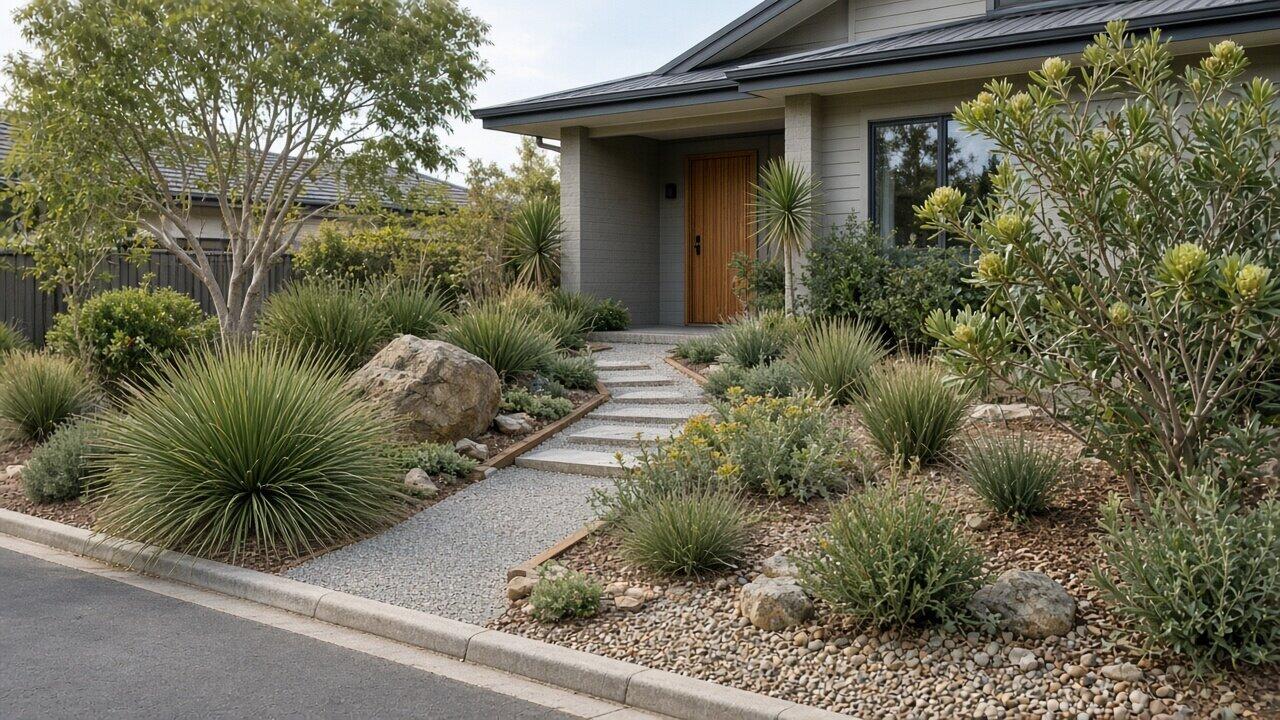
Your front yard creates first impressions, sets the tone for your property, and makes up a significant portion of your overall landscape investment. Getting it right means balancing curb appeal with practical considerations like maintenance, local regulations, and plants that actually thrive in Australian conditions.
Here’s your guide to front yard landscaping that works for Australian properties, with specific insights for Peninsula homeowners navigating coastal winds, clay soils, and council street tree regulations.
Front Yard Functions and Priorities
Before choosing plants or materials, understand what your front yard needs to achieve:
Essential functions:
- Safe, clear path from street to front door
- Vehicle access and parking (where applicable)
- Privacy screening without creating fortress appearance
- Water management (drainage from street, roof runoff)
- Property boundary definition
Desirable additions:
- Visual appeal and curb appeal
- Low maintenance once established
- Seasonal interest
- Wildlife habitat
- Street presence that suits neighbourhood character
Peninsula-specific considerations:
- Wind tolerance (coastal exposure)
- Clay soil management
- Salt tolerance (coastal properties)
- Native vegetation overlays (some areas)
- Street tree regulations
The Curb Appeal Formula
Successful front yards balance three elements:
1. Structure (Hardscape)
Paths and paving:
- Clear, safe route from street to front door
- Minimum 1.2m wide for comfortable access
- Well-lit for evening arrivals
- Non-slip surface
Driveway (if applicable):
- Appropriate width (2.5m minimum single, 5m double)
- Durable surface for vehicle loads
- Proper drainage away from house
- Connects naturally with street
Edging and definition:
- Garden bed borders clearly defined
- Lawn edges maintained
- Transition between elements looks intentional
Feature hardscape:
- Letterbox or entry pillar
- Retaining walls if sloped
- Garden bed borders (steel, concrete, timber)
2. Plantings (Softscape)
Layers and structure:
- Feature trees (if space permits and council allows)
- Structural shrubs (framework planting)
- Mid-height filler plants
- Groundcovers and mulch
Distribution:
- Either side of entry path (balanced, not identical)
- Screening boundary where privacy needed
- Feature planting near entry or visible from street
- Corner plantings to soften house/fence edges
Proportion:
- Plantings should complement, not overwhelm
- Balance between garden beds and open space
- Consider mature plant sizes, not just current size
3. Lawn or Alternative
Lawn benefits:
- Traditional appearance
- Soft, usable surface
- Cooling effect in summer
- Child and pet friendly
Lawn drawbacks:
- Ongoing maintenance (mowing, edging, feeding)
- Water requirements (especially summer)
- Not low-maintenance
- Struggles in very shaded or poor soil areas
Lawn alternatives:
- Native groundcovers (Myoporum, native violet)
- Gravel or pebble mulch with planting
- Low groundcover gardens (no-lawn designs)
- Combination approach (reduced lawn area)
Low-Maintenance Native Plant Selection
Australian natives are the obvious choice for low-maintenance front yards, but species selection matters enormously.
Structural Feature Plants (Peninsula-Appropriate)
Small trees (where permitted):
- Coastal Banksia (Banksia integrifolia): Salt tolerant, wind hardy, bird attracting
- Lemon-scented Myrtle (Backhousia citriodora): Fragrant, neat form, 4-6m
- Tuckeroo (Cupaniopsis anacardioides): Coastal tough, dense canopy, 8-10m
Large shrubs (structure plants):
- Westringia varieties (Coastal Rosemary): Grey-green foliage, white/mauve flowers, wind tolerant
- Correa varieties: Winter flowers, tough, various colours, bird attracting
- Grevillea varieties (medium types): Long flowering, bird attracting, many forms
Mid-Height Filler Plants
Proven Peninsula performers:
- Coastal Banksia (smaller cultivars)
- Lomandra varieties (strappy foliage, tough, reliable)
- Dianella varieties (flax lily) - blue flowers, purple berries
- Anigozanthos (Kangaroo Paw) - striking flowers, well-drained soil
- Myoporum parvifolium varieties - groundcover or mounding forms
Groundcovers
Reliable low growers:
- Native Violet (Viola hederacea): Shade tolerant, soft look, spreads
- Myoporum parvifolium: Fast spreading, white flowers, tough
- Carpobrotus varieties (Pigface): Coastal tough, salt tolerant, succulent
- Dichondra repens (Kidney Weed): Lawn alternative, soft, shade tolerant
Feature Grasses
Textural accents:
- Lomandra longifolia varieties - architectural strappy leaves
- Poa labillardieri (Tussock Grass) - fine texture, grey-green, native
- Themeda triandra (Kangaroo Grass) - fine textured, autumn colour
- Austrostipa varieties (Spear Grass) - movement, fine texture, native
Hardscape Balance
Front yards need functional hardscape, but balance prevents harsh, over-paved appearance.
Path Design
Materials:
- Pavers (concrete or natural stone): Most common, durable, wide range
- Exposed aggregate concrete: Textured, non-slip, modern
- Crazy paving: Natural stone, informal appearance, traditional
- Stepping stones through groundcover: Informal, cottage garden feel
Layout options:
- Straight path: Direct, formal, suits modern homes
- Curved path: Softer, creates interest, suits larger fronts
- Stepping stone path: Informal, minimises hardscape
- Wide path with garden beds: Generous, welcoming approach
For detailed paving guidance, see our paving ideas for Australian paths and patios.
Driveway Considerations
Surface options:
- Plain concrete: Budget-friendly, durable
- Exposed aggregate: Textured finish, non-slip
- Pavers: Flexible, easier to repair, premium look
- Permeable options: Council-preferred for stormwater management
Design tips:
- Avoid dominating front yard with excessive paving
- Consider reduced-width approach (pavers with grass gaps)
- Ensure proper drainage (slope away from house)
- Match or complement house and path materials
Garden Bed Edging
Clear definition between lawn and garden beds improves appearance:
Options:
- Steel edging: Clean lines, modern, durable, invisible when installed
- Concrete sleeper borders: Raised beds, modern appearance
- Timber sleepers: Natural look, defines change in level
- Brick or stone edging: Traditional, suits older homes
- No physical edge: Maintained line only (regular edging needed)
Edging reduces maintenance by preventing grass invasion and creating clear mowing lines.
Street Tree Regulations
Most Australian councils regulate street trees strictly.
Common Rules
Setback requirements:
- Minimum distance from street (often 3-6 metres)
- Distance from power lines (overhead clearance zones)
- Distance from driveways and crossovers
- Clearance from underground services
Height restrictions:
- Maximum mature height limits
- Restrictions near power lines
- Visibility requirements at street corners
Approved species lists:
- Many councils maintain approved street tree lists
- Prohibited species (invasive, problematic roots, etc.)
- Native vegetation overlays may require indigenous species
Permit requirements:
- Tree removal often requires permit (even on private property)
- Street tree planting may require approval
- Penalties for removing protected trees
Peninsula Reality
Mornington Peninsula Shire has:
- Native vegetation overlays across many areas
- Significant tree protections
- Approved street tree species lists
- Strict removal permit requirements
Check with council before planting or removing front yard trees. What seems like your property may be protected vegetation or regulated street tree zone.
Privacy Without Fortress Appearance
Front yard privacy is tricky - you want screening without looking unwelcoming or closed off.
Effective Screening Strategies
Mid-height plants (1.2-1.8m):
- Screen from street level view
- Don’t block natural surveillance
- Maintain open, safe appearance
- Westringia, Correa, Grevillea varieties work well
See-through boundaries:
- Open-style fencing (vertical battens, pickets)
- Hedge with see-through quality (not solid wall)
- Combination of solid and open sections
- Maintains street connection whilst providing privacy
Strategic placement:
- Screen sitting areas or windows
- Leave entry visible and welcoming
- Don’t screen entire front (fortress appearance)
- Balance privacy with safety
Layered approach:
- Front boundary low or open
- Mid-yard screening at functional height
- Near-house privacy where needed
Hedging Options
Formal hedge plants:
- Murraya (Mock Orange): Dense, fragrant flowers, requires trimming
- Lilly Pilly varieties: Fast growing, various forms, regular trimming needed
- Viburnum odoratissimum: Large leaf, fast, needs space
Informal hedge plants (Peninsula-suitable):
- Westringia varieties: Loose hedge, minimal trimming
- Coastal Banksia: Informal screen, bird attracting
- Correa varieties: Loose form, flowering, low maintenance
Native alternatives:
- Acacia varieties (wattles): Fast screening, relatively short-lived
- Melaleuca varieties: Tough, screening form, bird attracting
For hedge trimming and maintenance guidance, see our hedge trimming basics guide.
Slope and Drainage Management
Sloped front yards need special consideration.
Sloped Site Solutions
Retaining walls:
- Create level planting areas
- Manage erosion
- Add visual interest through terracing
- Materials: concrete sleepers, stone, gabions
For retaining wall options, see our detailed guide to retaining wall ideas for Australian yards.
Terraced garden beds:
- Multiple levels down slope
- Creates planting opportunities
- Breaks up large slope visually
- Manages water flow
Strategic groundcovers:
- Stabilise slopes with spreading plants
- Myoporum, Carpobrotus, native grasses
- Reduces erosion while establishing
- Lower maintenance than lawn on slopes
Drainage Considerations
Water flow management:
- Direct street runoff away from house
- Path and driveway drainage essential
- Garden beds should absorb, not channel water
- Consider ag pipe in clay soil areas
Peninsula clay challenges:
- Poor natural drainage
- Surface water pooling
- Soggy winter beds
- Requires active drainage design (swales, pipes, permeable areas)
For specific drainage solutions, see our guide to garden drainage fixes for wet Victorian yards.
Design Styles for Australian Front Yards
Contemporary Native
Characteristics:
- Native plants, modern arrangement
- Clean lines and structure
- Limited lawn or no lawn
- Architectural plant forms
- Gravel or pebble mulch
Plant palette:
- Structural grasses (Lomandra, Poa)
- Feature natives (Banksias, Grevilleas)
- Groundcover mass plantings
- Limited species (repeat for impact)
Best for: Modern homes, low-maintenance goals, drought-conscious, Peninsula native vegetation areas
Traditional Garden
Characteristics:
- Mix of natives and exotics
- Lawn as central feature
- Defined garden beds
- Flowering shrubs and perennials
- Formal or cottage garden feel
Plant palette:
- Feature shrubs with seasonal interest
- Perennial flowers
- Maintained lawn
- Pathway edging plants
Best for: Traditional homes, families wanting usable lawn, classic street appeal
Minimalist Modern
Characteristics:
- Minimal plant variety (repeat same species)
- Bold architectural plants
- Large format paving
- Gravel or pebble mulch
- Very low maintenance
Plant palette:
- Repeated structural plants (Lomandra, Strappy plants)
- Feature grass plantings
- Minimal or no lawn
- Clean, simple planting
Best for: Modern architecture, time-poor homeowners, contemporary street aesthetic
Coastal Informal
Characteristics:
- Relaxed, beachy appearance
- Coastal-tough natives
- Informal hedge boundaries
- Gravel paths or stepping stones
- Windbreak plantings
Plant palette:
- Coastal Banksia, Westringia, Carpobrotus
- Silver and grey-green foliage
- Salt-tolerant selections
- Informal layered planting
Best for: Peninsula coastal properties, relaxed lifestyle, wind-exposed sites
Maintenance Planning
Low-maintenance doesn’t mean no maintenance.
Establishment Phase (First 2 Years)
Requirements:
- Regular watering until plants established
- Weed control (mulch helps but not foolproof)
- Plant failures replaced
- Adjustment pruning as plants grow
Effort: Moderate to high initially, decreasing as plants establish
Established Phase (After 2+ Years)
Annual tasks:
- Mulch top-up (annually or biannually)
- Pruning structural plants (1-2 times per year)
- Weed control (reduced if good groundcovers established)
- Plant replacement as needed
Ongoing tasks:
- Lawn mowing (if lawn included): Weekly in growing season
- Edging (lawn edges): Monthly in growing season
- Path sweeping: As needed
- Deadheading flowers: Optional for appearance
Low-maintenance reality: Even “low-maintenance” front yards need 2-4 hours monthly maintenance after establishment. No front yard is truly maintenance-free.
Budget Expectations
Basic DIY front yard (50-80m² planting):
- Plants (tubes to 200mm pots): $500-1,000
- Mulch: $200-400
- Edging: $200-400
- Path materials: $500-1,500 (depending on extent)
- Total DIY: $1,400-3,300
Professional design and installation:
- Design consultation: $500-1,500
- Basic planting and mulch: $80-150 per m²
- Paths and hardscape: $200-400 per m²
- Feature elements: $500-5,000+ (letterbox, retaining, etc.)
- Total professional: $5,000-15,000+ (varies enormously with size and complexity)
Common Front Yard Mistakes
Undersized paths: 900mm paths feel narrow - use 1.2m minimum.
Overcrowding plants: Give plants space for mature size.
Ignoring council regulations: Street trees and fences have strict rules.
Poor drainage: Water pooling or flowing toward house causes expensive problems.
High-maintenance selections: Plants requiring constant pruning or water create ongoing burden.
No lighting: Dark front entries are unwelcoming and unsafe.
Fortress boundaries: Solid screening makes property feel closed-off and can reduce natural surveillance.
Final Thoughts
Successful front yard landscaping balances multiple goals:
- Visual appeal that enhances your property
- Practical function (access, parking, drainage)
- Manageable maintenance you’ll actually keep up with
- Appropriate plantings for your local conditions
- Compliance with council regulations
- Budget that makes sense for your property value
Start with the functional requirements (paths, drainage, boundaries), then layer in the aesthetic elements (plantings, feature hardscape, lighting).
Choose plants that genuinely suit Peninsula conditions - wind-tolerant, clay-soil adapted, low-water once established. Coastal rosemary (Westringia), Lomandra varieties, and Coastal Banksias are workhorses for good reason.
And remember: your front yard is the first thing you see when arriving home and the last thing you see when leaving. Make it a space that welcomes you, represents your home well, and doesn’t create a maintenance burden you’ll grow to resent.
Good front yard landscaping isn’t about following trends - it’s about creating a functional, attractive entry to your home that works with your local conditions and suits how you actually live.
Need a Hand?
Garden bed installation, planting, and maintenance services. Get a quote from our trusted Peninsula partners.
Contact Peninsula Hard Yards →Disclosure: We share links to related local services that serve our readers in the Peninsula area.