Gabion Retaining Walls for Sloped Blocks
Modern rock-filled gabion cages offer excellent drainage and cost-effective retaining for sloped Peninsula blocks. Understand pros, cons, and when professional installation pays off for coastal Australian properties.
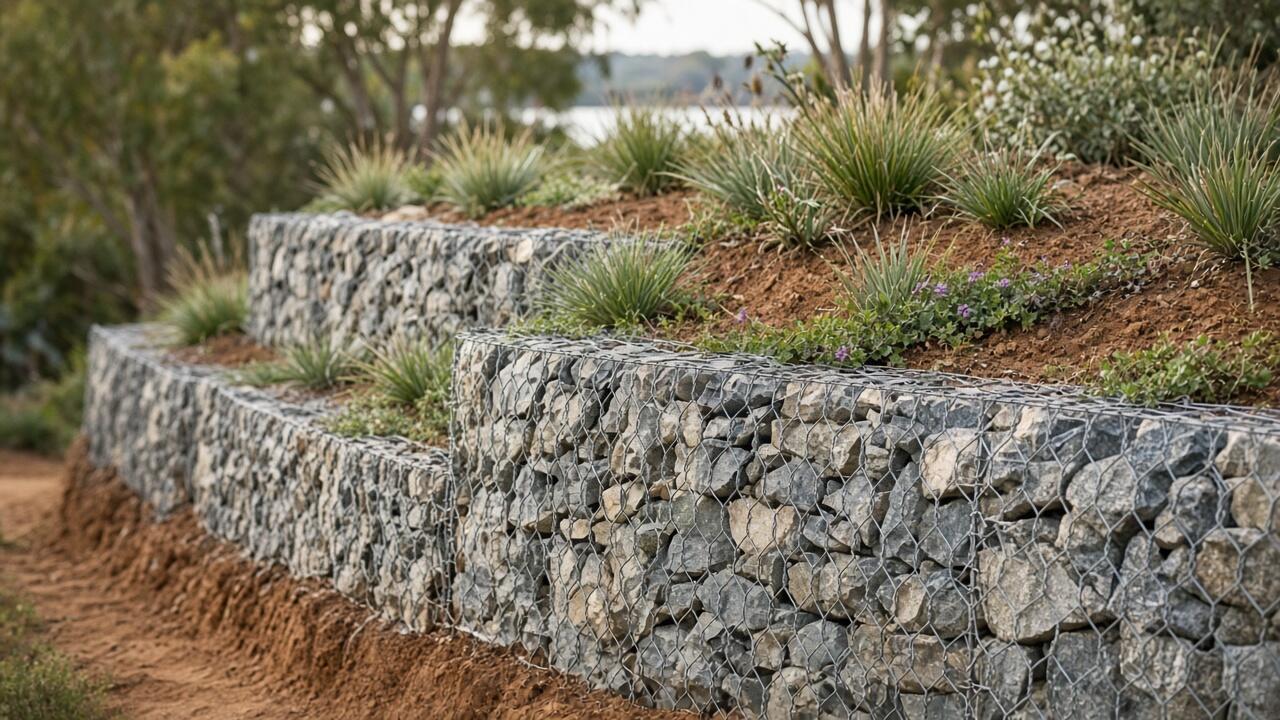
Gabion retaining walls transform sloped blocks through wire cages filled with rock, creating industrial-modern aesthetic whilst providing superior drainage performance compared to traditional solid walls. These modular structures suit contemporary Australian landscapes, particularly coastal and rural properties where their robust character complements natural surroundings.
Unlike timber sleepers or poured concrete, gabions permit water flow through rock-filled cages, eliminating hydrostatic pressure that destroys conventional retaining walls. This inherent drainage advantage, combined with relatively affordable materials and modular flexibility, explains gabions’ growing popularity across Melbourne and Peninsula sloped blocks requiring reliable earth retention.
Understanding gabion construction, realistic costs, installation requirements, and design considerations helps property owners determine when these distinctive walls suit their retaining needs better than sleepers, stone, or manufactured alternatives.
What Gabion Walls Are
Wire mesh cages filled with rock create structural retaining walls through mass and permeability.
Construction Principles
Gabion baskets:
- Heavy-gauge galvanised or PVC-coated wire mesh
- Rectangular cages (typically 1m x 0.5m x 0.5m or similar modular sizes)
- Assembled on-site, then filled with rock
- Stacked and wired together to form continuous wall
- Mass provides structural stability
Rock fill:
- 75-150mm stone typical (cobble to small rock size)
- Must be larger than mesh openings
- Angular rock preferred (interlocks better than rounded)
- Local quarried stone most economical
- Crushed rock, river cobble, or decorative stone options
Structural behaviour:
- Gravity wall (mass resists soil pressure)
- Permeable (water flows through rock voids)
- Flexible (accommodates minor ground movement)
- No footing required for low walls (rock mass on compacted base adequate)
- Modular (baskets stacked to required height)
Visual Character
Industrial-modern aesthetic:
- Wire cage structure visible
- Rock texture and colour dominant
- Contemporary rather than traditional
- Suits modern Australian architecture
- Raw, unfinished appearance (feature or drawback depending on taste)
Design contexts where gabions excel:
- Modern coastal properties (suits beach/industrial character)
- Contemporary architecture with clean lines
- Rural and semi-rural blocks (robust scale)
- Feature walls and landscape sculpture
- Commercial and public spaces
Where gabions less appropriate:
- Heritage or period homes (traditional materials suit better)
- Cottage gardens (too industrial)
- Formal English-style gardens (conflicts with refined aesthetic)
- Small intimate gardens (scale can overwhelm)
For comprehensive comparison of retaining wall materials including sleepers, stone, and manufactured options, see our guide on retaining wall ideas for Australian properties.
Advantages of Gabion Walls
Several characteristics make gabions attractive for specific applications.
Superior Drainage
Natural permeability:
- Water flows through rock voids and wire mesh
- No hydrostatic pressure buildup behind wall
- Eliminates primary cause of retaining wall failure
- No weep holes required (entire wall drains)
- Ideal for high water table or poor drainage sites
Drainage benefits:
- No ag pipe required (though surface drainage still important)
- Clay soil sites: gabions manage water better than solid walls
- Coastal high-rainfall areas: naturally handles heavy rain
- Reduces risk of catastrophic blowout from water pressure
- Inherent fail-safe for drainage management
Peninsula clay considerations:
- Heavy Peninsula clay holds water against conventional walls
- Gabion permeability prevents water accumulation
- Particularly suitable for poorly draining blocks
- Natural advantage over timber sleepers or concrete
Cost-Effective Materials
Affordable rock fill:
- Crushed rock or quarry rubble cheapest option
- $50-80 per tonne typical (bulk delivery)
- River cobble or decorative stone: $80-150 per tonne
- Local quarried stone reduces freight costs
- Material costs lower than natural sandstone or premium sleepers
Gabion basket costs:
- $30-80 per basket depending on size and coating
- Galvanised steel cheaper (rust potential coastal areas)
- PVC-coated wire: $50-80 per basket (coastal recommended)
- Modular sizing simplifies quantity estimation
- Available local landscape and building suppliers
Typical material costs (10m x 0.6m wall):
- Gabion baskets (0.5m high x 0.3m deep): $400-800
- Rock fill (4-6 tonnes): $200-600
- Installation materials (ties, stakes): $50-100
- Total materials: $650-1,500 (competitive with concrete sleepers)
Structural Flexibility
Accommodates movement:
- Wire mesh flexes without cracking (unlike concrete)
- Minor ground settlement absorbed by structure
- Suits reactive clay soils (Peninsula common)
- Earthquake resilient (not rigid structure)
- Forgiving of less-than-perfect base preparation
Modular adaptability:
- Curves and angles easily achieved (stack baskets as required)
- Height adjusted by adding basket courses
- Repairs straightforward (replace individual damaged baskets)
- Extensions simple (wire new baskets to existing)
- Design flexibility for complex sites
Longevity
Durable materials:
- PVC-coated wire: 25-50+ years coastal environments
- Galvanised wire: 15-30 years (rust eventually inland, sooner coastal)
- Rock fill: indefinite lifespan
- No rot or termite concerns (unlike timber)
- Minimal maintenance once installed
Coastal performance:
- Salt-tolerant (galvanised or PVC-coated wire appropriate)
- Wind-resistant (solid mass)
- Won’t blow over in Peninsula coastal storms
- UV-stable materials
- Suits harsh coastal Peninsula conditions
For critical drainage principles that apply to all retaining wall types, including gabions, see our comprehensive guide on retaining wall drainage requirements.
Disadvantages and Limitations
Gabions aren’t ideal for every situation.
Professional Installation Recommended
Complexity factors:
- Heavy materials (rock-filled baskets extremely heavy)
- Proper stacking and wiring technique essential
- Base preparation critical (despite forgiving structure)
- Basket assembly and filling labour-intensive
- Height over 1m requires engineering typically
DIY challenges:
- Physical demands extreme (tonnes of rock handling)
- Specialised equipment helpful (excavator for placement)
- Time-consuming (faster to hire professional)
- Improper installation risks collapse
- Mistakes expensive to rectify
Installation costs:
- Professional: $150-300 per square metre labour
- Typical 10m x 0.6m wall: $900-1,800 installation
- Total installed cost: $1,550-3,300 (materials + labour)
- DIY savings significant but physically demanding
- Realistic assessment of capability required
Aesthetic Limitations
Not universal appeal:
- Industrial appearance doesn’t suit all properties
- Wire cages visible (some dislike this)
- Difficult to soften with planting (rock-filled structure)
- Contemporary style specific
- May not suit neighbourhood character
Limited refinement:
- Rustic rather than refined
- Can’t achieve smooth rendered look
- Rock texture dominant (can’t paint or change easily)
- Bulky appearance (300mm+ depth typical)
- Scale can overwhelm small gardens
Fill Rock Considerations
Rock supply challenges:
- Requires 0.8-1.2 tonnes rock per cubic metre basket volume
- Bulk delivery essential (impractical hand-loading small quantities)
- Access required for truck and possible excavator
- Rock must be larger than mesh openings (limits options)
- Quality decorative stone expensive if desired
Filling labour:
- Hand-filling baskets extremely labour-intensive
- Excavator or loader dramatically speeds process
- Rock placement affects appearance (large attractive stones to face)
- Settling normal (may need topping up after initial settlement)
- Time-consuming even with machinery
Gabion Wall Construction
Proper installation ensures long-term performance.
Base Preparation
Foundation requirements:
- Excavate to firm ground (remove topsoil and organics)
- 100-150mm compacted crushed rock base
- Level and stable foundation
- Low walls (under 1m): no concrete footing required typically
- High walls (over 1m): concrete footing and engineering required
Drainage (still important despite permeability):
- Grade site to direct surface water away from wall
- Consider ag pipe at base if significant groundwater present
- Gravel backfill behind wall (75-150mm zone)
- Geotextile fabric between gravel and soil (prevents silt migration)
- Surface water management prevents overwhelming wall drainage capacity
Basket Assembly and Stacking
Assembly:
- Wire baskets flat-packed (fold and wire together on-site)
- Corner and edge wires secure panels
- Lacing wire or helical connectors join panels
- Bracing wires across basket prevent bulging when filled
- Empty baskets positioned before filling
Stacking:
- Bottom course on prepared base
- Wire baskets together (top to bottom, side to side)
- Stagger joints like brickwork (structural strength)
- Slight backward batter (lean into retained soil) improves stability
- Partially fill before moving to next level (weight stabilises)
Filling technique:
- Place attractive large stones against face (visible)
- Fill interior with smaller rock or rubble (economical)
- Compact filling periodically (prevents later settling)
- Don’t overfill (rock level with top of basket)
- Lid mesh wired closed after filling
Height and Engineering
Practical height limits:
- DIY: maximum 600mm safely
- Professional without engineering: 600mm-1m typical
- Over 1m: engineering required (most councils)
- Gravity wall calculations account for soil type and loading
- Geotechnical assessment for high walls or poor soils
When engineering essential:
- Walls over 1m height
- Surcharge loads (driveway, building above wall)
- Poor soil conditions (soft or reactive clay)
- High groundwater table
- Council building permit requirements
For honest guidance on DIY retaining wall limits and when professional help essential, see our guide on building retaining walls DIY vs hiring professionals.
Design and Integration
Gabions work best in appropriate landscape contexts.
Planting Around Gabions
Softening strategies:
- Cascading plants over top of wall (trailing rosemary, catmint)
- Tall grasses or strappy foliage adjacent to wall (contrast with rock)
- Feature trees near wall (screen or frame, not against wall face)
- Groundcovers at base (soften hard transition to paving or lawn)
- Avoid planting directly in gabions (limited soil pockets, maintenance access poor)
Peninsula-appropriate plants:
- Native coastal grasses (Poa, Lomandra, Dianella)
- Salt-tolerant shrubs (Westringia, Myoporum, Correa)
- Succulents and architectural plants (Agave, Aloe) suit industrial character
- Coastal rosemary cascading over walls
- Indigenous species for native vegetation overlay areas
Material Combinations
Complementary materials:
- Concrete paving (contemporary palette)
- Steel garden beds or edging (industrial continuity)
- Timber batten screens (warm contrast to stone)
- Rendered walls (house exterior) with gabion landscape walls
- Glass and metal (modern architecture)
Mixing wall types:
- Gabion lower section, timber upper tiers (cost management)
- Gabion feature walls, concrete sleeper functional areas
- Gabion entries or corners, rendered walls elsewhere
- Strategic gabion placement for maximum impact
- Budget allocation to visible high-impact areas
Coastal and Rural Context
Coastal properties:
- Natural beach/industrial aesthetic alignment
- Wind and salt resistant
- Robust scale suits coastal exposure
- Local stone available Peninsula quarries
- Complements modern coastal architecture
Sloped blocks:
- Modular stacking suits terracing multiple levels
- Drainage advantage critical sloped sites
- Handles large soil volumes behind wall
- Flexible design accommodates complex topography
- Cost-effective for extensive retaining requirements
When planning gabion installations or other hardscape projects on Peninsula properties, discussing material options and site-specific requirements with experienced local suppliers helps avoid common mistakes and ensures appropriate specification for your conditions. Peninsula Hard Yards can advise on local stone availability and whether gabions suit your particular site and aesthetic goals. Disclosure: Peninsula Hard Yards is a landscape supply and service partner we occasionally mention when relevant to readers’ projects.
Final Thoughts
Gabion retaining walls deliver excellent drainage performance, structural flexibility, and cost-effective earth retention for contemporary Australian properties, particularly sloped coastal blocks where their industrial aesthetic and salt-tolerant durability align with modern architecture and natural Peninsula conditions. For sites with drainage challenges, reactive clay soils, or modern design aesthetics, gabions offer compelling advantages over traditional timber or solid concrete walls.
When gabions make sense:
- Contemporary or coastal architecture (aesthetic alignment)
- Sloped blocks with drainage challenges (inherent permeability advantage)
- Reactive clay soils (structural flexibility accommodates movement)
- Budget-conscious projects (materials affordable if labour DIY or efficient professional)
- Rural or semi-rural properties (scale and character appropriate)
Cost expectations:
- Materials: $650-1,500 typical residential wall (10m x 0.6m)
- Professional installation: $900-1,800 labour
- Total installed: $1,550-3,300 (competitive with concrete sleepers, cheaper than natural stone)
- DIY possible but physically demanding (significant savings if capable)
Critical success factors:
- Proper base preparation (level, compacted, stable)
- Appropriate basket quality (PVC-coated coastal areas)
- Adequate rock fill (larger than mesh openings, angular preferred)
- Correct stacking and wiring technique (structural integrity)
- Engineering for walls over 1m (safety and compliance)
Drainage advantages:
- No hydrostatic pressure buildup (water flows through structure)
- Ideal for clay soils and high water table sites
- Reduces primary cause of retaining wall failure
- Minimal drainage infrastructure required (surface management still important)
- Natural fail-safe for Peninsula heavy-rainfall events
Professional vs DIY:
- Low walls (under 600mm) with good access: capable DIY option for physically able builders
- Professional installation worthwhile for most homeowners (heavy materials, specialised skills)
- Engineering essential walls over 1m (legal requirement most councils)
- Realistic assessment of physical capability and equipment access required
- False economy DIY if result compromised or injury risk
Aesthetic considerations:
- Industrial-modern character doesn’t suit heritage or cottage properties
- Contemporary architecture: natural alignment
- Scale can overwhelm small intimate gardens
- Rock colour and texture dominant (choose fill stone carefully)
- Softening with planting limited compared to solid walls
Peninsula-specific advantages:
- Coastal salt tolerance (PVC-coated wire)
- Wind and storm resistant (solid mass)
- Handles clay soil challenges (flexibility and drainage)
- Local stone availability reduces material costs
- Suits coastal modern architectural prevalence
Long-term performance:
- 25-50+ year lifespan PVC-coated wire (coastal)
- Rock fill indefinite lifespan
- Minimal maintenance (occasional basket repair if damaged)
- No rot or termite concerns (unlike timber)
- Structural flexibility prevents cracking from minor settlement
Gabion walls transform challenging sloped blocks into functional terraced spaces whilst contributing distinctive contemporary character to Australian landscapes. Strategic deployment where their drainage advantages, structural flexibility, and industrial aesthetic deliver maximum benefit concentrates gabion investment on sites and contexts where these distinctive walls outperform traditional alternatives.
Need a Hand?
Professional lawn and garden services when you need them. Get a quote from our trusted Peninsula partners.
Contact Mowing Magic or Peninsula Hard Yards →Disclosure: We share links to related local services that serve our readers in the Peninsula area.