Timber Sleeper Retaining Walls: Pros, Cons, Climate
Practical guide to timber sleeper retaining walls for Australian properties. Understand treated pine risks, termites, rot, climate challenges, and compare timber vs concrete sleeper options.
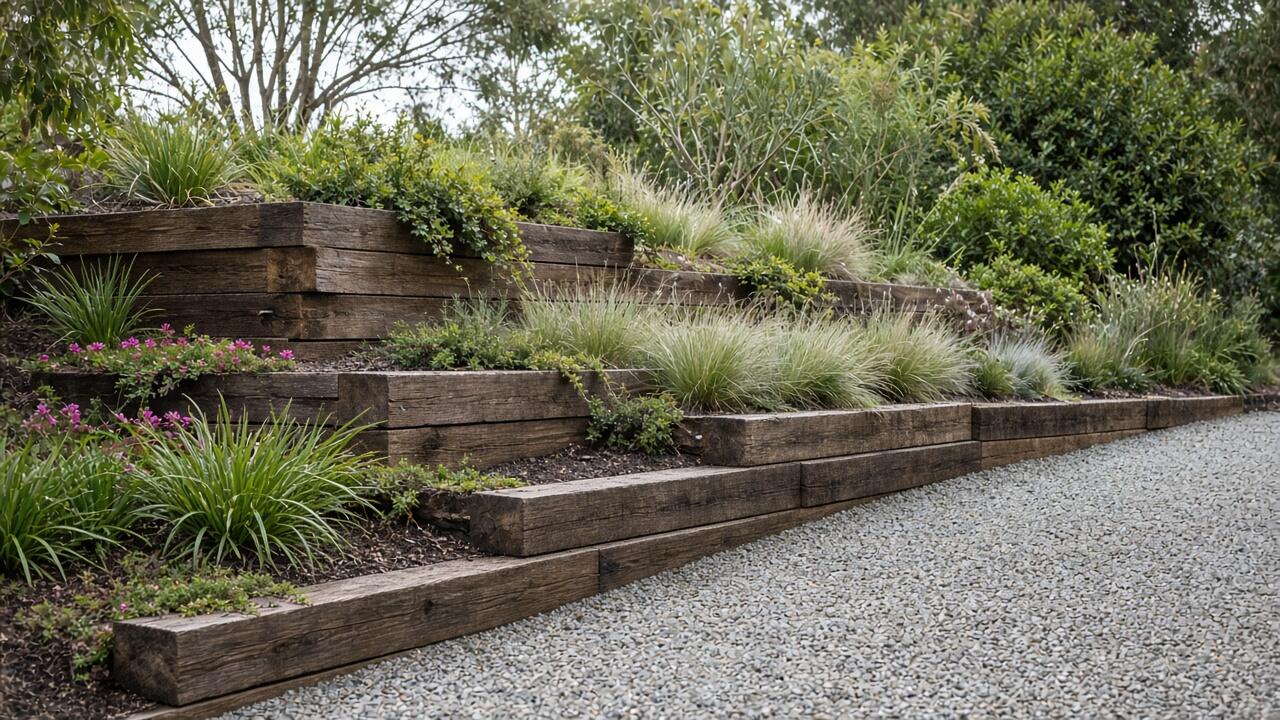
Timber sleeper retaining walls deliver a natural, warm aesthetic that suits Australian gardens beautifully. Yet timber’s vulnerability to our climate - termites, moisture, UV exposure, and decay - creates real challenges that many homeowners discover only after installation.
Understanding when timber sleepers make sense, which timber types survive Australian conditions, and how they compare to concrete alternatives helps you make informed decisions about retaining wall materials that will actually last in your property’s specific environment.
The Timber Sleeper Appeal
Timber remains popular for retaining walls despite well-known durability concerns.
Why Homeowners Choose Timber
Natural aesthetic:
- Warm, organic appearance
- Suits cottage gardens, bush settings, informal landscapes
- Softens hard landscape elements
- Complements timber fencing and decking
- Australian natives and timber feel naturally paired
DIY-friendly:
- Relatively easy to work with (cuts, drills)
- Manageable weight for two people
- Doesn’t require specialised equipment
- Simpler installation than concrete
- Appealing for hands-on homeowners
Immediate appearance:
- Looks established from day one
- No stark new-wall appearance
- Weathers and ages naturally
- Develops character over time
Moderate initial cost:
- Cheaper than natural stone
- Comparable to concrete sleepers initially
- Accessible to budget-conscious projects
- Cost-per-metre attractive upfront
The Underlying Challenge
Australian climate creates hostile environment for timber:
- High UV exposure (degrades treatment and timber)
- Moisture extremes (wet winters, dry summers)
- Termites endemic across most regions
- Fungal decay in damp conditions
- Bushfire risk in many areas
These factors significantly impact timber sleeper longevity, particularly in retaining wall applications where ground contact and moisture are unavoidable.
Treated Pine Sleepers: The Reality
Treated pine dominates the timber sleeper market, but performance varies dramatically.
What Treatment Does
H4 treatment (structural in-ground contact):
- Chemical preservatives forced into timber under pressure
- Protects against termites and fungal decay
- Copper-based (CCA - Copper Chrome Arsenic, or newer alternatives)
- Green/brown tinge from chemicals
- Minimum standard for retaining walls
H5 treatment (high hazard in-ground):
- Higher preservative retention than H4
- Better protection in extreme conditions
- Recommended for ground contact in severe exposure
- Higher cost than H4
- Necessary for Peninsula coastal or high-moisture areas
What treatment cannot do:
- Prevent UV degradation of timber surface
- Stop all moisture movement
- Guarantee unlimited lifespan
- Eliminate all termite risk
- Prevent eventual rot in extreme conditions
Realistic Timber Sleeper Lifespan
H4 treated pine (typical suburban conditions):
- 10-15 years functional lifespan
- Shows deterioration by year 7-10
- May need replacement or reinforcement by year 12-15
- Variable depending on drainage and exposure
H5 treated pine (or better drainage/exposure):
- 15-20 years possible
- Still not permanent solution
- Eventual replacement required
- Better value than H4 for critical walls
Peninsula clay soil consideration: Clay moisture, poor drainage, and coastal humidity significantly reduce treated pine lifespan. 8-12 years more realistic expectation.
Compare to concrete sleepers:
- 40-60+ years typical lifespan
- Minimal deterioration over time
- No termite or rot concerns
- Long-term better value despite higher initial cost
For comprehensive comparison of sleeper retaining wall options, see our guide on retaining wall ideas for Australian properties.
Termite Risk
Termites represent the most significant threat to timber sleepers.
Treatment Limitations
What many homeowners don’t realise:
- Treatment deters termites, doesn’t make timber termite-proof
- UV exposure degrades surface treatment over time
- Cracks and checks expose untreated interior
- Termites can access interior through cracks
- H4/H5 treatment reduces risk but doesn’t eliminate it
High-risk scenarios:
- Properties with termite history
- Bushland or heavily-vegetated areas
- Poor drainage (termites thrive in moisture)
- Sleepers in direct ground contact
- Peninsula properties near bushland reserves
Inspection Requirements
Timber sleeper walls need:
- Annual termite inspection
- Regular checking for mud trails or damage
- Immediate attention to any signs
- Professional assessment if uncertain
- Budget for potential treatment or replacement
Cost reality:
- Annual inspections: $200-400
- Termite treatment if found: $2,000-5,000+
- Wall replacement if damaged: $5,000-15,000+
- Ongoing monitoring essential
Compare to concrete: no termite risk, no inspection costs, no treatment needed.
Rot and Decay
Even treated timber eventually succumbs to moisture and fungal decay.
How Timber Sleepers Fail
Moisture accumulation:
- Soil behind wall holds moisture against timber
- Retaining walls by definition have water pressure
- Drainage critical but rarely perfect
- Ground contact accelerates decay
- Melbourne wet winters particularly damaging
Common failure points:
- Ground-contact bottom sleepers fail first
- Post bases in ground deteriorate
- Areas with poor drainage fail earlier
- North-facing walls (UV exposure) degrade faster
- Joints between sleepers collect moisture
Progressive deterioration:
- Surface weathering and checking (first few years)
- Moisture penetration through cracks (years 3-7)
- Internal rot starting (years 5-10)
- Structural weakness developing (years 8-15)
- Failure requiring replacement (years 10-20)
Peninsula and Melbourne Climate Factors
Clay soil challenges:
- Clay retains moisture longer
- Poor drainage common
- Water pressure against walls higher
- Accelerates timber deterioration
- Common across Peninsula residential areas
Coastal humidity:
- Salt exposure accelerates deterioration
- Higher ambient humidity
- Less drying between rain events
- Fungal growth more aggressive
- Treatment degradation faster
Winter rainfall:
- Prolonged wet periods (May-October)
- Timber stays wet for weeks
- Ideal conditions for fungal decay
- Annual cycle of wet-dry stresses timber
- Coastal Peninsula properties particularly affected
Hardwood Sleepers: Better but Expensive
Hardwood sleepers outperform treated pine but at significant cost.
Hardwood Advantages
Natural durability:
- Class 1/2 hardwoods resist decay naturally
- No chemical treatment needed
- Termite-resistant (not termite-proof)
- Better longevity than treated pine
- Superior to treated pine even untreated
Popular species:
Ironbark (Class 1):
- Extremely hard and durable
- 25-40+ year lifespan in-ground
- Best timber option for retaining walls
- Difficult to work with (very hard)
- Premium price
Tallowwood, turpentine (Class 1):
- Excellent durability
- Naturally greasy timber (repels moisture somewhat)
- Long lifespan
- Expensive
Spotted gum, blackbutt (Class 2):
- Good durability (15-25 years in-ground)
- More affordable than Class 1
- Still superior to treated pine
- Moderate cost
Hardwood Considerations
Cost:
- $80-150 per sleeper (treated pine: $25-45)
- 2-4x material cost
- Similar installation cost
- Harder to work with (dulls tools, difficult to cut/drill)
Availability:
- Less readily available than treated pine
- Specific dimensions harder to source
- Supply varies with forestry operations
- Lead times possible
Weight:
- Significantly heavier than pine
- Two-person lifting challenging
- Installation requires more effort
- Equipment helpful for larger walls
Not invincible:
- Even hardwood eventually decays
- Termite-resistant not termite-proof
- Still vulnerable to extreme conditions
- Not permanent solution (just longer-lasting)
When hardwood makes sense:
- Critical retaining walls where failure expensive
- Properties with termite history
- Homeowners committed to timber aesthetic
- Budget allows for premium materials
- Feature walls where appearance critical
When it doesn’t:
- Budget-constrained projects (concrete sleepers better value)
- Large retaining walls (cost prohibitive)
- High-moisture sites (even hardwood struggles)
- Bushfire zones (timber generally unsuitable)
Timber vs Concrete Sleepers Compared
Durability and Lifespan
Treated pine timber:
- 10-15 years typical (Melbourne conditions)
- Replacement likely required
- Deterioration visible by year 7-10
- Ongoing maintenance burden
Hardwood timber:
- 20-40 years depending on species
- Better long-term but still not permanent
- Significant upfront cost
- Less maintenance than pine
Concrete sleepers:
- 40-60+ years typical
- Minimal deterioration
- No termite, rot, or decay issues
- Permanent solution effectively
Cost Comparison (per linear metre for 900mm wall)
Treated pine sleepers:
- Materials: $80-120
- Installation (DIY-able): $0-100
- Total: $80-220 per metre
- Replacement needed: 10-15 years
Hardwood sleepers:
- Materials: $200-350
- Installation (harder DIY): $50-150
- Total: $250-500 per metre
- Replacement needed: 20-40 years
Concrete sleepers:
- Materials: $100-150
- Installation (heavier, DIY-able): $50-150
- Total: $150-300 per metre
- Replacement needed: 40-60+ years
Long-term cost analysis (30 years):
- Treated pine: $160-440 per metre (two replacements likely)
- Hardwood: $250-500 per metre (possibly one replacement)
- Concrete: $150-300 per metre (no replacement)
Concrete sleepers represent best long-term value despite similar or slightly higher initial cost.
Aesthetic Considerations
Timber advantages:
- Natural, warm appearance
- Suits bush, cottage, informal gardens
- Weathers to silver-grey (attractive to some)
- Organic texture and grain
Concrete advantages:
- Modern concrete sleepers mimic timber grain convincingly
- Woodgrain-textured and coloured options
- Consistent appearance over time
- Can look very similar to timber from distance
Aesthetic reality: High-quality concrete sleepers satisfy most homeowners aesthetically whilst delivering superior durability. Timber purists notice difference; most visitors don’t.
Maintenance Requirements
Timber sleepers:
- Annual inspection for rot, termites, damage
- Re-oiling or sealing (optional, extends life slightly)
- Replacement of failed sleepers or posts
- Drainage maintenance critical
- Ongoing vigilance required
Concrete sleepers:
- Minimal maintenance
- Occasional cleaning only
- No termite inspections
- No rot concerns
- Effectively maintenance-free
When Timber Sleepers Make Sense
Despite challenges, timber has appropriate applications.
Suitable Scenarios
Low retaining walls (under 600mm):
- Less structural load
- Easier to replace if needed
- Lower material cost
- Aesthetic benefit higher (visible)
- Risk/cost lower
Feature walls (not structural):
- Garden bed edging
- Decorative raised planters
- Non-critical aesthetic elements
- Replacement not expensive
- Timber look worth shorter lifespan
Temporary or short-term solutions:
- Rental properties
- Staging for property sale
- Temporary terracing
- 5-10 year planning horizon
- Will be replaced anyway
Properties with existing timber theme:
- Timber decking, fencing already present
- Cohesive aesthetic across property
- Homeowner accepts maintenance trade-off
- Budget for eventual replacement planned
DIY projects where concrete too heavy:
- Solo DIY builder
- No equipment available
- Access constraints
- Manageable timber sleeper weight critical
Unsuitable Scenarios
Avoid timber sleepers for:
High retaining walls (over 1 metre):
- Structural importance too high
- Failure consequences expensive
- Engineering often requires concrete anyway
- Long-term durability essential
Properties with termite history:
- Risk too high
- Inspection and treatment costs ongoing
- Concrete eliminates concern
- Not worth the risk
Poorly-drained clay soil sites:
- Timber lifespan significantly reduced
- Clay moisture accelerates decay
- Peninsula clay soil particularly challenging
- Concrete far better choice
Bushfire zones:
- Timber retaining walls increase fire risk
- BAL-rated properties may prohibit timber
- Concrete or steel required
- Insurance implications
Properties desiring permanent solution:
- Concrete delivers 40-60+ years
- Timber always eventual replacement
- Long-term value favours concrete
- Set-and-forget preference
Coastal properties (particularly oceanfront):
- Salt accelerates timber degradation
- Higher humidity
- Reduced treatment effectiveness
- Concrete far superior
Drainage Critical for Any Timber Wall
If choosing timber, drainage design determines success or failure.
Essential Drainage Elements
Ag pipe behind wall:
- 100mm agricultural pipe at base of wall
- Collects groundwater
- Directs water away from wall
- Outlet to stormwater or suitable drainage point
- Non-negotiable for any retaining wall
Gravel backfill:
- 300mm gravel immediately behind wall
- Drainage aggregate (not compacted soil)
- Allows water to drain to ag pipe
- Reduces moisture against timber
- Critical for timber longevity
Weep holes:
- Through wall at base
- Every 1-2 metres
- Allows water drainage through wall
- Prevents water pressure build-up
- Simple but essential
Top drainage:
- Grade soil away from top of wall
- Prevent surface water running into wall
- Simple swale or drainage directing water away
- Often overlooked but important
Peninsula clay soil:
- Drainage even more critical
- Clay holds moisture
- Larger gravel backfill zone (400-500mm)
- Consider subsoil drainage as well
- Ag pipe outlets must actually drain (not into more clay)
Poor drainage guarantees premature timber failure. Even excellent drainage only slows inevitable deterioration.
For drainage solutions on challenging sites, see our guide on garden drainage fixes for wet Victorian yards.
Installation Considerations
Engineering and Permits
When engineering required:
- Walls over 600mm height (commonly)
- Walls within 1.5-3x height of boundary
- Retaining walls supporting structures
- Significant surcharge loads
Challenges for timber:
- Engineers often specify concrete (greater confidence)
- Timber structural properties variable
- Treatment effectiveness degrades over time
- Liability concerns with timber
- Concrete usually engineered solution
DIY vs Professional
DIY suitable for:
- Low walls (under 600mm)
- Straight walls, simple designs
- Experienced DIY builders
- Non-critical applications
Professional recommended for:
- Walls over 600mm
- Engineered walls (engineer specifies contractor)
- Complex designs or stepped walls
- Properties with drainage challenges
- Critical retaining walls
Alternative: Composite Timber Options
Newer composite products worth considering.
Recycled Plastic “Timber” Sleepers
Characteristics:
- Made from recycled plastic
- Look similar to timber
- Impervious to rot and termites
- Long lifespan (40+ years)
- More expensive than treated pine, similar to hardwood
Advantages:
- No rot or termite issues
- Sustainable (recycled material)
- Low maintenance
- Long lifespan
- Can cut and work like timber
Disadvantages:
- Less natural appearance than real timber
- Can flex under load (engineered solutions required)
- UV degradation possible (quality products better)
- Not yet widely adopted for retaining walls
- Limited structural data
Emerging option: Worth investigating for low walls and feature applications. Not yet proven for significant structural retaining walls.
Bushfire Considerations
BAL zones:
- Timber retaining walls increase fire risk
- BAL-12.5 and higher often restrict timber
- Concrete, steel, or stone required
- Check property BAL rating before designing
Insurance implications:
- Timber walls in bushfire zones may affect insurance
- Non-compliant walls can void coverage
- Concrete eliminates concern
Professional Hardscape Solutions
For homeowners prioritising quality, longevity, and professional results, partnering with experienced hardscaping professionals ensures retaining walls are designed, engineered, and constructed to last. Proper material selection, structural design, and drainage implementation prevent the costly failures that DIY and budget approaches often face.
If your Peninsula property requires retaining wall solutions that genuinely last, consider consulting specialists who understand local clay soils, drainage challenges, and material performance in coastal conditions. Peninsula Hard Yards brings professional hardscaping expertise to Mornington Peninsula properties, delivering retaining walls and outdoor structures built to endure Melbourne’s climate and coastal exposure.
Disclosure: Peninsula Hard Yards is a professional hardscaping service operating on the Mornington Peninsula. We mention them as a relevant local example of specialist retaining wall and hardscape construction for readers seeking professional solutions.
Final Thoughts
Timber sleeper retaining walls offer natural aesthetics and moderate initial costs, but Australian climate conditions create significant durability challenges. Understanding the realistic lifespan, maintenance requirements, and long-term costs helps you make informed material decisions.
Choose timber sleepers when:
- Low walls (under 600mm) where replacement acceptable
- Natural aesthetic critical to property character
- DIY manageable weight important
- Short-to-medium term solution (10-20 years) acceptable
- Budget allows for hardwood (better than pine)
Choose concrete sleepers when:
- Long-term permanent solution desired
- High walls or engineered walls
- Properties with termites, poor drainage, or clay soil
- Maintenance-free preference
- Best long-term value priority
If choosing timber:
- Specify H5 treatment minimum (H4 inadequate for many applications)
- Budget for hardwood if possible (significantly better than pine)
- Implement excellent drainage (ag pipe, gravel backfill, weep holes)
- Accept 10-20 year lifespan as realistic
- Plan for eventual replacement costs
- Annual inspections for termites and rot
Melbourne and Peninsula realities:
- Clay soil accelerates timber deterioration
- Wet winters and dry summers stress timber
- Coastal humidity reduces treatment effectiveness
- Termites active across most areas
- Bushfire zones often prohibit timber
Cost reality check: Treated pine appears cheaper initially but replacement costs make concrete better long-term value. Hardwood timber can last longer but costs 2-4x as much whilst still requiring eventual replacement. Concrete sleepers deliver 40-60+ years maintenance-free performance at comparable or lower cost than timber options over time.
For most Australian retaining wall applications, concrete sleepers represent the better choice: comparable aesthetics (modern timber-look concrete convincing), superior durability, no termite or rot concerns, minimal maintenance, and better long-term value.
Timber has its place - low feature walls, decorative garden edging, properties prioritising natural materials above longevity - but understand you’re choosing aesthetics over performance. That can be the right decision for your situation; just make it with clear expectations about realistic lifespan and eventual replacement needs.
Done right with excellent drainage, quality timber (hardwood preferred), and proper construction, timber sleeper walls deliver 15-25 years of service. That’s adequate for many homeowners. Just don’t expect 40-60 year permanence that concrete delivers, and budget accordingly for future replacement. Realistic expectations prevent disappointment and allow informed material choices that match your priorities, budget, and timeline.
For a detailed comparison of concrete sleeper options, see our guide on concrete sleeper retaining walls.
Need a Hand?
Professional lawn and garden services when you need them. Get a quote from our trusted Peninsula partners.
Contact Mowing Magic or Peninsula Hard Yards →Disclosure: We share links to related local services that serve our readers in the Peninsula area.