Low-Maintenance Front Yard with Australian Natives
Design low-maintenance front yards using Australian native plants suited to Peninsula climate. Structural planting approaches, once-established watering, lawn-free alternatives, and Peninsula-appropriate native species for modern Australian gardens.
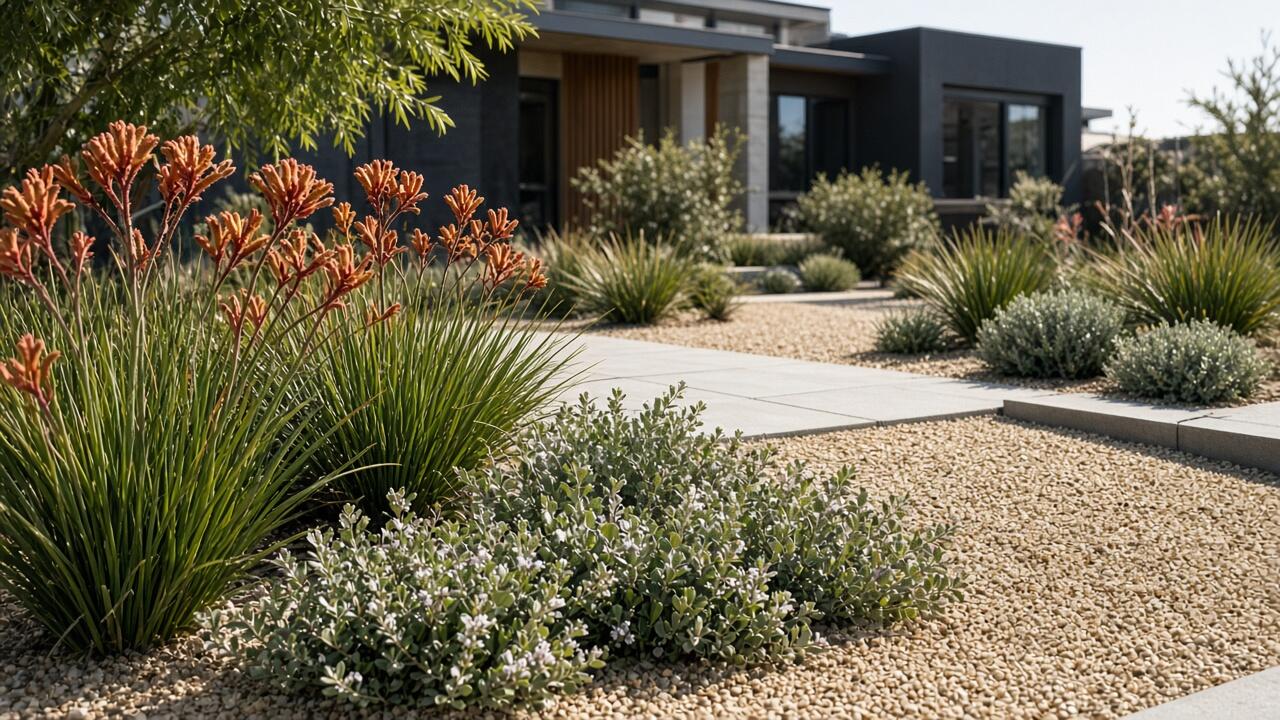
Low-maintenance front yard gardens resolve the conflict between attractive street presence and practical time limitations that confront homeowners unwilling to commit weekends to lawn mowing, hedge trimming, and constant plant replacement. Australian native plants offer particular advantage here: evolved for Australian climate extremes, low water requirements once established, minimal feeding needs, and natural pest resistance reduce ongoing maintenance below exotic alternatives whilst delivering distinctive native aesthetic increasingly valued in contemporary Australian landscapes.
Successful native front yards combine structural planting principles, appropriate species selection for Peninsula conditions, and realistic expectations about establishment periods and sensible maintenance reduction (not zero maintenance). Strategic design eliminates lawns entirely, reduces water consumption, and creates year-round attractive frontages that require occasional attention rather than weekly commitment.
Understanding Peninsula-suited native species, structural design approaches, and transitioning away from traditional high-maintenance lawn frontages helps homeowners create sustainable, attractive front gardens that align with contemporary environmental awareness and practical time constraints.
Why Australian Natives for Low Maintenance
Native plants offer distinct advantages for reducing front yard maintenance.
Water Requirements
Once established (2-3 years), most natives require minimal irrigation:
- Deep root systems access groundwater
- Drought adaptations (waxy leaves, reduced surface area)
- Peninsula’s 800-1000mm annual rainfall often sufficient
- Occasional deep watering in extended dry periods
- Dramatic reduction from lawn’s weekly irrigation needs
Establishment period reality:
- First 12-18 months: regular watering essential (same as exotics)
- Once established: monthly or less frequent watering
- Summer: occasional deep soak during extended heat
- Winter: rainfall typically adequate
- Investment in establishment pays ongoing dividends
Water savings vs lawn:
- Lawn: weekly watering required (Melbourne summers)
- Established natives: monthly or less
- 70-90% reduction in water use
- Lower water bills
- Environmental benefit (reduced consumption)
Fertiliser and Soil Amendments
Most Australian natives adapted to poor soils:
- Low phosphorus requirement (excess phosphorus toxic to many natives)
- Minimal nitrogen feeding needed
- Peninsula’s sandy loam suits natives naturally
- Avoid traditional fertilisers (can damage natives)
- Native-specific fertiliser sparingly if needed
Contrast with exotic plants:
- Roses, annuals, exotic perennials require regular feeding
- Lawn requires seasonal fertilising
- Garden bed soil improvement ongoing
- Native gardens: minimal feeding once established
- Reduced cost and time
Pest and Disease Resistance
Native plants in appropriate conditions resist pests:
- Evolved with Australian pests (natural balance)
- Healthy plants resist disease
- Avoid overwatering (main disease trigger)
- Occasional pest issues but less than exotics
- No routine spraying required typically
Common issues manageable:
- Psyllids on certain natives (tolerate or address if severe)
- Scale insects occasionally (treat if problematic)
- Fungal issues if drainage poor (design problem not plant problem)
- Overall pest pressure lower than exotic gardens
- Reduced chemical use and maintenance time
Pruning and Maintenance
Many natives require minimal pruning:
- Natural form attractive (not clipped hedges needing constant shaping)
- Occasional light prune maintains shape
- Deadheading optional (improves appearance but not essential)
- No regular hedge trimming (if appropriate species selected)
- Annual or less frequent attention adequate
Exceptions:
- Some natives vigorous pruners (Westringia, Lilly Pilly if used as hedge)
- Choose naturally compact varieties reduces pruning
- Strategic species selection critical
- Structural pruning every few years maintains size
- Still less than traditional exotic hedges
Peninsula-Appropriate Native Species
Not all Australian natives suit Peninsula climate; choose regionally appropriate species.
Peninsula Climate Considerations
Coastal influences:
- Cool winters, mild summers (compared to inland)
- Salt-laden winds (coastal properties)
- Sandy loam soils (free-draining)
- Moderate rainfall (800-1000mm annually)
- Temperate climate favours many southern natives
Soil type:
- Peninsula sandy loam suits many natives
- Well-draining (native advantage)
- Lower nutrient levels (native adaptation)
- Clay pockets exist (test drainage in heavy areas)
- Soil improvement rarely needed for natives
Wind exposure:
- Coastal properties face strong winds
- Choose wind-tolerant species
- Inland blocks more sheltered
- Consider microclimate (your specific site)
- Wind protection structures (fences) help establishment
Structural Feature Plants
These natives provide backbone and year-round structure:
Coastal Rosemary (Westringia fruticosa):
- Height: 1-2m, width: 1-1.5m
- Foliage: grey-green, fine-textured
- Flowers: white/mauve, spring-summer
- Conditions: full sun to part shade, salt-tolerant, drought-hardy
- Maintenance: occasional trim maintains shape, very hardy
- Uses: low hedge, feature plant, mass planting
- Peninsula suitability: excellent (coastal native)
Grevillea ‘Robyn Gordon’:
- Height: 1.5-2m, width: 2-3m
- Foliage: fine, fern-like
- Flowers: red/pink, year-round
- Conditions: full sun, well-drained soil, drought-hardy
- Maintenance: light prune after flowering, very low
- Uses: feature plant, bird attractor, mass planting
- Peninsula suitability: excellent
Kangaroo Paw (Anigozanthos hybrids):
- Height: 0.5-1.5m depending on variety
- Foliage: strappy, clumping
- Flowers: red, yellow, orange, pink (spring-summer)
- Conditions: full sun, excellent drainage essential
- Maintenance: remove spent flower stems, divide clumps every 3-5 years
- Uses: feature plant, mass planting, contemporary gardens
- Peninsula suitability: good (sandy soil advantage)
Lomandra longifolia (Mat Rush):
- Height: 0.6-1m, width: 0.6-1m
- Foliage: strappy, tufted clumps
- Flowers: small yellow (spring)
- Conditions: full sun to full shade, most soils, very hardy
- Maintenance: annual trim removes old foliage (optional)
- Uses: mass groundcover, edging, tough utility plant
- Peninsula suitability: excellent (extremely adaptable)
Coastal Banksia (Banksia integrifolia):
- Height: 5-15m (can be kept smaller with pruning), width: 3-5m
- Foliage: dark green, silver undersides
- Flowers: pale yellow spikes (autumn-winter)
- Conditions: full sun, salt-tolerant, coastal
- Maintenance: minimal, shape if desired
- Uses: screen, feature tree, wildlife
- Peninsula suitability: excellent (Peninsula native)
Groundcovers and Infill Plants
Lower-growing natives fill spaces and suppress weeds:
Native Violet (Viola hederacea):
- Height: 5-15cm, spreading
- Foliage: small rounded leaves
- Flowers: white/purple, most of year
- Conditions: part shade to shade, moist soil
- Maintenance: very low, self-spreading
- Uses: groundcover under trees, shaded areas
- Peninsula suitability: excellent
Myoporum parvifolium (Creeping Boobialla):
- Height: 10-30cm, spreading 1-2m
- Foliage: small, dense
- Flowers: white, spring-summer
- Conditions: full sun to part shade, drought-hardy
- Maintenance: minimal, fast-growing
- Uses: groundcover, erosion control, mass planting
- Peninsula suitability: good
Scaevola aemula (Fan Flower):
- Height: 20-50cm, spreading 0.5-1m
- Foliage: bright green
- Flowers: blue/purple, spring-summer
- Conditions: full sun to part shade, well-drained
- Maintenance: occasional trim maintains shape
- Uses: groundcover, feature plant, mass planting
- Peninsula suitability: excellent (coastal native)
Dianella ‘Little Rev’ (Flax Lily dwarf):
- Height: 30-40cm, clumping
- Foliage: strappy, blue-green
- Flowers: blue, spring (followed by blue berries)
- Conditions: full sun to part shade, adaptable
- Maintenance: minimal, remove old foliage annually
- Uses: low border, mass planting, edging
- Peninsula suitability: excellent
Grasses for Movement and Texture
Native grasses add softness and movement:
Lomandra ‘Tanika’ (compact form):
- Height: 40-50cm, clumping
- Foliage: fine, soft, bright green
- Conditions: sun to shade, adaptable
- Maintenance: annual trim optional
- Uses: mass planting, borders, contemporary gardens
- Peninsula suitability: excellent
Poa labillardieri (Common Tussock Grass):
- Height: 60-90cm, clumping
- Foliage: fine blue-green
- Conditions: full sun to part shade, well-drained
- Maintenance: minimal, remove old growth if desired
- Uses: feature grass, informal naturalistic planting
- Peninsula suitability: excellent (Victorian native grassland species)
Austrostipa pubescens (Tall Spear Grass):
- Height: 60-90cm, clumping
- Foliage: fine, arching
- Flowers: feathery seed heads (summer)
- Conditions: full sun, well-drained
- Maintenance: minimal, cut back old growth
- Uses: naturalistic planting, movement, texture
- Peninsula suitability: good
Trees for Structure and Shade
Small to medium natives suited to front yard scale:
Acacia cognata ‘Lime Magik’ (Bower Wattle):
- Height: 3-5m, width: 2-3m
- Foliage: lime-green, weeping form
- Flowers: yellow, winter-spring
- Conditions: full sun to part shade, adaptable
- Maintenance: light prune after flowering
- Uses: feature tree, screen, contemporary gardens
- Peninsula suitability: excellent
Lemon-scented Myrtle (Backhousia citriodora):
- Height: 4-8m (can be kept smaller), width: 2-3m
- Foliage: lemon-scented, glossy green
- Flowers: white, summer
- Conditions: full sun to part shade, moist soil
- Maintenance: prune to shape, minimal
- Uses: screen, feature tree, edible leaves
- Peninsula suitability: good (needs adequate water)
Coastal Tea Tree (Leptospermum laevigatum):
- Height: 4-8m, width: 3-5m
- Foliage: grey-green
- Flowers: white, spring
- Conditions: full sun, salt-tolerant, wind-hardy
- Maintenance: minimal, hardy
- Uses: screen, windbreak, coastal properties
- Peninsula suitability: excellent (Peninsula native)
Dwarf River Bottlebrush (Callistemon ‘Little John’):
- Height: 1m, width: 1m
- Foliage: dense, compact
- Flowers: red bottlebrush, spring-summer
- Conditions: full sun to part shade, adaptable
- Maintenance: light prune after flowering
- Uses: low hedge, feature plant, compact gardens
- Peninsula suitability: excellent
Structural Planting Design Principles
Successful low-maintenance natives require thoughtful design, not random planting.
Layered Planting Structure
Effective native gardens use layered approach:
- Canopy layer: small trees (3-8m) provide height and structure
- Shrub layer: medium natives (1-2m) create bulk and screening
- Groundcover layer: low plants (0.2-0.6m) cover soil and suppress weeds
- Each layer defined function and aesthetic contribution
- Mimics natural Australian ecosystems
Proportions:
- Small front yards (under 50 square metres): 1-2 small trees maximum
- Medium front yards (50-100 square metres): 2-3 trees, multiple shrubs
- Large front yards (100+ square metres): 3-5 trees, generous shrub and groundcover masses
- Avoid over-planting (common mistake)
- Plants grow—anticipate mature size
Repetition and Mass Planting
Design principle: repeat key species:
- Choose 5-8 species total (not 20+ different plants)
- Repeat each species in groups of 3-5 plants minimum
- Creates cohesion and visual calm
- Easier maintenance (learn each plant’s needs)
- Professional appearance
Mass planting benefits:
- Groundcovers planted densely (4-6 per square metre) suppress weeds quickly
- Grouped plants create impact
- Reduces individual plant focus (maintenance easier)
- Strong design statement
- Contemporary aesthetic
Hardscape Integration
Balance planting with hard surfaces:
- Paving or gravel paths define circulation
- Mulched garden beds (not lawn)
- Edging separates garden from path/driveway
- Hardscape reduces planted area (less maintenance)
- Clear definition looks intentional
Strategic hardscape:
- Entry path: pavers or stepping stones through natives
- Driveway borders: low native hedge or groundcover strip
- Mulched beds: 75mm layer suppresses weeds and retains moisture
- Gravel areas: low-maintenance alternative to lawn
- Balance planted and hard surfaces
For front yard design approaches including hardscape integration, see our guide on front yard landscaping ideas for Australian properties.
Focal Points and Feature Plants
Create visual interest with focal plants:
- One or two feature plants (Kangaroo Paw, sculptural Banksia, flowering Grevillea)
- Position where visible from street or entry
- Surround with lower, simpler plants (Lomandra, Westringia)
- Feature plant draws eye, supporting plants provide backdrop
- Avoid competition (too many features = visual chaos)
Placement strategy:
- Near entry (welcomes visitors)
- Visible from street (curb appeal)
- Corner or intersection (defines space)
- Against house wall (softens built form)
- Strategic placement creates composition
No-Lawn Front Yards
Eliminating front lawn reduces maintenance dramatically.
Why Remove Front Lawn
Lawn maintenance reality:
- Weekly mowing (26-40 times per year)
- Regular watering (weekly in summer)
- Seasonal fertilising and weed control
- Edging and trimming
- High maintenance commitment
Native garden alternative:
- No mowing
- Minimal watering once established
- Little fertiliser
- Occasional weeding (reduces over time)
- Dramatic time savings
Environmental benefits:
- Lower water consumption (70-90% reduction)
- No lawn chemicals (fertiliser, herbicide, pesticide)
- Increased biodiversity (native plants support native wildlife)
- Reduced noise (no mower)
- Contemporary environmental responsibility
Lawn Removal Process
Step 1: Plan replacement planting:
- Design native garden layout
- Select appropriate species
- Order plants and materials
- Don’t remove lawn until plan ready (bare soil = weeds)
Step 2: Remove lawn:
- Spray with herbicide (glyphosate) and let die (2-3 weeks)
- OR smother with cardboard/newspaper and mulch (6-8 weeks)
- OR strip turf mechanically (immediate but labour-intensive)
- Remove dead/smothered organic matter
- Loosen compacted soil (fork or rotary hoe)
Step 3: Soil preparation:
- Native-friendly soil (don’t add fertiliser or compost heavily)
- Improve drainage if needed (gypsum on clay, coarse sand)
- Avoid rich soil (natives adapted to poor soils)
- Level and grade away from house
Step 4: Plant natives:
- Plant in autumn or spring (best establishment)
- Water in thoroughly
- Mulch immediately (75-100mm depth)
- Water regularly until established (12-18 months)
Step 5: Maintain during establishment:
- Weekly watering first 6-8 weeks
- Reduce to fortnightly next few months
- Monitor and remove weeds
- Once established (12-18 months): minimal maintenance
Alternative Ground Covers
If complete lawn removal too drastic:
Native groundcovers as lawn substitute:
- Native Violet (Viola hederacea): soft green carpet, part shade
- Myoporum parvifolium: tougher, full sun
- Scaevola: colourful flowers, spreading
- Not walkable like lawn but attractive
- Very low maintenance
Gravel or pebble areas:
- Large gravel (20-40mm) with stepping stones
- Contemporary aesthetic
- Extremely low maintenance
- Cost-effective
- Suits modern or coastal homes
Mixed approach:
- Small lawn area (50% of previous lawn)
- Native garden beds border lawn
- Staged transition (remove lawn incrementally)
- Psychological comfort (retains some lawn)
- Still reduces maintenance significantly
For detailed lawn alternatives and low-maintenance front yard options, see our guide on modern Australian front yard ideas.
Once-Established Watering
Realistic expectations about native water needs prevent disappointment.
Establishment Phase (12-24 Months)
Regular watering essential:
- First 8 weeks: weekly watering (deep soak)
- Next 4 months: fortnightly watering
- Next 6-12 months: monthly watering (supplement rainfall)
- Can’t skip establishment watering (plants die)
- Investment in establishment pays long-term dividends
Deep watering technique:
- Slow, deep soak better than frequent shallow watering
- Encourages deep root growth
- Apply water slowly (drip or leaky hose)
- Allow soil to dry between waterings (avoid overwatering)
- Mulch retains moisture
Once Established (2+ Years)
Minimal irrigation required:
- Peninsula rainfall (800-1000mm annually) often sufficient
- Supplement during extended dry periods (3-4+ weeks no rain)
- Summer: monthly deep watering during dry spells
- Winter: rainfall adequate (no supplemental watering)
- Monitor plants (wilting indicates water needed)
Watering frequency (established natives, Peninsula):
- Spring: monthly or less (rainfall typically adequate)
- Summer: fortnightly to monthly (depending on rainfall and heat)
- Autumn: monthly or none (autumn rains return)
- Winter: none (rainfall sufficient)
- Total annual watering: 10-20 times vs 50+ for lawn
Drought-hardy species require less:
- Westringia, Grevillea, Banksia, Myoporum very drought-hardy
- Can survive on rainfall alone once established
- Others (Dianella, Kangaroo Paw) benefit from occasional summer water
- Species selection influences final water requirements
- Match plants to your watering willingness
Water-Saving Infrastructure
Drip irrigation (optional but valuable):
- Automated drip system simplifies watering
- Delivers water directly to root zones
- Reduces water waste
- Can be timed for early morning (best time)
- Moderate cost ($500-1,500 typical front yard)
Mulch critical:
- 75-100mm mulch layer retains soil moisture
- Reduces evaporation significantly
- Suppresses weeds
- Breaks down slowly (adds organic matter)
- Top-up annually (settles and breaks down)
Rainwater tank:
- Harvest roof runoff for garden irrigation
- Reduces mains water consumption
- Environmental benefit
- Government rebates sometimes available
- Moderate investment ($1,000-3,000+ installed)
Maintenance Schedule Reality
Low maintenance isn’t zero maintenance; set realistic expectations.
First Year (Establishment)
Monthly tasks:
- Water regularly (weekly to fortnightly)
- Remove weeds (competition for water and nutrients)
- Monitor plant health (replace failures early)
- Top-up mulch if settling
- Total time: 2-4 hours per month
Years 2-3 (Transitional)
Seasonal tasks:
- Watering during dry spells (fortnightly to monthly)
- Occasional weeding (reduces as plants fill in)
- Light pruning after flowering (some species)
- Annual mulch top-up
- Total time: 1-2 hours per month average
Years 4+ (Established Low Maintenance)
Annual tasks:
- Mulch top-up (1-2 hours)
- Occasional pruning (2-4 hours)
- Weeding (1-2 hours annually if groundcovers dense)
- Monitor and water if extreme drought (rare)
- Total time: 5-10 hours per year
- Contrast with lawn: 50-100 hours per year
Reality check: Low-maintenance native gardens require 80-90% less time than traditional lawn-and-exotic front yards. But establishment phase (first 1-2 years) requires significant input. Long-term benefit justifies establishment effort.
Design Examples for Different Front Yard Sizes
Practical planting plans for common scenarios.
Small Front Yard (30-50 Square Metres)
Layout:
- One small tree (Acacia ‘Lime Magik’ or Callistemon ‘Little John’)
- Mass planting of Westringia (5-7 plants) as low hedge along fence
- Groundcover layer: Lomandra ‘Tanika’ (10-15 plants) and Myoporum parvifolium (3-5 plants)
- Feature plant: Kangaroo Paw (3 plants grouped)
- Gravel or paved path to entry
- Mulched beds (no lawn)
Maintenance:
- Establishment: regular watering 12 months
- Ongoing: 5-8 hours annually (mulch, light prune, occasional watering)
- Very low maintenance once established
Cost (materials and plants):
- Plants: $300-600
- Mulch: $100-200
- Path materials (if new): $400-800
- Total: $800-1,600 + installation labour (if hiring)
Medium Front Yard (50-100 Square Metres)
Layout:
- Two small trees (Coastal Banksia + Lemon-scented Myrtle)
- Shrub layer: Grevillea ‘Robyn Gordon’ (3 plants), Westringia (7-10 plants)
- Groundcover layer: Lomandra (15-20 plants), Dianella ‘Little Rev’ (10-15 plants), Native Violet (shaded areas)
- Feature grass: Poa labillardieri (3-5 clumps)
- Gravel or paved paths
- Small lawn area optional (20-30 square metres maximum)
Maintenance:
- Establishment: 18 months regular watering
- Ongoing: 8-15 hours annually
- Significantly less than traditional lawn garden
Cost (materials and plants):
- Plants: $600-1,200
- Mulch: $200-350
- Hardscape: $800-1,500
- Total: $1,600-3,050 + installation labour
Large Front Yard (100+ Square Metres)
Layout:
- Three trees (Coastal Banksia, two Acacia ‘Lime Magik’)
- Extensive shrub layer: Grevillea, Westringia, Coastal Rosemary in masses
- Groundcover layers: Lomandra, Dianella, Myoporum, Scaevola in generous drifts
- Feature plantings: Kangaroo Paws, ornamental grasses
- Meandering gravel or paved paths
- No lawn (or very small retained lawn area)
Maintenance:
- Establishment: 18-24 months regular watering (large area)
- Ongoing: 12-20 hours annually
- Fraction of equivalent lawn maintenance (80+ hours annually)
Cost (materials and plants):
- Plants: $1,200-2,500
- Mulch: $350-600
- Hardscape (paths, edging): $1,500-3,000
- Total: $3,050-6,100 + installation labour
Common Mistakes to Avoid
Learn from others’ native garden failures.
Overwatering
Most common killer of established natives:
- Australian natives adapted to dry conditions
- Overwatering causes root rot and fungal disease
- Water deeply but infrequently
- Allow soil to dry between waterings
- Good drainage essential (Peninsula sandy soil helps)
Signs of overwatering:
- Yellowing leaves
- Leaf drop
- Fungal growth at base
- Soft, collapsing stems
- Reduce watering if these appear
Using Traditional Fertilisers
High phosphorus damages natives:
- Traditional lawn and garden fertilisers contain phosphorus
- Many natives (Banksia, Grevillea, others) phosphorus-sensitive
- Causes leaf burn, decline, death
- Use native-specific fertiliser only (if fertilising at all)
- Most natives need minimal feeding in Peninsula soils
Poor Drainage
Waterlogged soils kill natives:
- Most natives require well-drained soil
- Clay pockets on Peninsula problematic
- Test drainage before planting (dig hole, fill with water, observe)
- Improve drainage with gypsum, coarse sand, raised mounds
- Choose species suited to moist conditions if drainage poor (Melaleuca, certain Leptospermum)
Wrong Species for Conditions
Not all natives suit all conditions:
- Sun-loving species in shade: weak, leggy growth
- Shade-lovers in full sun: leaf burn, stress
- Dry-adapted species in wet soil: root rot
- Match species to your site conditions
- Research specific requirements before purchasing
Planting Too Densely
Give plants room to grow:
- Crowded plants compete for resources
- Air circulation poor (disease risk)
- Maintenance difficult (can’t reach between plants)
- Follow spacing recommendations
- Initial sparse appearance fills in 12-24 months
Final Thoughts
Low-maintenance front yards using Australian native plants deliver practical time-saving benefits whilst supporting environmental sustainability and contemporary native aesthetic increasingly valued across Australian landscapes. Strategic species selection suited to Peninsula conditions, structural design principles, and elimination of high-maintenance lawns reduce ongoing commitment from 50-100 annual hours to 5-20 hours whilst creating distinctive, resilient gardens that celebrate regional native flora.
Success factors:
- Choose Peninsula-appropriate species (Westringia, Grevillea, Lomandra, Coastal Banksia, Myoporum)
- Structural planting design (layered, mass plantings, repetition)
- Eliminate or drastically reduce front lawn
- Commit to establishment watering (12-24 months)
- Realistic expectations (low maintenance, not zero maintenance)
Establishment investment essential: First 12-18 months require regular watering and attention. Skipping establishment phase produces expensive plant failures. Investment in proper establishment delivers decades of minimal-maintenance native garden. Short-term effort enables long-term benefits.
Water savings significant: Once established, native gardens require 70-90% less water than traditional lawns. Peninsula rainfall (800-1000mm annually) often sufficient with occasional summer supplemental watering. Environmental benefit aligns with contemporary water conservation priorities and practical maintenance reduction.
Maintenance reality: Established native front yards require 5-20 annual hours (mulching, occasional pruning, minimal watering, light weeding) compared to 50-100+ hours for lawn-dominant traditional gardens (mowing, edging, watering, feeding, weed control). Time savings justify establishment effort and initial plant costs.
Design principles matter: Random native planting produces messy, maintenance-heavy results. Structural layering (trees, shrubs, groundcovers), mass planting (groups of 3-5+ of each species), and hardscape integration (paths, mulched beds, edging) create cohesive, professional appearance requiring less ongoing maintenance than poorly-designed gardens.
Peninsula species selection: Not all Australian natives suit Peninsula temperate climate. Prioritise regionally-appropriate species: coastal natives (Westringia, Coastal Banksia, Coastal Tea Tree), Victorian natives (Lomandra, Poa, Dianella), and proven performers (Grevillea ‘Robyn Gordon’, Myoporum parvifolium). Match plants to site conditions (sun/shade, drainage) for best long-term performance.
Cost-effective transition: Converting traditional lawn front yards to low-maintenance natives costs $800-3,000+ for typical residential frontages (plant materials, mulch, path modifications). Phased approach (eliminate 50% of lawn initially, complete transition later) manages budget whilst demonstrating benefits before full commitment. Long-term maintenance savings and water bill reduction provide ongoing value return.
Low-maintenance native front yards represent practical response to time constraints, environmental awareness, and contemporary Australian garden aesthetic that celebrates regional native flora. Strategic design using Peninsula-appropriate species, commitment to establishment phase, and realistic expectations deliver front gardens requiring minimal ongoing maintenance whilst providing year-round attractive street presence and supporting local biodiversity through native plant communities suited to southern Australian temperate climate conditions.
Need a Hand?
Garden bed installation, planting, and maintenance services. Get a quote from our trusted Peninsula partners.
Contact Peninsula Hard Yards →Disclosure: We share links to related local services that serve our readers in the Peninsula area.