Outdoor Lighting Australia: Safe, Subtle, Useful
Australian outdoor lighting electrical requirements: 240V vs 12V systems, IP ratings for weather protection, solar viability, and licensed electrician obligations. Practical safety-first guidance for compliant garden lighting.
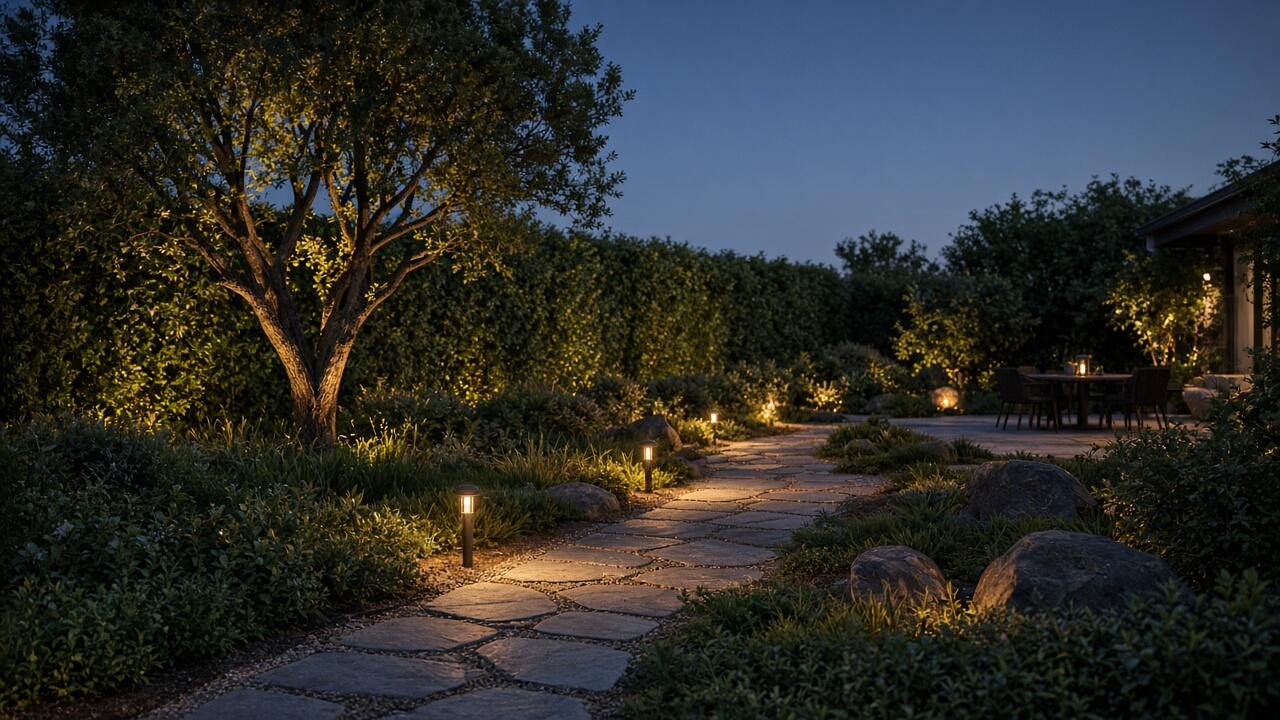
Australian outdoor lighting regulations prioritise safety in our wet climate, high UV exposure, and fire-prone environment. Understanding electrical system options, weather protection ratings, and when licensed electrician work becomes mandatory helps property owners create functional, beautiful, legally-compliant outdoor lighting that enhances usability and security whilst avoiding dangerous DIY electrical mistakes or expensive non-compliant installations discovered during property sales or insurance claims.
Outdoor lighting extends beyond aesthetic considerations—electrical safety, IP weather ratings, voltage system selection, and Australian Standards compliance determine whether installations remain safe, functional, and legally defensible over years of exposure to summer heat, winter rain, and coastal conditions that degrade inadequately specified equipment.
Australian Electrical Compliance
Legal requirements for outdoor electrical work.
Licensed Electrician Requirements
What Australian law requires:
- All 240V mains wiring must be performed by licensed electrician
- Even “simple” connections (extending power outdoors) require licensed work
- Illegal for homeowners to perform own 240V electrical work
- Penalties include fines, insurance voidance, and liability for incidents
- No exceptions (regardless of homeowner skill or experience)
Why it matters:
- Australian 240V mains voltage lethal
- Outdoor electrical work particularly hazardous (moisture exposure)
- Incorrect installations cause electrocution, fires, equipment damage
- Insurance void if unlicensed work involved in claim
- Property sale implications (building inspections identify non-compliant work)
What homeowners can legally do:
- Install battery-powered lights (no mains connection)
- Install solar lights (self-contained units)
- Plug pre-wired equipment into existing outdoor outlets (if outlet professionally installed)
- Replace light globes/bulbs in existing installed fixtures
- Low-voltage 12V wiring from transformer (grey area—see below)
What requires licensed electrician:
- Installing new 240V power outlets outdoors
- Wiring 240V light fixtures permanently
- Extending mains power circuits
- Installing transformers for low-voltage systems
- Any work on main switchboard or meter box
- RCD (safety switch) installation or modification
Certificates and Compliance
Certificate of Electrical Safety:
- Licensed electrician must issue certificate for completed work
- Required by law for any electrical installation or modification
- Property sale may require producing certificates
- Compliance evidence essential insurance claims
Building permits:
- Generally not required for like-for-like light fixture replacement
- May be required extensive new outdoor electrical systems (council-dependent)
- Check local council (regulations vary)
- Always required if building structures (pergola with integrated lighting requires building permit for structure)
Voltage Systems: 240V vs 12V
Fundamental choice affecting safety, cost, installation, and performance.
240V Mains Voltage Systems
What it is:
- Standard Australian household voltage
- Directly powered from home electrical system
- Licensed electrician mandatory for all installation
- Most powerful lighting option
Advantages:
- Maximum brightness and power (no voltage loss)
- Suitable high-output fixtures (floodlights, feature lights)
- No transformers required (except LED drivers)
- Long cable runs no problem (minimal voltage drop)
- Professional installation guarantees safety compliance
Disadvantages:
- Lethal voltage (safety risk if damaged)
- Must use licensed electrician (higher installation cost)
- Requires IP-rated fixtures (weather protection)
- RCD protection mandatory outdoors (safety switch)
- More expensive per light installed (labour costs)
Best for:
- Permanent high-output lighting (security floods, feature tree uplighting)
- Main entertaining area lighting (bright dining, cooking areas)
- Driveway and entry lighting (substantial illumination)
- Properties with existing outdoor power infrastructure
- When maximum reliability and performance essential
Typical installation costs:
- Electrician labour: $80-120 per hour (2-4 hours typical basic install)
- Simple fixture installation: $150-300 per light (includes labour and compliance)
- New circuit from switchboard: $400-800+ (depending on distance and complexity)
- RCD/safety switch (if not already installed): $200-400
12V Low-Voltage Systems
What it is:
- Stepped-down voltage from 240V via transformer
- Safer low voltage (reduced electrocution risk, not zero)
- Transformer must be installed by electrician (240V connection)
- Some homeowners install cable and lights themselves after transformer installed (grey legal area)
Advantages:
- Safer voltage (reduced hazard, still not completely safe)
- Lower installation cost per light (after transformer)
- Homeowner may be able to install cable/lights (check local regulations)
- Suitable most garden lighting needs
- Easy to add more lights later (extend existing 12V circuit)
Disadvantages:
- Voltage drop long cable runs (brightness reduces with distance from transformer)
- Lower maximum brightness (not suitable high-output applications)
- Requires transformer (upfront cost, plus electrician to install)
- Transformers fail (typical 5-10 year lifespan, replacement required)
- Cable sizing critical (too thin causes excessive voltage drop)
Best for:
- Garden path lighting (low-level ambience)
- Garden bed and feature plant uplighting
- Deck and stair lighting (safety illumination)
- Large numbers of distributed lights (cost-effective after transformer)
- Homeowners wanting involvement in installation (after professional transformer)
Legal grey area: Low-voltage 12V wiring beyond the transformer sits in regulatory grey zone. Technically electrical work, but many electricians and councils accept homeowner 12V installations after professional transformer installation. Check with local electrician and council before assuming homeowner 12V work permitted. Some states stricter than others.
Typical installation costs:
- Transformer (50-300W capacity): $150-600
- Electrician to install transformer: $200-400
- 12V cable and connectors: $2-8 per metre plus fittings
- 12V light fixtures: $15-80 each (wide range)
- Total DIY system (post-transformer): potentially $500-1,500 for 10-15 lights
Voltage drop management: Critical issue for 12V systems. Long cable runs (over 10-15m) cause brightness reduction at cable end. Solutions:
- Heavier cable (2.5mm² or thicker for longer runs)
- Multiple transformers (divide system into shorter zones)
- Strategic transformer placement (central location minimises worst-case cable length)
- Voltage-drop calculators (online tools predict brightness loss)
For design approaches and where to place different light types functionally, see our guide on outdoor lighting ideas for Melbourne gardens.
IP Ratings: Weather Protection
Australian climate demands proper weather protection.
Understanding IP Ratings
IP Code format: IP-XX
- First digit: solid particle protection (dust, debris)
- Second digit: liquid/moisture protection
- Example: IP65 = dust-tight, water jet protected
Common outdoor IP ratings:
IP44:
- Splash-resistant (protected from rain)
- Minimum for sheltered outdoor locations
- Under eaves, covered patios, verandahs
- Not suitable exposed locations
IP54:
- Dust-protected, splash-resistant
- Suitable most outdoor locations
- Exposed paths, garden beds (not directly sprayed)
- Common minimum for general outdoor use
IP65:
- Dust-tight, water jet protected
- Suitable hose spray and heavy rain
- Driveways, exposed areas, near pools
- Good general outdoor rating
IP66/IP67:
- High-pressure water protection
- Submersible short-term (IP67)
- Pool areas, high-pressure cleaning areas
- Premium outdoor fixtures
IP68:
- Fully submersible (depth and duration varies by product)
- Underwater pool lights, pond lights
- Most protected option
IP Rating Selection by Location
Covered outdoor areas (verandah, pergola, eave):
- Minimum IP44
- IP54 better (occasional wind-driven rain)
- Downlights recessed in ceilings need IP rating (moisture still penetrates)
Exposed paths, driveways, garden beds:
- Minimum IP54
- IP65 recommended (hose spray, heavy weather)
- Stake lights and ground fixtures need good rating (ground moisture, sprinklers)
Pools and water features:
- IP67 minimum pool surrounds
- IP68 mandatory underwater (submersible rating)
- Specific pool-rated products (not just IP rating—pool compliance)
Coastal areas (Peninsula beachfront):
- IP65 minimum (salt spray aggressive)
- Corrosion-resistant materials (316 stainless steel, powder-coated aluminium)
- Regular cleaning (salt accumulation corrodes even rated fixtures)
Melbourne climate:
- IP54 minimum any outdoor location
- IP65 recommended exposed areas (reliable Melbourne rain)
- Winter rainfall and summer storms demand proper protection
- Cheap non-rated lights fail 1-2 years (false economy)
Materials and Corrosion
Marine-grade stainless steel (316):
- Best corrosion resistance (coastal areas essential)
- Expensive
- Long lifespan (decades)
- Worth investment coastal or high-quality installations
Aluminium (powder-coated):
- Good corrosion resistance if coating intact
- Mid-range cost
- Check coating quality (cheap powder coating fails)
- Common quality fixture material
Plastic/polycarbonate:
- Corrosion-resistant (doesn’t rust)
- UV degradation concern (Australian sun harsh)
- Budget option
- Suitable temporary or low-importance applications
Brass/copper:
- Develops patina (green oxidation)
- Some homeowners like aged appearance
- Long-lasting despite patina
- Traditional aesthetic
Solar vs Mains-Powered
Comparing powered and self-sufficient lighting.
Solar Garden Lights
How they work:
- Integral solar panel charges battery during day
- Battery powers LED light at night
- Self-contained (no wiring required)
- Automatic operation (light sensor)
Advantages:
- No electrician required (completely DIY)
- No running costs (free solar power)
- Relocatable (not fixed installation)
- Safe (no mains voltage)
- Extremely affordable (basic lights $10-30 each)
Disadvantages:
- Limited brightness (small solar panel and battery constrain output)
- Weather dependent (cloudy days reduce charge)
- Battery lifespan limited (typically 1-3 years, replacement required)
- Quality varies dramatically (cheap units disappoint)
- Not suitable primary lighting (adequate accent only)
When solar works:
- Path marking (gentle wayfinding)
- Garden bed accents (low-level ambience)
- Feature highlighting (moderate brightness acceptable)
- Temporary lighting (events, testing positions)
- Remote locations (no power access)
- Supplementary lighting (not primary illumination)
When solar doesn’t work:
- Primary security lighting (insufficient brightness)
- Main entertaining area (inadequate illumination)
- Heavily shaded locations (insufficient solar charge)
- Reliability-critical applications (weather affects performance)
- High-traffic safety lighting (brightness and consistency essential)
Quality matters: Solar lights span $10 disposable units lasting one season to $100-200 quality fixtures with replaceable batteries and decent output. Invest in quality if expecting multi-year service and usable brightness.
Mains-Powered vs Solar Decision
Choose mains-powered (240V or 12V) when:
- Primary functional lighting (security, entertaining, safety)
- Consistent brightness essential
- High output required
- Permanent installation planned
- Budget allows professional installation
- Reliability non-negotiable
Choose solar when:
- Accent and ambience only (not functional reliance)
- Electrician cost prohibitive
- Temporary or experimental positioning
- Remote garden areas (expensive to trench power)
- Environmental priorities (solar appeal)
- Supplementing existing lighting
Hybrid approach: Many successful outdoor lighting schemes combine mains-powered primary lighting (entertaining areas, entries, security) with solar accent lighting (garden beds, remote paths, feature plants). Use each technology where it excels.
Safety Considerations
Australian outdoor conditions create specific hazards.
RCD Protection (Safety Switch)
What RCD does:
- Residual Current Device (safety switch)
- Detects current leakage (fault)
- Cuts power instantly (prevents electrocution)
- Mandatory all outdoor 240V circuits Australia
Legal requirement:
- All outdoor power outlets must be RCD-protected
- All outdoor 240V lighting must be RCD-protected
- Existing installations without RCD should be upgraded
- Licensed electrician verifies compliance
Why critical outdoors:
- Moisture dramatically increases electrocution risk
- Damaged cables, deteriorated fixtures create faults
- RCD prevents lethal shocks
- Non-RCD outdoor circuits extremely dangerous
Cable Protection
Burying cables:
- 240V cables: minimum 600mm depth, plus conduit and warning tape
- 12V cables: 300mm depth recommended (prevents damage)
- Mark cable routes (avoid future accidental dig-through)
- Conduit protects from garden tools, roots, moisture
Above-ground cables:
- Avoid where possible (trip hazard, damage risk)
- If necessary: secure, protected, clearly visible
- Use outdoor-rated cable (UV-resistant)
- Protect from traffic and equipment
Connections:
- Weatherproof junction boxes (IP-rated)
- No exposed connections (tape alone inadequate)
- Use proper connectors (not household terminals)
- All 240V connections by electrician
Light Fixture Safety
Heat management:
- Downlights in enclosed spaces (eave soffits) need clearance
- LED fixtures run cooler (safer than halogen)
- Check fixture temperature rating (insulation contact)
- Improper installation fire risk
Secure mounting:
- Garden stakes pushed firmly into ground (wind dislodges loose fixtures)
- Wall/eave fixtures properly fastened (vibration and wind loosening)
- Tree-mounted fixtures secured (growth doesn’t pinch cables)
- Coastal wind particularly demanding (Peninsula exposure)
Child and pet safety:
- Hot fixtures (halogen) burn risk
- Low-level lights accessible to children (LED low-heat safer)
- Cables trip hazard
- Avoid low-voltage transformers in accessible locations (temptation to touch)
Bushfire Zones
Outdoor lighting in fire-prone areas requires consideration.
BAL-Rated Areas
Restrictions may apply:
- Some BAL zones restrict external electrical fixtures
- Enclosed fixtures better than exposed (reduce ember entry)
- Metal fixtures better than plastic (fire resistance)
- Downlights in eaves can compromise bushfire protection
Design approaches:
- Minimise external fixtures (rely on sensor-activated security lights only)
- Fully-enclosed metal fixtures
- Low-voltage systems (transformers indoors, minimal exterior fixtures)
- Consult bushfire consultant or electrician familiar with BAL requirements
Cost Planning
Realistic budget expectations for different outdoor lighting approaches.
240V Mains System (5 lights example)
Fixed garden lights:
- 5x wall/post fixtures: $300-800
- Electrician installation (new circuit, fixtures, compliance): $1,200-2,500
- Total: $1,500-3,300 ($300-660 per light installed)
Sensor security floodlights:
- 2x sensor floods: $150-400
- Electrician installation: $400-800
- Total: $550-1,200 ($275-600 per light installed)
12V Low-Voltage System (15 lights example)
Professional complete installation:
- 15x garden lights: $300-900
- Transformer: $150-400
- Cable and connectors: $150-300
- Electrician (transformer install): $250-450
- Electrician or contractor (lights and cable): $400-800
- Total: $1,250-2,850 ($80-190 per light installed)
DIY after transformer (homeowner cable/lights):
- 15x garden lights: $300-900
- Transformer: $150-400
- Cable and connectors: $150-300
- Electrician (transformer only): $250-450
- DIY labour: Free (your time)
- Total: $850-2,050 ($55-135 per light installed)
Solar Lighting (15 lights example)
Budget solar:
- 15x basic solar stakes: $150-300
- Installation: DIY (minutes)
- Total: $150-300 ($10-20 per light)
- Lifespan: 1-2 years (low quality)
Quality solar:
- 15x premium solar lights: $750-1,500
- Installation: DIY (easy)
- Total: $750-1,500 ($50-100 per light)
- Lifespan: 3-5 years (replaceable batteries extend)
Mixed Approach (common strategy)
Mains primary + solar accents:
- 240V security/entry (2 lights): $700-1,200
- 12V entertaining area (8 lights): $650-1,200
- Solar garden accents (12 lights): $500-1,000
- Total: $1,850-3,400
Combines reliable functional lighting where essential with affordable accent lighting where adequate.
Planning and Positioning
Before purchasing:
- Walk property at night (identify dark areas needing light)
- Consider activities (where do you walk, entertain, need security)
- Existing obstacles (trees, paths, garden beds)
- Power source locations (affects cable runs and cost)
- Budget allocation (prioritise functional over purely aesthetic)
Testing positions:
- Use temporary lights (battery camping lights, etc.) to test positions
- Height, angle, brightness needs become clear
- Adjust plans before permanent installation
Professional design: For complex or high-budget installations, lighting designers create plans considering aesthetics, function, and technical requirements. Cost: $500-2,000 depending on scope, often worth it for extensive systems.
Final Thoughts
Australian outdoor lighting prioritises safety through mandatory licensed electrical work, weather-appropriate IP ratings, and RCD protection whilst balancing performance, budget, and aesthetic goals through strategic voltage system selection and mains vs solar technology choices.
Electrical compliance:
- All 240V work requires licensed electrician (no exceptions, illegal otherwise)
- RCD protection mandatory outdoor circuits (prevents electrocution)
- Certificates of Electrical Safety document compliance
- Insurance void if unlicensed work discovered in claims
System selection:
- 240V mains: Maximum brightness, licensed electrician essential, best for primary functional lighting
- 12V low-voltage: Safer voltage, lower per-light cost after transformer, suitable most garden lighting
- Solar: No electrician required, limited brightness, accent and supplementary roles only
Weather protection:
- IP54 minimum outdoor (better IP65 exposed areas)
- Melbourne rain demands proper IP ratings (false economy buying non-rated)
- Coastal areas need IP65+ and corrosion-resistant materials (salt aggressive)
- Quality fixtures last decades; cheap units fail 1-2 years
Safety priorities:
- Never DIY 240V electrical work (lethal voltage, illegal, insurance void)
- RCD protection non-negotiable outdoor power
- Bury cables properly (depth, conduit, marking)
- IP-rated weatherproof connections and fixtures
- Consider bushfire BAL ratings if applicable
Cost framework:
- 240V installed: $300-660 per light (professional, compliant, bright)
- 12V installed: $80-190 per light (moderate, flexible, cost-effective bulk)
- Solar: $10-100 per light (DIY, limited brightness, batteries 1-3 years)
Strategic approach: Successful outdoor lighting combines technologies strategically: mains-powered primary lighting (security, entertaining, entries) where reliability essential, 12V systems for distributed garden and path lighting where cost-effectiveness matters, and solar accents in remote or supplementary locations where adequate brightness and convenience outweigh performance limitations.
Melbourne and Peninsula considerations:
- Reliable rainfall demands IP65 exposed locations (IP54 minimum covered)
- Coastal salt corrosion requires 316 stainless or quality powder-coated aluminium
- Winter darkness (early sunset) increases lighting usage and importance
- Licensed electrician compliance consistent across Victoria (council variations minor)
- Check BAL rating bushfire-prone properties (affects fixture selection and positioning)
Plan outdoor lighting prioritising safety compliance, appropriate technology for each location’s needs, and professional installation for all mains-voltage work. Cutting corners on IP ratings, using unlicensed electrical work, or under-specifying voltage systems creates unsafe, non-compliant, short-lived installations that compromise outdoor space usability, property value, and legal standing whilst risking serious electrical hazards in Australian wet climate conditions.
Need a Hand?
Professional lawn and garden services when you need them. Get a quote from our trusted Peninsula partners.
Contact Mowing Magic or Peninsula Hard Yards →Disclosure: We share links to related local services that serve our readers in the Peninsula area.