Outdoor Lighting Ideas for Melbourne Gardens
Practical outdoor lighting design for Melbourne properties. Balance safety, ambience, and functionality across changing seasons. Know when licensed electricians are required for 240V installations.
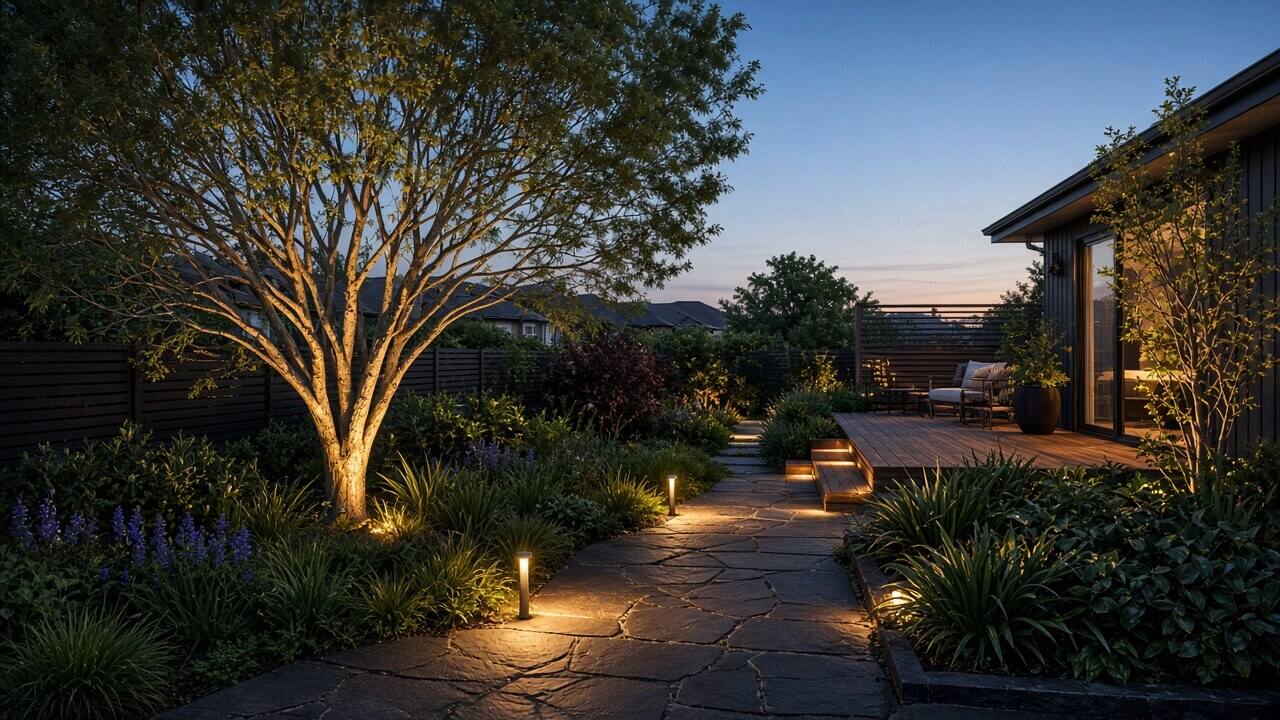
Outdoor lighting extends your garden’s usability into evening hours and creates atmosphere that transforms ordinary spaces into something special. But Melbourne’s variable weather, distinct seasons, and specific electrical requirements mean outdoor lighting needs thoughtful planning beyond just picking attractive fixtures.
Here’s your comprehensive guide to outdoor lighting for Melbourne gardens, with practical advice on what works across our seasons.
Why Outdoor Lighting Matters
Beyond aesthetics, outdoor lighting serves critical functions:
Safety and Security
- Pathway illumination prevents trips and falls
- Step and level changes highlighted for visibility
- Entry areas lit for returning home after dark
- Dark corners eliminated for security
- Motion sensor options for automatic night lighting
Usability Extension
- Winter evenings - functional outdoor space from 5pm onwards
- Summer entertaining - extends into later evening
- Year-round access to garden regardless of daylight hours
Atmosphere and Ambience
- Visual interest after dark
- Feature highlighting - trees, architecture, plantings
- Entertaining mood creation
- Property appeal from street
Done well, outdoor lighting makes your garden a destination, not just a daytime space you view through windows after 6pm.
Types of Outdoor Lighting
Path and Walkway Lighting
Purpose: Safe navigation from street to door, house to garden areas, along paths and driveways.
Options:
- Bollard lights (600-900mm height) - modern, even light distribution
- Low path lights (150-400mm height) - subtle, pools of light
- Recessed path lights (in-ground) - minimal visual clutter, contemporary
- Solar path lights - no wiring, easy DIY, variable quality
Placement principles:
- 2-3 metres apart typical spacing
- Both sides of wide paths (alternating pattern)
- Focus light downward (not upward into eyes)
- Key spots: path turns, steps, entry areas
Melbourne consideration: Winter rain and shorter days mean path lighting gets heavy use 5-8 months of the year. This isn’t decorative - it’s functional safety lighting you’ll rely on.
Feature and Accent Lighting
Purpose: Highlight specimen plants, trees, architectural features, or garden focal points.
Options:
- Uplights - ground-mounted spotting upward (dramatic effect)
- Downlights - mounted high pointing down (moonlighting effect)
- Spot lights - focused beam on specific feature
- Wash lights - wider beam across walls or large plants
What to light:
- Feature trees (especially those with interesting bark or structure)
- Architectural elements (fences, screens, walls)
- Specimen plants or garden beds
- Water features
- Outdoor art or sculptural elements
Technique tips:
- Less is more - over-lighting looks tacky
- Cross-lighting creates depth (light from multiple angles)
- Vary intensity - not everything lit equally
- Consider seasonal changes (deciduous trees winter vs summer)
Melbourne seasons: Lighting deciduous feature trees creates stunning winter silhouettes but may be less effective in full summer leaf. Plan for year-round interest.
Entertaining and Task Lighting
Purpose: Functional light for outdoor living areas, BBQs, dining, and cooking.
Options:
- Overhead patio lighting - ceiling-mounted or pendant lights
- BBQ area lighting - task lighting for food prep
- Dining table lighting - overhead pendant or festoon style
- Wall sconces - flanking doors or along patios
- Festoon/string lights - ambient party lighting
Key principles:
- Task lighting should be bright enough for safety and function
- Dining lighting can be softer (too bright feels clinical)
- Dimmers valuable for adjusting mood
- Position lights to avoid glare in eyes of seated people
Peninsula entertaining: Covered patios with integrated lighting extend entertaining season significantly - Melbourne winters are mild enough for outdoor dining with proper lighting and heat source.
Deck and Step Lighting
Purpose: Safety on level changes and elevated structures.
Options:
- Recessed deck lights - mounted in decking or risers
- Post cap lights - top of deck posts or balustrades
- Strip lighting - LED strips under handrails or treads
- Step lights - illuminating each riser or tread edge
Critical areas:
- Every step or level change
- Deck edges (especially elevated decks)
- Gate openings
- Transition from paved to grass areas
Never compromise on step lighting - this is pure safety, not optional decoration.
Security and Motion Sensor Lighting
Purpose: Automatic lighting for security and convenience.
Options:
- Motion sensor floods - bright area lighting triggered by movement
- Sensor-activated path lights - gentler automatic lighting
- Dusk-to-dawn sensors - automatic on at sunset
- Smart lighting - app controlled, programmable timing
Best placement:
- Side gates and rear access points
- Dark corners of property
- Garage and carport areas
- Main entry path (can be dusk-to-dawn rather than motion)
Balance: Security lighting should feel safe, not aggressive. Constant bright floodlighting annoys neighbours and creates glare. Motion-activated makes more sense for most residential properties.
Power Options: 240V vs 12V vs Solar
240V Mains Lighting
Advantages:
- Brightest output available
- Most reliable (no battery concerns)
- Widest fixture selection
- Best for task and security lighting
Requirements:
- Licensed electrician mandatory for installation
- Weatherproof fixtures rated for outdoor use (IP rating critical)
- RCD protection on circuit
- Compliance with AS/NZS 3000 (Wiring Rules)
Best for: Permanent installations, patio areas, security lighting, task lighting, feature lighting requiring consistent brightness
Melbourne regulation: All 240V outdoor electrical work requires licensed electrician. DIY 240V outdoor wiring is illegal and dangerous - wet conditions, ground faults, and shock risks make this non-negotiable.
12V Low Voltage Lighting
Advantages:
- Safer (low voltage reduces shock risk)
- More DIY-friendly (though transformer installation may need electrician)
- Flexible positioning (easier to relocate)
- Good range of garden lighting fixtures
Requirements:
- Transformer required (240V to 12V conversion)
- Transformer installation by licensed electrician if hardwired
- Plug-in transformers DIY-possible (if qualified outdoor outlet exists)
- Cable runs limited by voltage drop
Best for: Garden bed lighting, path lighting, feature lighting, DIY installations, renters (more portable)
Solar Outdoor Lighting
Advantages:
- No wiring required - completely DIY
- No running costs
- Easy to relocate
- Environmentally friendly
Considerations:
- Quality varies enormously (cheap solar lights disappoint)
- Battery life degrades over time (2-4 years typical)
- Melbourne winter - less sun means dimmer output, shorter duration
- Not suitable for task or security lighting (insufficient brightness)
- Need direct sun exposure for charging
Best for: Supplemental path lighting, temporary installations, rental properties, locations where wiring impractical
Melbourne solar reality: Our shorter winter days and frequent cloud mean solar performs adequately in summer but struggles winter months. Budget accordingly or choose mains/low voltage for critical lighting.
Melbourne Seasonal Lighting Considerations
Winter (June-August)
Challenges:
- Early darkness (5:30pm sunset)
- Frequent rain (wet fixtures and paths)
- Cold temperatures (less outdoor entertaining)
- Limited daylight (solar charging struggles)
Lighting priorities:
- Path and safety lighting critical (daily use)
- Entry lighting essential
- Feature lighting on winter-interest plants
- Covered entertaining area lighting (for brave winter entertainers)
Spring (September-November)
Opportunities:
- Daylight extending rapidly
- Weather improving (more outdoor time)
- Spring garden colour worth highlighting
- Start of entertaining season
Lighting priorities:
- Feature lighting on spring bulbs and blossoms
- Entertaining area lighting coming into use
- Solar lights begin performing better
Summer (December-February)
Peak usage:
- Late evening entertaining (sunset 8:30pm+)
- Maximum outdoor living
- Solar lights performing optimally
- Every lighting zone earning its keep
Lighting priorities:
- Ambient and entertaining lighting most used
- Security lighting still important
- Feature lighting on summer garden
- Pool lighting (if applicable)
Autumn (March-May)
Transition:
- Earlier darkness approaching
- Weather still pleasant for outdoor use
- Garden autumn colour worth highlighting
Lighting priorities:
- Path lighting becoming more critical again
- Feature lighting on autumn foliage
- Entertaining lighting still frequent use
Smart Outdoor Lighting Options
Modern technology adds convenience and flexibility:
Smart Controls
Features:
- App-based control from phone
- Voice control (Google, Alexa, Apple)
- Programmable schedules
- Zone control (different areas separately)
- Dimming and colour temperature adjustment
Benefits:
- Turn lights on before arriving home
- Adjust from inside (no venturing into cold/rain)
- Holiday mode (simulate presence)
- Energy management (automatic shutoff)
Costs: Smart bulbs or smart switches add $20-100 per fixture, but convenience often worth investment for frequently used lighting.
Timers and Sensors
Even without full smart systems:
- Dusk-to-dawn sensors provide automatic on/off
- Motion sensors activate when needed
- Simple timers schedule lighting cheaply
Placement and Design Principles
Layer Your Lighting
Like interior design, outdoor lighting works best in layers:
- Ambient lighting - general illumination (festoon lights, wall sconces)
- Task lighting - specific function (BBQ, dining, path)
- Accent lighting - feature highlights (trees, architecture)
All three layers create depth and interest. Only one layer looks flat.
Avoid Common Mistakes
Over-lighting:
- Not every plant needs a spotlight
- Brighter isn’t always better
- Garden should have pools of light and darkness (creates drama)
Up-lighting faces:
- Lights positioned to shine upward into faces create glare
- Path lights should aim downward
Single direction lighting:
- Lighting from one angle only creates harsh shadows
- Multiple light sources create depth
Ignoring neighbours:
- Light spilling into neighbour’s windows causes problems
- Shield or direct lights carefully on boundary areas
Mismatched colour temperatures:
- Warm white (2700-3000K) suits most garden settings
- Cool white (4000K+) feels clinical unless intentional modern aesthetic
- Mixing warm and cool looks uncoordinated
Tree Lighting Techniques
Up-lighting:
- Position light at base pointing up through canopy
- Creates dramatic silhouette effect
- Best for trees with interesting branch structure
Down-lighting (moonlighting):
- Mount light high in tree pointing down
- Mimics natural moonlight effect
- Creates dappled light and shadows
- Best for large established trees
Cross-lighting:
- Multiple lights from different angles
- Creates depth and dimensional interest
- Best for specimen trees as focal points
Maintenance and Longevity
Outdoor lighting requires some maintenance:
LED longevity:
- Modern LED fixtures last 25,000-50,000 hours
- 10-20 years typical lifespan
- Initial cost higher, running costs and replacement much lower
Cleaning:
- Wipe fixtures annually to remove dirt and cobwebs
- Clear debris from solar panels (if solar lighting)
- Check and clean motion sensors
Checking connections:
- Inspect 240V fixtures for weather damage
- Check low voltage connections annually
- Verify transformers operating correctly
Replacing bulbs/fixtures:
- LED bulbs rarely need replacement
- When fixtures fail, often complete unit replacement (LED integrated designs)
- Budget for fixture replacement every 10-15 years
DIY vs Licensed Electrician
DIY Suitable For:
- Solar lighting - no electrical work required
- 12V low voltage - if plug-in transformer used (and outdoor outlet already exists)
- Replacing bulbs in existing fixtures
- Installing light fixtures on existing outdoor circuits (if competent and fixtures rated correctly)
Licensed Electrician Required For:
- All 240V outdoor wiring new installations
- Installing new outdoor power circuits
- Hardwiring transformers
- Any mains connection work
- Installing outlets for outdoor use
Melbourne electrical regulations: Never DIY mains outdoor electrical work. It’s illegal, dangerous (ground faults, water, shock risks), and voids insurance. Licensed electricians ensure work complies with standards and is safe.
If you’re planning comprehensive outdoor lighting - safety paths, entertaining areas, feature lighting on mature gardens - professional design and installation ensures proper power, weather protection, and lighting effect. Peninsula Hard Yards works with licensed electricians for integrated outdoor lighting as part of landscape projects across the Mornington Peninsula.
Disclosure: We share links to related local services that serve our readers in the Peninsula area.
Budgeting Outdoor Lighting
Basic DIY Solar Path Lighting
- Quality solar path lights: $30-80 each
- 6-8 lights for typical path: $200-600 total
- Fully DIY installation
Low Voltage Garden Lighting
- Transformer: $100-300
- 12V fixtures: $40-150 each
- 6-fixture setup: $500-1,200 (materials + electrician for transformer)
Professional 240V Installation
- Entry-level fixtures: $80-200 each installed
- Mid-range quality: $200-400 each installed
- Premium fixtures: $400-800+ each installed
Typical installations:
- Basic path lighting (6 lights): $1,500-3,000
- Patio entertaining lighting: $1,000-3,000
- Comprehensive garden lighting (15-20 fixtures): $5,000-12,000+
- Smart lighting premium: +20-40% over standard
Final Thoughts
Outdoor lighting transforms Melbourne gardens from daytime-only spaces into year-round usable environments. The right lighting:
- Extends usability into evening hours across all seasons
- Improves safety on paths, steps, and dark areas
- Creates atmosphere for entertaining and enjoyment
- Highlights features and investment in landscaping
- Adds property value and street appeal
Start with your priorities:
- Safety first - paths, steps, entries
- Usability second - entertaining areas, task lighting
- Features third - accent and decorative lighting
Budget matters - better to light fewer areas well than entire garden poorly. Start with highest-use zones and expand over time.
And remember Melbourne’s seasons: lighting that works year-round suits our climate better than summer-focused designs. We spend more evenings outdoors across winter/spring/autumn combined than summer alone.
Your outdoor lighting investment pays returns every evening you use your garden. Design it thoughtfully, install it properly, and enjoy decades of extended outdoor living.
Need a Hand?
Professional lawn and garden services when you need them. Get a quote from our trusted Peninsula partners.
Contact Mowing Magic or Peninsula Hard Yards →Disclosure: We share links to related local services that serve our readers in the Peninsula area.