Outdoor Privacy Screen Ideas for Gardens
Practical privacy solutions for Australian gardens. Compare plants, screens, and fences. Explore instant hedges, batten screens, balcony privacy options, and designs that balance privacy with aesthetics.
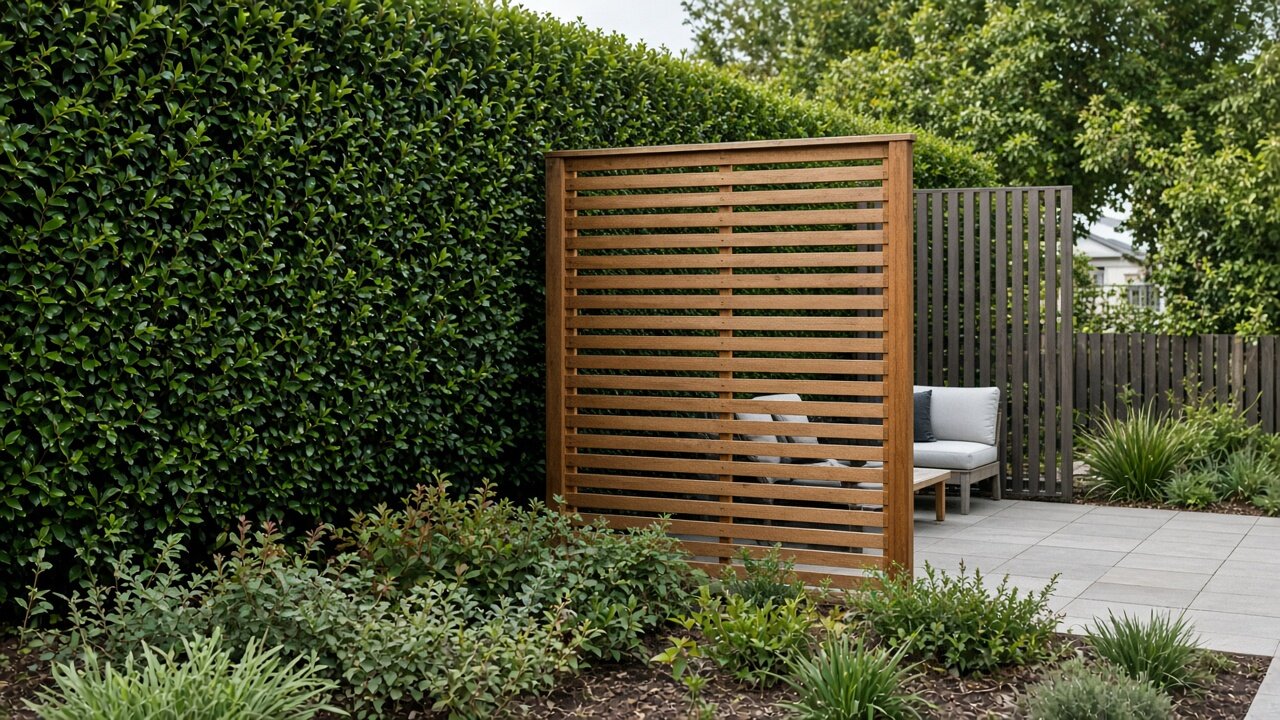
Privacy in your outdoor space transforms how you use your garden. Whether you’re creating an intimate courtyard, blocking overlooking neighbours, screening an unsightly view, or simply defining boundaries, the right privacy solution balances function, aesthetics, and maintenance within your budget.
Australian gardens face unique privacy challenges - close suburban blocks, overlooking two-storey neighbours, balcony living, and the desire to maintain airflow whilst gaining screening. Here’s your guide to privacy solutions that actually work.
Plants vs Screens vs Fences
Three fundamental approaches, each with distinct advantages.
Privacy Plants (Hedges and Screening Plants)
Advantages:
- Natural appearance blends into garden
- Living element with seasonal interest
- Wildlife habitat for birds and beneficial insects
- Air filtration and cooling effects
- Flexible design - can be shaped over time
- Sound dampening better than hard surfaces
- Cost-effective if you’re patient
Disadvantages:
- Time to establish (months to years depending on choice)
- Ongoing maintenance (trimming, watering, fertilising)
- Can fail (plants die, get diseases)
- Width required (most hedges need 60cm+ width)
- Root systems can cause issues near paths or structures
- Seasonal variation (deciduous plants lose privacy in winter)
Best for: Traditional gardens, properties with space, homeowners who enjoy gardening, permanent long-term solutions, wildlife-friendly landscapes
Screening Structures (Timber/Metal Screens)
Advantages:
- Immediate privacy from day one
- Precise height and coverage as designed
- Consistent year-round performance
- Narrow footprint (takes less garden space)
- Design flexibility (modern, traditional, custom patterns)
- Low maintenance compared to plants
- Can be removed or relocated if needed
Disadvantages:
- Higher upfront cost than plants
- Less natural appearance (though depends on design)
- No environmental benefits (no habitat, no cooling)
- Wind loading concerns (needs proper installation)
- Material degradation over time (timber weathers, metal rusts)
- Planning approval sometimes required
Best for: Immediate privacy needs, narrow spaces, modern designs, low-maintenance preference, precise screening requirements
Solid Fences
Advantages:
- Complete privacy (total visual block)
- Security as well as privacy
- Immediate solution
- Defines property boundary clearly
- Weather protection (windbreak)
- Long lifespan if properly built
Disadvantages:
- Highest cost option typically
- Can feel enclosed or claustrophobic
- Blocks airflow (creates wind tunnels or dead air zones)
- Creates dark areas by blocking light
- Regulations often limit height
- Neighbour consultation required for boundary fences
- Heavy, imposing appearance
Best for: Complete privacy requirements, boundary definitions, security needs, wind protection, properties with ample space
Instant Hedge Solutions
For homeowners wanting plant-based privacy without the wait.
What Are Instant Hedges?
Pre-grown hedge plants in advanced sizes:
- Typically 1.2-2.5m height at purchase
- Grown in special boxes or large pots
- Planted in row for immediate hedge effect
- Deliver privacy from day one
Popular Instant Hedge Species
Murraya (Mock Orange):
- Dense evergreen foliage
- Fragrant white flowers
- 2-4m mature height
- Frost-sensitive (fine for coastal Peninsula)
- Fast growing once established
Lilly Pilly varieties:
- Australian native, bird-attracting
- Dense screening capability
- 2-6m depending on variety
- Colourful new growth (bronze/pink)
- Handles pruning well
Viburnum odoratissimum (Sweet Viburnum):
- Very dense foliage
- Glossy leaves
- 2-4m typical height
- Tolerates shade well
- Reliable performer
Photinia ‘Red Robin’:
- Red new growth (striking colour)
- Dense when trimmed regularly
- 2-4m manageable height
- Handles Peninsula conditions well
- Popular choice for instant screening
Cost Expectations
Instant hedge pricing:
- 1.2-1.5m height: $80-150 per plant
- 1.8-2.0m height: $150-250 per plant
- 2.5m+ height: $250-400+ per plant
Installation:
- DIY possible but plants are heavy
- Professional installation recommended for multiple plants
- Include soil preparation, plant cost, installation, initial mulching
Example project:
- 10m hedge length, 1.8m high plants at 1m spacing
- Materials (10 plants): $1,500-2,500
- Professional installation: +$800-1,500
- Total: $2,300-4,000
Comparison: Equivalent timber batten screen might cost $1,500-2,500 installed, but hedge increases in value over time whilst screen depreciates.
Instant Hedge Installation
Critical success factors:
Soil preparation:
- Well-draining soil essential
- Amend clay with gypsum and compost
- Create raised mounding if drainage poor
Planting:
- Space 80cm-1.2m apart (depending on species and size)
- Don’t plant too deep (root flare at soil level)
- Backfill with quality soil mix
Establishment care:
- Consistent watering first 6-12 months critical
- Mulch well (but keep mulch away from stems)
- Slow-release fertiliser
- Trim lightly to encourage density
Peninsula challenge: Clay soil requires excellent drainage. Instant hedges fail quickly in waterlogged conditions - mounding or improving drainage is not optional.
Timber Batten Screens
Modern, popular, and highly effective privacy solution.
Design Approaches
Vertical battens:
- Most common orientation
- Sleek, contemporary look
- Typically 70-100mm wide battens
- Spacing varies (40-70mm gaps common)
- Creates filtered privacy (airflow maintained)
Horizontal battens:
- More traditional appearance
- 90-140mm wide boards typical
- Can be overlapping (complete privacy) or gapped
- Easier DIY construction
Mixed or geometric patterns:
- Custom designs
- Feature wall approach
- Higher cost but architectural impact
- Suits contemporary homes
Batten Spacing for Privacy
Privacy vs airflow trade-off:
- 30-40mm gaps: Strong privacy, moderate airflow
- 50-60mm gaps: Balanced privacy and airflow (most common)
- 70-80mm gaps: Light screening, excellent airflow
- Overlapping battens: Complete privacy, restricted airflow
Angle matters: Screens angled at 45° provide more privacy than straight vertical whilst maintaining airflow.
Timber Species for Screens
Treated pine:
- Most affordable
- Requires regular maintenance (oiling/staining)
- 10-15 year lifespan with maintenance
- Versatile (can be painted any colour)
Hardwood (merbau, spotted gum, ironbark):
- Premium appearance
- Long lifespan (20-30+ years)
- Higher cost
- Weathers naturally to grey or needs oiling
- Very durable
Screening-specific products:
- Pre-made modular screening panels
- Aluminium battens with timber appearance
- Composite screening (low maintenance)
- Metal screens with powder-coat finish
Installation Considerations
Support structure critical:
- Steel or hardwood posts every 2-2.4m
- Concrete footings for freestanding screens
- Horizontal rails between posts (100x50mm typical)
- Frame must withstand wind loading
Height regulations:
- Most councils allow 1.8m fences without permit
- 2.0m+ typically requires planning permission
- Check setback rules (screens closer to boundaries may have lower limits)
- Varies by council - verify before building
Wind loading:
- Solid screens act as sails in wind
- Adequate footing depth essential (600mm+ for tall screens)
- Consider engineering for high exposed locations
- Batten spacing reduces wind load vs solid panels
Cost Expectations
Materials (DIY):
- Treated pine batten screen (1.8m high): $150-250 per metre
- Hardwood batten screen (1.8m high): $250-400 per metre
- Includes posts, rails, battens, fixings
Professional installation:
- Treated pine: $250-400 per metre installed
- Hardwood: $400-600 per metre installed
- Premium designs/materials: $600-1,000+ per metre
Metal Privacy Screens
Durable alternative to timber with different aesthetic.
Types of Metal Screens
Powder-coated aluminium:
- Lightweight
- Won’t rust
- Variety of colours
- Low maintenance
- Premium price
- Contemporary appearance
Laser-cut decorative screens:
- Patterns create visual interest whilst screening
- Aluminium or steel
- Custom designs possible
- Feature wall approach
- Very expensive ($500-1,500+ per panel)
Corrugated metal:
- Industrial aesthetic
- Colorbond steel common
- Durable and low maintenance
- Budget-friendly metal option
- Can feel plain without softening plants
Advantages of Metal Screens
- Long lifespan (30+ years for aluminium)
- Very low maintenance
- Won’t rot, warp, or need repainting
- Termite-proof
- Sleek modern appearance
- Narrow profile possible
Disadvantages
- Higher upfront cost than timber
- Can look stark without plant softening
- Heats up in direct sun (hot to touch)
- Less “warm” feeling than timber
- Difficult to modify or repair
Balcony Privacy Solutions
Specific challenges for apartment and townhouse balconies.
Regulations and Restrictions
Common body corporate or council restrictions:
- No permanent structures without approval
- Colour and material limitations
- Height restrictions
- Wind loading concerns for high-rise
- Fire regulations (combustible materials restricted)
Check before installing - unapproved balcony modifications can force expensive removal.
Balcony-Appropriate Solutions
Outdoor blinds:
- Roll-up or fixed
- PVC, mesh, or canvas
- Instant privacy when deployed
- Can be retracted for views/airflow
- Professional installation recommended
Planter boxes with tall plants:
- Living screen
- Bamboo in planters popular (but choose clumping varieties)
- Vertical garden systems
- Self-watering planters reduce maintenance
- Consider weight (balcony load limits)
Portable screening panels:
- Freestanding screen sections
- Weighted bases
- Can be moved or removed
- Suits rental properties
- Less permanent solution
Shade sails with screening:
- Angled shade sail provides side privacy
- Wind-resistant when properly installed
- Professional installation essential for high-rise
- Engineering may be required
Climbing plants on wire or trellis:
- Light structure with plants
- Star jasmine, pandorea, hardenbergia suited to Melbourne
- Takes time to establish
- Needs secure fixing to balcony
- Watering access essential
Living Walls and Vertical Gardens
Modern privacy solution combining screening with greenery.
Vertical Garden Systems
Modular panel systems:
- Pre-planted panels attached to wall or frame
- Irrigation system included
- Immediate green screen effect
- Professional installation typical
- Higher maintenance (watering, fertilising, plant replacement)
Climbing plants on structures:
- Wire grids, trellis, mesh as support
- Plants grow to cover over time
- Lower cost than modular systems
- Takes 1-3 years for coverage
- Choose vigorous climbers for quick coverage
Suitable Climbing Plants (Melbourne/Peninsula)
Evergreen climbers:
- Star jasmine: Fragrant, dense coverage, well-behaved
- Hardenbergia (Native wisteria): Purple flowers, native, tough
- Pandorea: Pink or white flowers, fast growing
- Bower vine (Pandorea jasminoides): Vigorous, showy flowers
Deciduous (lose privacy in winter):
- Wisteria: Beautiful but loses leaves, very vigorous
- Grape vines: Edible bonus but winter bare
Fast coverage priorities: Pandorea and bower vine fastest. Star jasmine slower but more controllable.
Privacy Hedge Plant Options
Traditional hedge approach for longer-term screening.
Fast-Growing Screening Plants
Bamboo (clumping varieties only):
- Very fast screening (2-3m in 2 years possible)
- Dense year-round privacy
- Modern architectural look
- Critical: Only plant clumping varieties (Bambusa, Fargesia)
- Running bamboo will invade everywhere (avoid completely)
Lilly Pilly (Acmena/Syzygium varieties):
- Australian native
- Dense foliage, attractive berries
- 2-4m in 3-4 years
- Handles Peninsula conditions well
- Regular trimming maintains density
Viburnum:
- Reliable, dense screening
- 2-3m in 3-4 years
- Tolerates shade and sun
- Glossy foliage looks good year-round
Murraya:
- Fast establishing (2m in 2 years)
- Fragrant flowers
- Dense when trimmed
- Frost-tender (avoid coldest Peninsula areas)
Hedge Maintenance Requirements
Regular trimming essential:
- 2-4 times per year depending on species
- Maintains density (untrimmed hedges get sparse at base)
- Shapes hedge to desired form
- Creates neat appearance
Watering:
- First 1-2 years critical
- Established hedges typically drought-tolerant (though perform better with occasional deep watering)
- Clay soil Peninsula properties: less watering needed but drainage critical
Fertilising:
- Annual slow-release fertiliser
- Promotes healthy growth and density
- Avoid high nitrogen close to fences (can stain)
Pest and disease management:
- Psyllids on Lilly Pilly common (not fatal, but unsightly)
- Murraya susceptible to sooty mould
- Choose resistant varieties where possible
Combining Privacy Solutions
Often the most effective approach mixes strategies.
Screen + Plants
Why it works:
- Immediate privacy from screen
- Plants soften appearance over time
- Flexibility (can remove screen later once plants establish)
- Layered privacy more effective than single approach
Example combinations:
- Batten screen with climbing plants growing through gaps
- Low screen (1.2m) with hedge plants behind reaching 2m+
- Metal screen base with planted vertical garden sections
Hedge + Fence
Traditional combination:
- Solid boundary fence for security/definition
- Hedge planted in front for softening
- Can plant on one or both sides
- Creates depth and natural appearance
Space requirement: Need 60-100cm from fence for hedge planting (allows growth and maintenance access).
Multi-Level Planting
Instead of single hedge row:
- Tall screening plants at back (Lilly Pilly, Viburnum 3-4m)
- Mid-height shrubs (1.5-2m) in front
- Low planting at ground (50-80cm)
Creates depth, more natural appearance, and very effective screening.
Common Privacy Screen Mistakes
Solid screens blocking airflow: Suburban gardens need breeze. Complete privacy with zero airflow creates uncomfortable, still air. Leave gaps or mix strategies.
Undersized screening: Installing 1.5m screen when neighbours overlook from 2m+ doesn’t solve problem. Measure carefully.
Running bamboo: The single worst landscaping decision. Running bamboo invades everything - drains, neighbours’ gardens, foundations. Only clumping bamboo ever appropriate.
No maintenance plan for hedges: Hedges left untrimmed become sparse, leggy, and fail at providing privacy they were planted for.
Ignoring drainage for hedge plants: Clay soil without drainage kills instant hedges quickly. Not optional for Peninsula properties.
Building without checking regulations: Unapproved screening structures cause problems when selling or if neighbours complain.
Planting too close to boundary: Hedge overhanging neighbour’s property creates disputes. Plant with mature size in mind.
Cost Comparison Summary
Per metre of 1.8-2.0m high screening:
DIY plant-based:
- Standard hedge plants (small): $15-30 per plant = $150-300 per 10m (patient approach)
- Instant hedge: $1,500-2,500 per 10m
DIY screen/fence:
- Timber batten screen: $150-250 per metre
- Solid timber fence: $200-350 per metre
Professional installation:
- Instant hedge installed: $230-400 per metre
- Timber batten screen installed: $250-400 per metre (treated pine)
- Hardwood screen installed: $400-600 per metre
- Metal screen installed: $500-800+ per metre
- Solid fence (Colorbond): $300-450 per metre installed
DIY vs Professional Installation
DIY suitable for:
- Standard hedge planting (not instant hedges)
- Small screening projects (under 6m)
- Simple batten screens on level ground
- Homeowners with carpentry experience
- Non-structural applications
Professional recommended for:
- Instant hedge installations (plants are heavy and expensive)
- Screens over 1.8m high
- Freestanding screens (engineering and wind loading)
- Long runs (10m+)
- Difficult sites (slopes, poor access)
- Balcony installations
- When structural integrity matters
Final Thoughts
Effective privacy screening balances immediate needs with long-term aesthetics:
- Plants deliver natural beauty but require time and maintenance
- Structures provide instant solutions with minimal ongoing care
- Combining approaches often creates best outcome
- Regulations matter - verify before building
- Airflow matters - don’t create dead air spaces
Start by clarifying your priorities:
- How quickly do you need privacy?
- What’s your maintenance tolerance?
- What’s your budget?
- Is this permanent or temporary?
- Do you want natural or architectural appearance?
Your answers guide the right solution.
For balcony privacy, favour lightweight and removable solutions that meet body corporate requirements. For suburban gardens, combination approaches often work best - immediate batten screening with hedge planting for long-term softening.
Done thoughtfully, privacy screening transforms overlooked outdoor space into intimate, usable areas where you actually want to spend time. Whether you choose living hedges, architectural screens, or a combination, the goal is the same - creating outdoor privacy that feels right for your property and lifestyle.
The best privacy solutions work so well you forget they’re there - you simply enjoy your garden without feeling overlooked.
Need a Hand?
Expert hedge trimming, pruning, and garden maintenance. Get a quote from our trusted Peninsula partners.
Contact Peninsula Hard Yards →Disclosure: We share links to related local services that serve our readers in the Peninsula area.